USAID DEC
Characteristics of clients with sexually transmitted infections and HIV coinfection in same-day antiretroviral therapy cohort in Bangkok, Thailand
Sign inFHI 360
Characteristics of clients with sexually transmitted infections and HIV coinfection in same-day antiretroviral therapy cohort in Bangkok, Thailand
The study examined the characteristics of HIV-positive clients with sexually transmitted infections (STIs) and HIV coinfection in a same-day antiretroviral therapy (ART) cohort in Bangkok, Thailand.
2019 · 2 pages
Sign in to readA free account is required to download.
Abstract
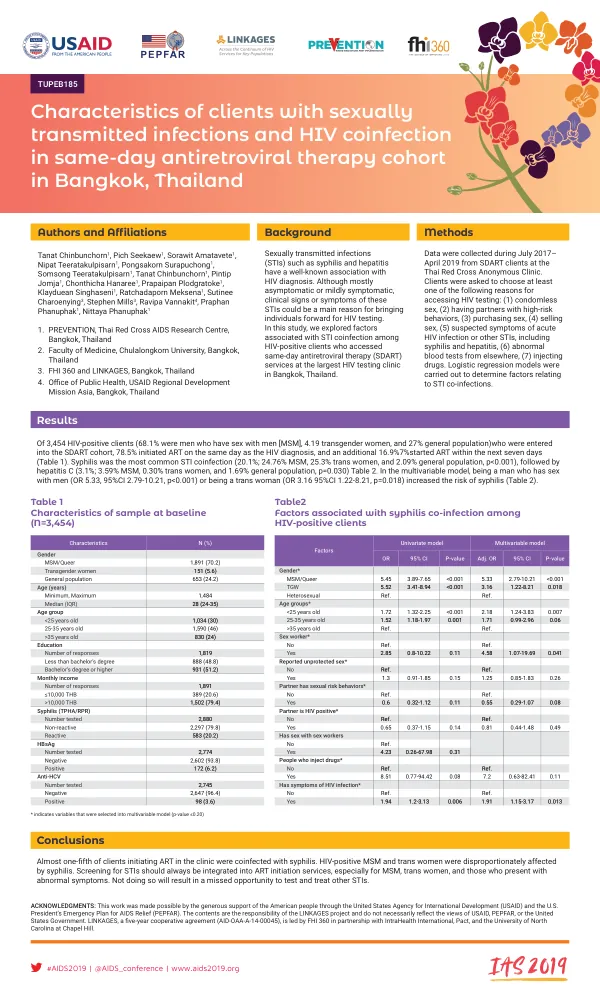
The study included 3,454 HIV-positive clients who initiated ART on the same day as their HIV diagnosis or within the next seven days. The majority of clients were men who have sex with men (MSM), accounting for 68.1% of the sample. Syphilis was the most common STI coinfection, affecting 20.1% of clients, with a higher prevalence among MSM (24.76%) and transgender women (25.3%). Hepatitis C was the second most common STI coinfection, affecting 3.1% of clients, with a higher prevalence among MSM (3.59%) and a lower prevalence among transgender women (0.30%). The study used logistic regression models to determine factors associated with STI coinfection. The results showed that being a MSM (OR 5.33, 95%CI 2.79-10.21, p<0.001) or a transgender woman (OR 3.16, 95%CI 1.22-8.21, p=0.018) increased the risk of syphilis. The study also found that age, education level, and monthly income were not significantly associated with STI coinfection. The study concluded that almost one-fifth of clients initiating ART in the clinic were coinfected with syphilis. HIV-positive MSM and transgender women were disproportionately affected by syphilis. The study recommended that screening for STIs should always be integrated into ART initiation services, especially for MSM, transgender women, and those who present with abnormal symptoms. The study's findings highlight the need for targeted interventions to prevent and treat STIs among HIV-positive individuals, particularly among MSM and transgender women. The study's results also emphasize the importance of integrating STI screening into ART initiation services to identify and treat coinfected individuals. The study's sample consisted of 3,454 HIV-positive clients, with a median age of 28 years (IQR 24-35). The majority of clients (70.2%) were MSM, followed by transgender women (5.6%) and the general population (24.2%). The study found that clients with lower education levels and lower monthly incomes were more likely to be coinfected with STIs. The study's results have implications for HIV prevention and treatment programs, particularly in settings where MSM and transgender women are at high risk of STI coinfection. The study's findings highlight the need for targeted interventions to prevent and treat STIs among these populations, as well as the importance of integrating STI screening into ART initiation services.