USAID DEC
Importance of HIV Risk Perception: Predictors of PrEP Acceptance Among Thai MSM and TG Women at a Community-Based Health Service
Sign inFAMILY HEALTH INTERNATIONAL
Importance of HIV Risk Perception: Predictors of PrEP Acceptance Among Thai MSM and TG Women at a Community-Based Health Service
HIV prevalence among Thai men who have sex with men (MSM) and transgender women (TG) is significantly higher than the general population.
2017 · 9 pages
Sign in to readA free account is required to download.
Abstract
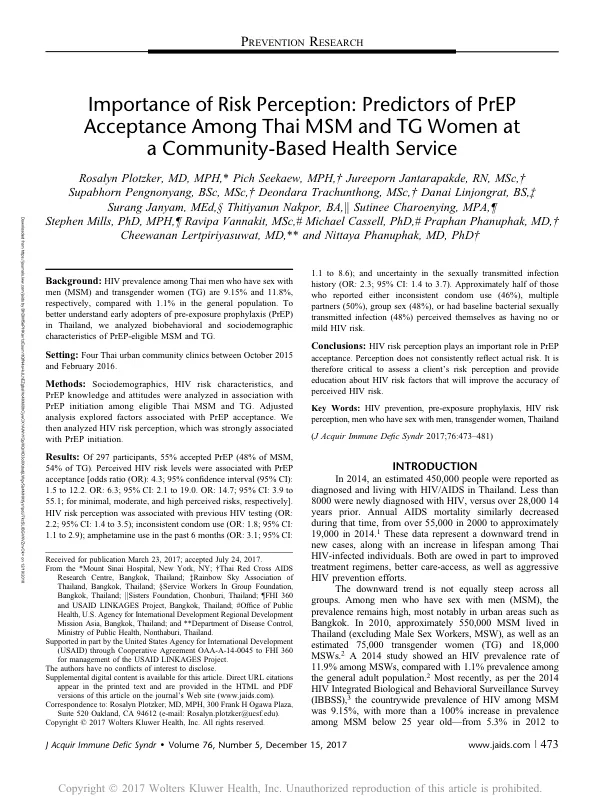
In 2014, an estimated 450,000 people were reported as diagnosed and living with HIV/AIDS in Thailand, with less than 8,000 newly diagnosed with HIV, compared to over 28,000 14 years prior. Annual AIDS mortality decreased during this time, from over 55,000 in 2000 to approximately 19,000 in 2014. Among MSM, the prevalence remains high, most notably in urban areas such as Bangkok. In 2010, approximately 550,000 MSM lived in Thailand, as well as an estimated 75,000 TG and 18,000 male sex workers (MSWs). A 2014 study showed an HIV prevalence rate of 11.9% among MSWs, compared to 1.1% prevalence among the general adult population. The countrywide prevalence of HIV among MSM was 9.15%, with more than a 100% increase in prevalence among MSM below 25 years old, from 5.3% in 2012 to 10.99% in 2014. Pre-exposure prophylaxis (PrEP) is an antiretroviral approach to prevent HIV infection. The daily oral dose of tenofovir-emtricitabine (TDF/FTC) has been proven effective in multiple clinical and pragmatic trials. However, barriers to PrEP use exist among Thai MSM and TG, including limited knowledge, stigma, expense, one's own HIV risk perception, and access to the drug itself. To address these challenges, the Department of Disease Control (DDC) under the Ministry of Public Health (MOPH) is collaborating with various organizations to evaluate the use of PrEP among MSM and TG. A prospective observational cohort study was conducted to assess the acceptance of PrEP among HIV-uninfected MSM and TG. Participants were recruited from community-based clinic sites in Bangkok and Pattaya, which serve clients with high HIV incidence and provide sexual health services to at-risk MSM and TG. Enrollment in the PrEP substudy began in October 2015, and data included in this analysis pertain to participants who enrolled up to February 19, 2016. The study found that 55% of participants accepted PrEP, with 48% of MSM and 54% of TG accepting the medication. Perceived HIV risk levels were associated with PrEP acceptance, with higher perceived risk levels corresponding to higher odds of PrEP acceptance. HIV risk perception was also associated with previous HIV testing, inconsistent condom use, amphetamine use in the past 6 months, and uncertainty in the sexually transmitted infection history. Approximately half of those who reported inconsistent condom use, multiple partners, group sex, or had baseline bacterial sexually transmitted infection perceived themselves as having no or mild HIV risk. The study highlights the importance of assessing a client's risk perception and providing education about HIV risk factors to improve the accuracy of perceived HIV risk. The findings suggest that HIV risk perception plays a critical role in PrEP acceptance, and that addressing these perceptions may be essential to increasing PrEP use among Thai MSM and TG.
Related documents
Documents in this collection
 2019
2019USAID DEC
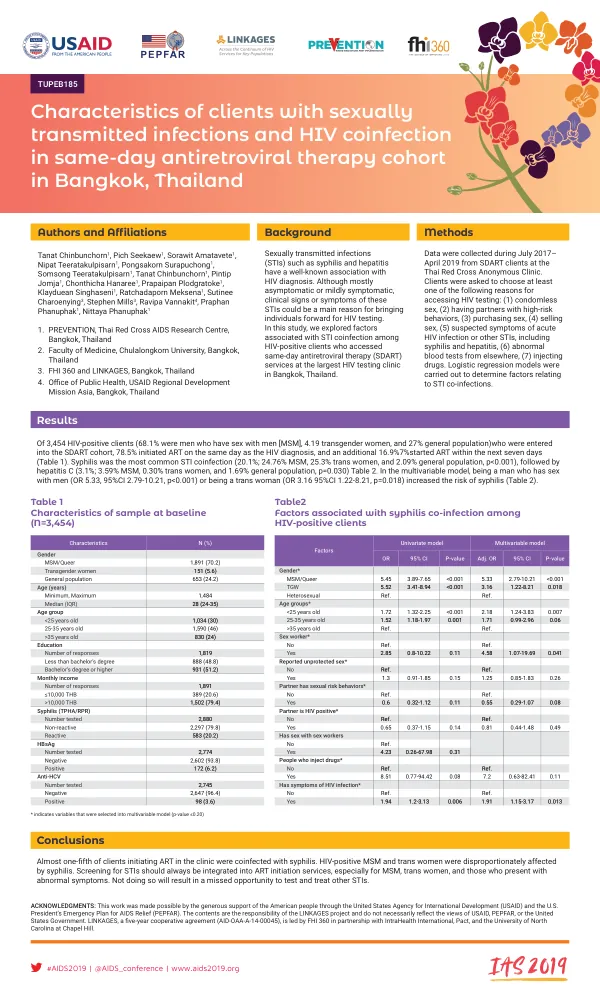
Characteristics of clients with sexually transmitted infections and HIV coinfection in same-day antiretroviral therapy cohort in Bangkok, Thailand
Open record 2019
2019USAID DEC