USAID
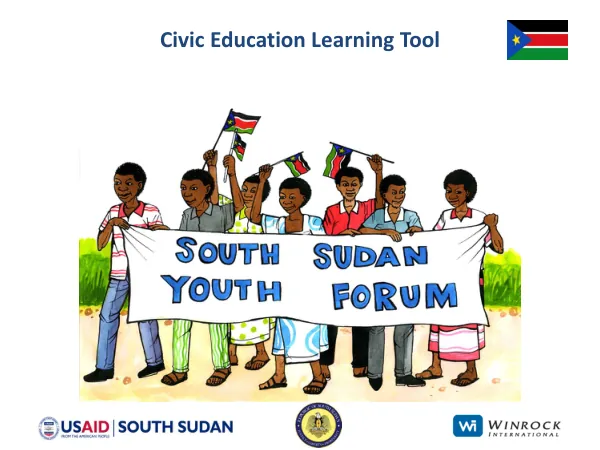
Civic Education Learning Tool for the New Republic of South Sudan
Civic education is learning about self-government, which involves citizens actively participating in their own governance.
2012 · 78 pages
Sign in to readA free account is required to download.
Abstract
This includes providing input and receiving feedback from leaders. Civics education focuses on the role of citizens in the operation and oversight of government. Government officials are expected to promote the values of civic education in their areas and communities. Democracy is a form of government that originates from the people. In a democracy, citizens have the power to choose their form of government. The concept of democracy is based on the principle of people having the power to participate and govern themselves. This empowerment enables citizens to make informed decisions about their lives and communities. Citizens in a representative democracy have specific roles and responsibilities. They are expected to participate in the electoral process, attend public meetings, and engage in community activities. These activities include joining government campaigns to fight corruption, serving on committees such as the Water Management Committee, and gathering to voice concerns about issues affecting their communities. The Transitional Constitution of South Sudan outlines the framework for democracy in the country. It enshrines civil and political rights, which are essential for citizens to participate in the democratic process. These rights include the freedom to express opinions, assemble peacefully, and access information. Effective governance in South Sudan relies on citizen participation. Without the active engagement of citizens, governments cannot function effectively. The Building Responsibility for Delivery of Government Services (BRIDGE) program, implemented by Winrock International, aims to promote civic education and community engagement in the country. This program provides a facilitation tool for local government officials and other participants to learn about community engagement techniques and processes. The facilitation tool guides participants through a series of exercises and discussions on civic education and governance. It emphasizes the importance of civic rights and participation, including voting, attending public meetings, and joining government campaigns. The tool also highlights the roles and responsibilities of citizens and government officials in a representative democracy. By promoting civic education and community engagement, the BRIDGE program aims to strengthen democracy in South Sudan and improve the lives of its citizens.
Related documents