USAID
Peace-building Learning Tool
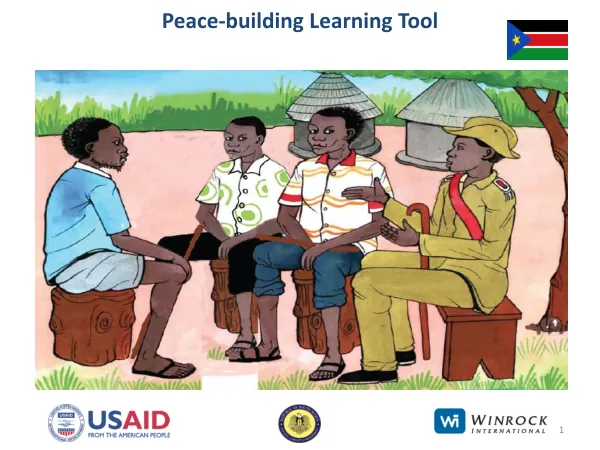
Peace-building Learning Tool is a facilitation tool designed to educate communities about peace-building and the important role of youth and women as key drivers for sustainable peace.
50 pages
Sign in to readA free account is required to download.
Abstract
The tool was produced in cooperation with the Local Government Board and with the generous support of the United States Agency for International Development (USAID) through the Building Responsibility for Delivery of Government Services (BRIDGE) program. The tool aims to discuss basic skills for successfully resolving conflicts within communities and ways to avoid conflict in the future and promote peaceful co-existence. It highlights the importance of understanding conflict and its causes, as well as the role of local government and peace-building in communities. The tool also emphasizes the significance of peace and its importance for individuals, communities, and future generations. Conflict is defined as a disagreement between individuals, groups, or communities that can lead to violence or peaceful solutions. It is a common occurrence in communities, often resulting from differences in opinion or approach. However, conflict can be harmful when differences lead to violence. The tool identifies common causes of violence in South Sudan, including family feuds, poverty, ethnic rivalries, political disagreements, financial/economic disagreements, arguments over land and water access, differences in religious beliefs, and border disputes. The tool also emphasizes the importance of understanding the role of women and youth in peace-building. Women and youth are recognized as key drivers for sustainable peace, and their participation is essential for promoting peaceful co-existence. The tool encourages communities to work together to define conflict, list types of conflict, and discuss how conflict can be harmful to communities. The facilitation tool is designed to be used in group settings, with participants divided into groups of 4-6, including women and youth. Each group works together to define conflict, list types of conflict, and discuss how conflict can be harmful to communities. The tool provides a framework for communities to engage in peace-building efforts and promote peaceful co-existence. The tool's agenda for Day 1 includes discussions on what is conflict, types of conflict, causes of conflict in South Sudan, what is peace-building, why peace is important, local government's role in peace-building, and the role of women and youth in peace-building. The tool provides a comprehensive framework for communities to engage in peace-building efforts and promote peaceful co-existence.
Related documents