INTERNATIONAL CITY AND COUNTY MANAGEMENT ASSOCIATION
Clean Cities, Blue Ocean | FY2021 Quarter Three Progress Report
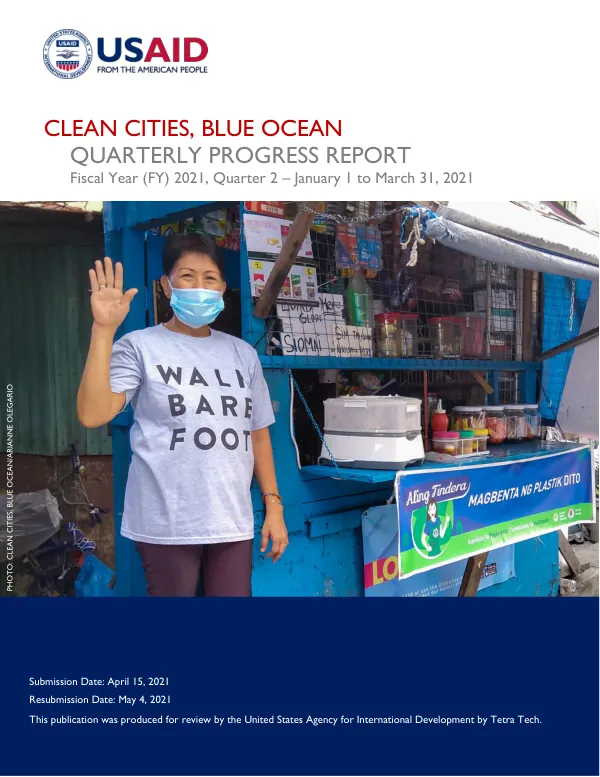
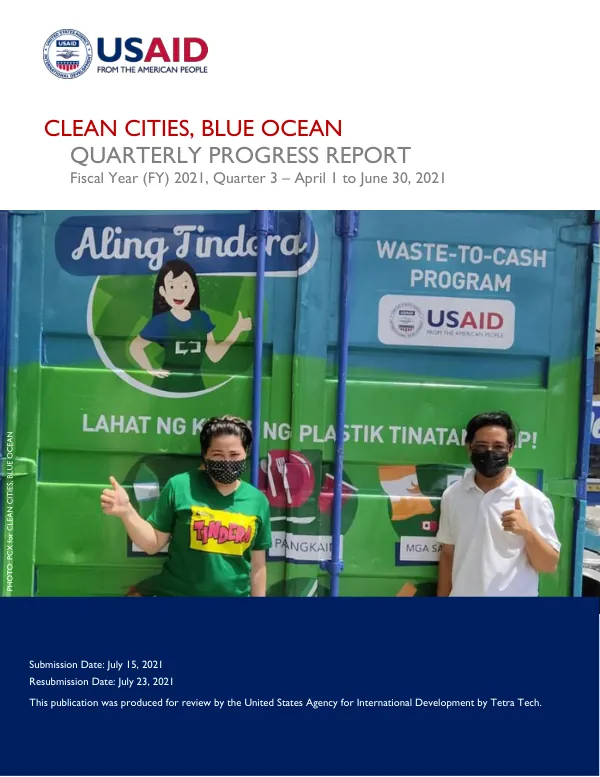
Clean Cities, Blue Ocean is a global program aimed at reducing marine plastic pollution and promoting sustainable waste management practices.
2021 · 65 pages
Sign in to readA free account is required to download.
Abstract
The program is implemented by Tetra Tech, with funding from the United States Agency for International Development (USAID). The program's primary focus is on Asia, Latin America, and the Caribbean, with a goal of improving the enabling environment for the 3Rs (Reduce, Reuse, and Recycle) and promoting sustainable waste management practices. The program has four main focus areas: building capacity of CCBO engagement sites in improved solid waste management, improving the enabling environment for the 3Rs with a focus on CCBO engagement sites, building social business cases for the 3Rs and improved waste management, and supporting gender equality and women's economic empowerment. The program also focuses on strengthening public-private partnerships and multi-stakeholder alliances, as well as strengthening USAID leadership in combating marine plastics. In the Latin America and Caribbean region, the program has made significant progress in improving solid waste management practices and promoting the 3Rs. In the Dominican Republic, the program has worked with local government and private sector partners to establish a waste management system that includes recycling and composting. In Peru, the program has supported the development of a national waste management plan and has worked with local communities to establish waste management systems. In Asia, the program has focused on improving solid waste management practices and promoting the 3Rs in several countries, including Indonesia, the Philippines, and Vietnam. In Indonesia, the program has worked with local government and private sector partners to establish a waste management system that includes recycling and composting. In the Philippines, the program has supported the development of a national waste management plan and has worked with local communities to establish waste management systems. The program has also made significant progress in strengthening public-private partnerships and multi-stakeholder alliances. In the Dominican Republic, the program has worked with local government and private sector partners to establish a waste management system that includes recycling and composting. In Peru, the program has supported the development of a national waste management plan and has worked with local communities to establish waste management systems. In terms of implementation challenges, the program has faced several challenges, including limited resources and capacity constraints. However, the program has also learned several lessons, including the importance of building strong partnerships with local government and private sector partners, and the need to develop tailored solutions that meet the specific needs of each country. The program's planned tasks for the next reporting period include continuing to build capacity of CCBO engagement sites in improved solid waste management, improving the enabling environment for the 3Rs with a focus on CCBO engagement sites, building social business cases for the 3Rs and improved waste management, and supporting gender equality and women's economic empowerment. The program will also continue to strengthen public-private partnerships and multi-stakeholder alliances, and will work to strengthen USAID leadership in combating marine plastics. Overall, the Clean Cities, Blue Ocean program has made significant progress in reducing marine plastic pollution and promoting sustainable waste management practices in several countries. The program's focus on building strong partnerships with local government and private sector partners, and its commitment to developing tailored solutions that meet the specific needs of each country, have been key to its success.