INTERNATIONAL CITY AND COUNTY MANAGEMENT ASSOCIATION
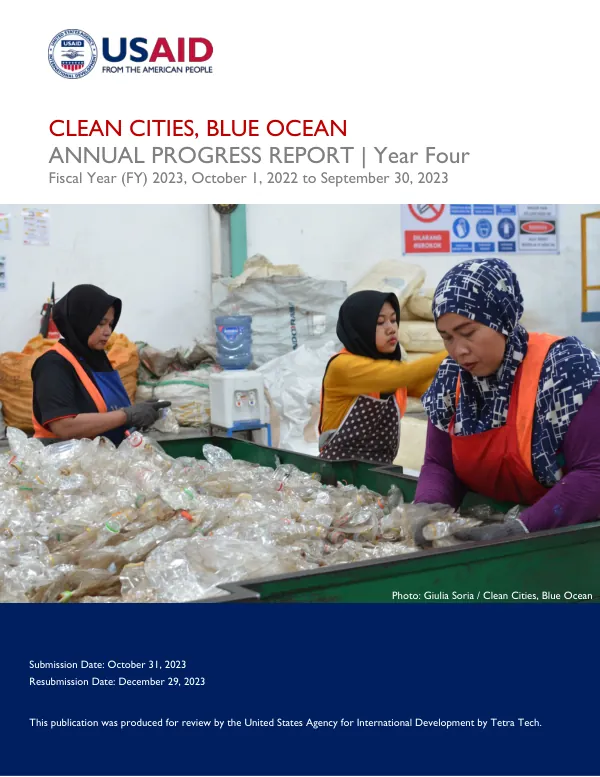
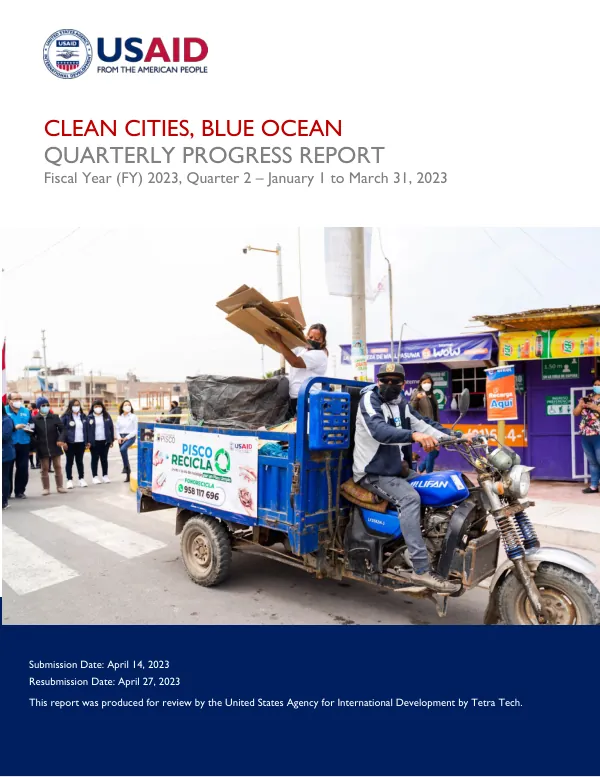
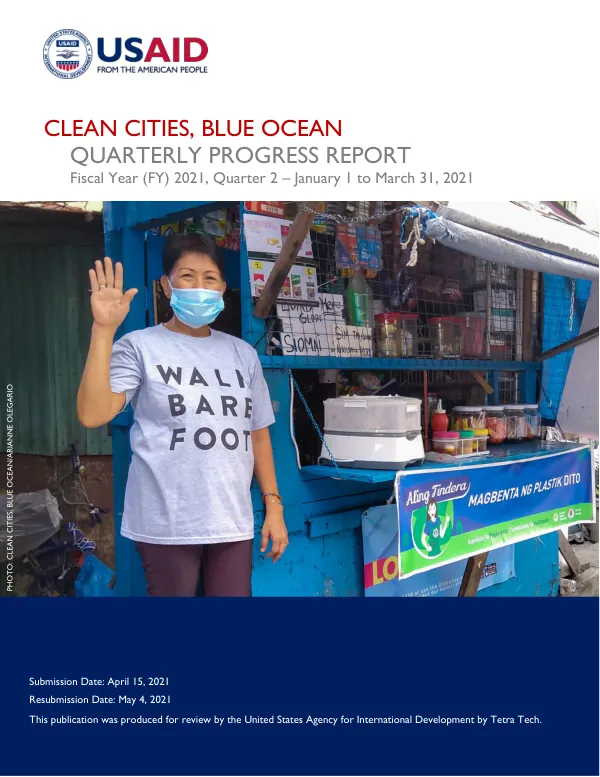
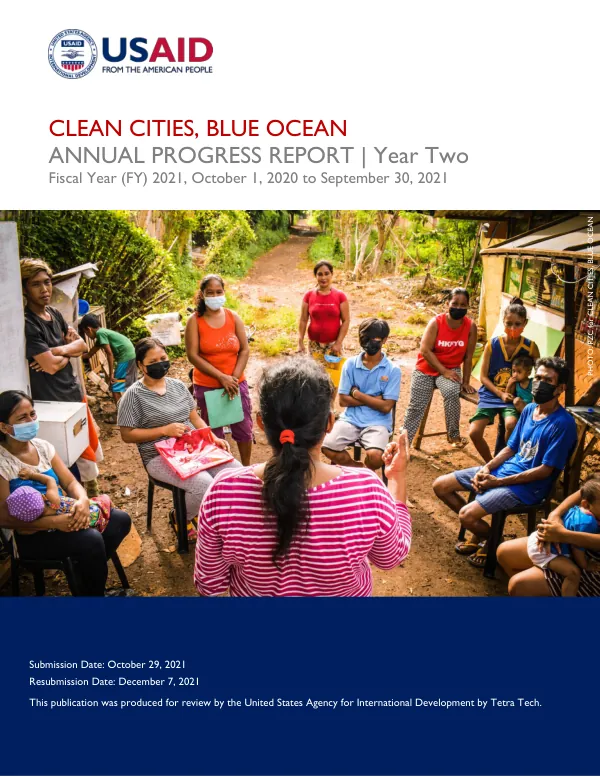
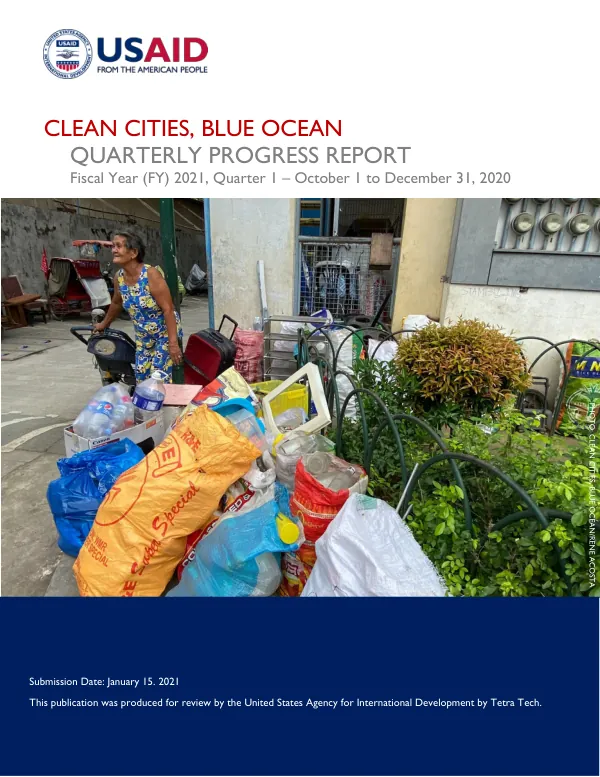
Clean Cities, Blue Ocean | FY21 Quarter One Progress Report
Clean Cities, Blue Ocean is a five-year program designed to respond to the global crisis of ocean plastics pollution.
2021 · 43 pages
Sign in to readA free account is required to download.
Abstract
The program was awarded to Tetra Tech on August 29, 2019, with a budget of $48 million. The program is the U.S. Agency for International Development's flagship program to target ocean plastics, mitigating their impact directly at their source in rapidly urbanizing areas throughout many low- and middle-income countries. The program's four main objectives are to promote reduction, reuse, and recycling (3Rs) practices and strengthen local and regional markets for recycled plastics; build social and behavior change (SBC) for 3Rs and sustainable solid waste management (SWM); increase capacity and effective governance of SWM and recycling systems; and support international fora, public-private partnerships (PPPs), and multi-stakeholder alliances. Additionally, the program works to address and improve the livelihoods of those working in the SWM and recycling sectors, including to further gender equity and advance women's economic empowerment. The program has a global focus, with a primary emphasis on Asia, Latin America, and the Caribbean. The program's implementation period spans from August 29, 2019, to August 27, 2024. Tetra Tech serves as the prime implementing partner, with subcontractors including The Manoff Group, International City/County Management Association, and Ocean Conservancy. During the first quarter of Fiscal Year 2021, which spans from October 1 to December 31, 2020, the program made significant progress in various focus areas. In Focus Area 1, the program built capacity of CCBO engagement sites in improved solid waste management, with a focus on 15 countries. The program also advanced technical objectives, including the development of a solid waste management plan for the Dominican Republic. In Focus Area 2, the program improved the enabling environment for 3Rs with a focus on CCBO engagement sites. The program also built social and behavior change for 3Rs and improved SWM, addressing livelihood challenges for waste workers. In Focus Area 4, the program supported gender equality and women's economic empowerment, with a focus on women-headed households. The program also made progress in global activities, including strengthening public-private partnerships and multi-stakeholder alliances. The program's management and operations were also reviewed, with a focus on contract management, procurement, organization, staffing, communications, and monitoring and evaluation. Implementation challenges and lessons learned were also identified during the first quarter of Fiscal Year 2021. The program plans to address these challenges and build on its progress in the next reporting period. The program's progress against its year two work plan is outlined in Annex I, while a financial overview is provided in Annex II.