FEDERATION MINISTRY OF ENERGY, MINING AND INDUSTRY
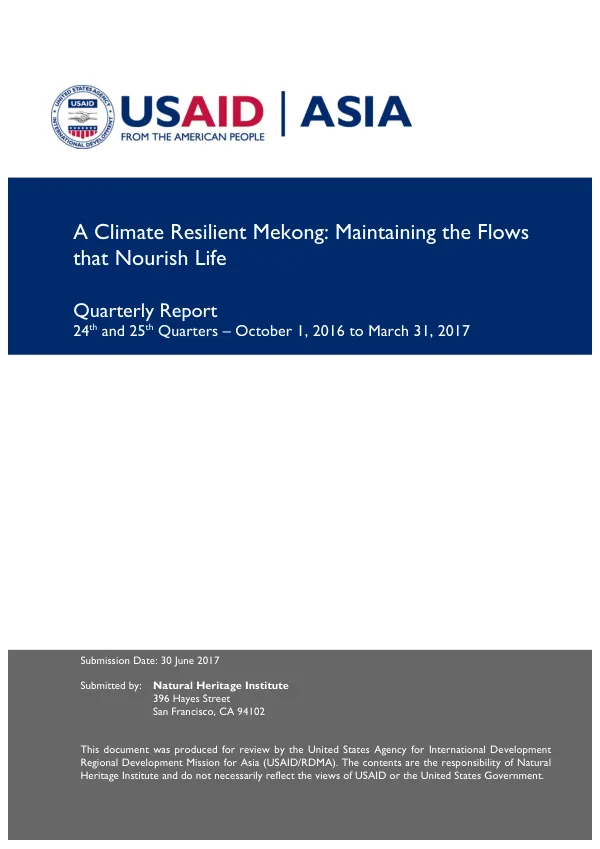
Climate Resilient Mekong: Maintaining the Flows that Nourish Life
The Climate Resilient Mekong: Maintaining the Flows that Nourish Life program aims to inform and influence the choices made by national governments, investors, and hydropower customers regarding the siting, design, and operation of hydropower dams throughout the Mekong River system.
2017 · 57 pages
Sign in to readA free account is required to download.
Abstract
The program seeks to maintain the flows of water, sediments, nutrients, and migratory fish to sustain the exceptional biological productivity of the river system. The ultimate goal is to transform the official dam development plans in light of the information developed by the Activity on alternatives that will maintain these flows. The program's main activity for the reporting period consisted of finalizing and packaging the results of the Sambor hydropower dam alternatives study for the Royal Government of Cambodia and beginning the feasibility study of a non-dam alternative to Sambor. Additionally, the program completed the review and concurrence by fisheries experts and relevant Lao Ministries on the findings and conclusions from the Xe Kong Fisheries Expert Workshop. The program also continued the study of alternative Xe Kong dam sites in other catchments above existing dams. The program's Monitoring and Evaluation (M&E) Plan has been revised and approved by USAID. The plan includes indicators such as the number of stakeholders with increased capacity to ascertain and implement sustainable hydropower options, the number of official hydropower development plans modified to embrace more benign alternatives, and the number of model runs, reports, and assessments on the environmental performance of the alternatives provided to decision-makers and made available to the public and press. As of the end of the reporting period, the program has achieved significant progress in increasing the capacity of stakeholders to implement sustainable hydropower options. The number of stakeholders with increased capacity has increased from 10 in the baseline year to 1045 in the reporting period. Additionally, the program has modified 38 official hydropower development plans to embrace more benign alternatives. The program has also produced 912 model runs, reports, and assessments on the environmental performance of the alternatives provided to decision-makers and made available to the public and press. The program has also made significant progress in increasing access to information on hydropower development alternatives for the Mekong River Basin. The number of users on the OneHub information sharing platform has increased from 50 in the baseline year to 912 in the reporting period. The program has also provided training and briefings to 676 stakeholders, including 359 women, on sustainable hydropower options. The program's success will be measured by the extent to which the best alternatives to ameliorate the potential adverse effects of hydropower dams are implemented by national governments. The program's ultimate goal is to transform the official dam development plans in light of the information developed by the Activity on alternatives that will maintain the flows of water, sediments, nutrients, and migratory fish to sustain the exceptional biological productivity of the river system.
Related documents