CORE INTERNATIONAL, INC.
Final Year 1 Work Plan_EEE for SEA Activity
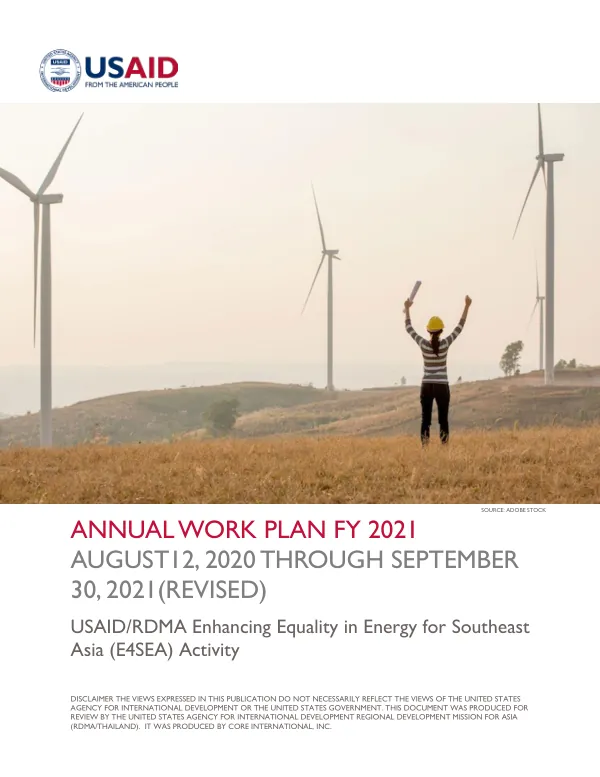
The Enhancing Equality in Energy for Southeast Asia (E4SEA) Activity is a USAID-funded initiative aimed at improving gender equality in the Southeast Asia energy sector workforce.
2021 · 63 pages
Sign in to readA free account is required to download.
Abstract
Launched in 2020, the Activity is part of the Asia Enhancing Development and Growth through Energy (Asia EDGE) initiative, a U.S. government-wide effort to promote sustainable and secure energy development in the Indo-Pacific region. The E4SEA Activity seeks to enhance USAID's energy outcomes by improving gender equality in the Southeast Asia energy sector workforce, which supports both a sustainable and secure energy sector and overall women's empowerment. The Activity's goal is to improve gender equality in the energy sector, which will be achieved by increasing diversity of the energy sector workforce, supporting inclusive workplace environments, and increasing promotion and leadership opportunities for women in the energy sector. The Activity will focus on seven developing Asian countries, referred to as the seven focus countries: Burma, Cambodia, Indonesia, Laos, the Philippines, Vietnam, and Thailand. The E4SEA Activity's Theory of Change is based on the assumption that increasing diversity of the energy sector workplace, creating inclusive workplace environments, and providing equitable promotion and leadership opportunities for women will lead to improved gender equality in the energy sector. To achieve its goal, the E4SEA Activity will implement five objectives, each with specific interventions and tasks. Objective 1 aims to identify core challenges to gender equality in the energy sector in Southeast Asia, while Objective 2 seeks to increase the number of women and girls pursuing careers in the energy sector. Objective 3 focuses on increasing the recruitment, retention, and promotion of women in the energy sector workplace, while Objective 4 aims to increase mentorship and leadership opportunities for women in the energy sector. Objective 5 seeks to enhance communication, collaboration, and learning among stakeholders. The E4SEA Activity will work closely with various stakeholders, including USAID activities/projects, host country governments, local governments, and other relevant stakeholders implementing projects in the same geographic locations. The Activity will also engage with the private sector, civil society organizations, and other key stakeholders to promote gender equality in the energy sector. The E4SEA Activity's annual work plan outlines the interventions and tasks to be completed during the first year of the contract, from August 12, 2020, to September 30, 2021. The work plan describes the logical sequence and timing of interventions and tasks within each objective and includes a detailed budget and narrative for implementation. The E4SEA Activity's Theory of Change is based on the assumption that increasing diversity of the energy sector workplace, creating inclusive workplace environments, and providing equitable promotion and leadership opportunities for women will lead to improved gender equality in the energy sector. The Activity's goal is to improve gender equality in the energy sector, which will be achieved by increasing diversity of the energy sector workforce, supporting inclusive workplace environments, and increasing promotion and leadership opportunities for women in the energy sector. The E4SEA Activity will focus on seven developing Asian countries, referred to as the seven focus countries: Burma, Cambodia, Indonesia, Laos, the Philippines, Vietnam, and Thailand. The Activity will work closely with various stakeholders, including USAID activities/projects, host country governments, local governments, and other relevant stakeholders implementing projects in the same geographic locations.
Related documents