USAID
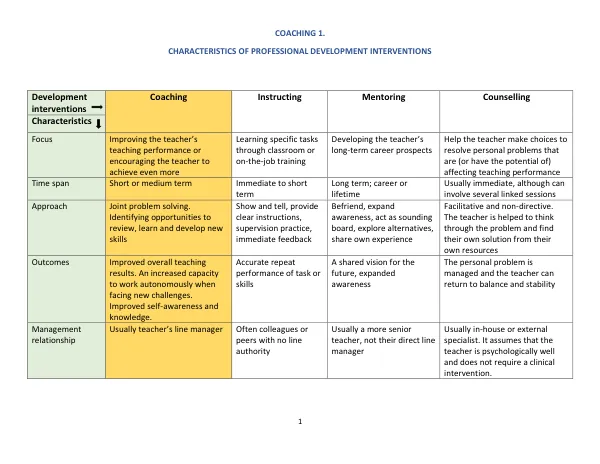
Coaching 1. Characteristics of Professional Development Interventions
Professional development interventions in schools are designed to improve teacher performance and encourage them to achieve even more.
2019 · 2 pages
Sign in to readA free account is required to download.
Abstract
Coaching is a key characteristic of these interventions, focusing on improving the teacher's teaching performance or encouraging them to achieve even more. This approach involves developing the teacher's long-term career prospects and helping them make choices to resolve personal problems that are affecting their teaching performance. Coaching is a non-directive form of development, focusing on improving performance and developing teachers' skills. Personal issues may be discussed, but the emphasis is on performance at work. Coaching activities have both school and teacher goals, and effective coaching is based on mutual respect and enhancing the capacity of the coachee in solving problems they face. Coaching usually follows a specific meeting structure to have a lasting effect and provides people with feedback on both their strengths and areas of improvement. The coaching process is designed to help improve someone else's day-to-day performance in their key duties, aiming to improve learning. It is a continuous process, demanding ongoing commitment from both parties to make it work. The aim of the process is to help the teacher perform their current role more effectively and realize their long-term potential. Coaching meetings involve defining together with the teacher those aspects of their work on which they want to be coached, making a contract that outlines objectives, mutual expectations, and the period they will work together. Coaching is typically led by a teacher's line manager, although it can also be led by colleagues or peers with no line authority. The coach usually has a more senior role, not directly managing the teacher, and may be an in-house or external specialist. Coaching assumes that the teacher is psychologically well and does not require a clinical intervention. Effective coaching requires good interpersonal skills and a non-directive approach, helping the teacher to think through problems and find their own solutions. The coaching route involves defining specific tasks on which the teacher wants to be coached, making a contract that outlines objectives and expectations, and scheduling regular meetings. The coach and teacher work together to identify opportunities to review, learn, and develop new skills, with the teacher taking ownership of their development. Coaching outcomes include improved overall teaching results, increased capacity to work autonomously, improved self-awareness and knowledge, and accurate repeat performance of tasks or skills.