DEVIDA
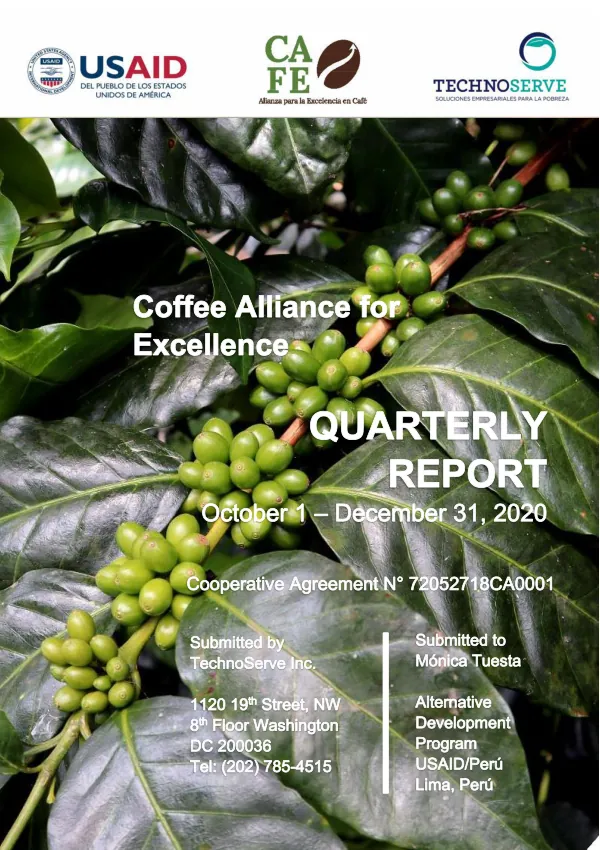
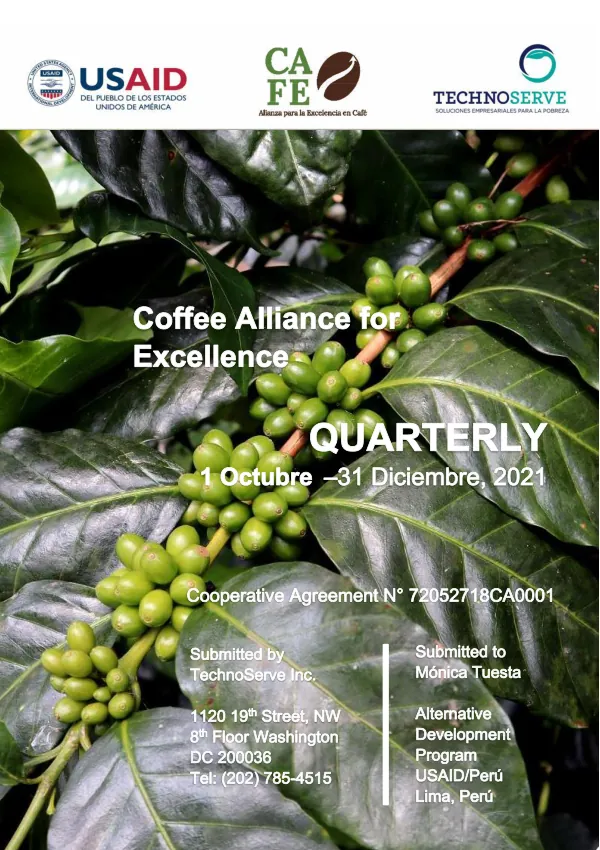
Coffee Alliance for Excellence: Cooperative Agreement N. 72052718CA00001
The Coffee Alliance for Excellence (CAFE) is a cooperative agreement between TechnoServe, Inc.
2020 · 48 pages
Sign in to readA free account is required to download.
Abstract
and USAID/Peru, with the goal of improving the quality and sustainability of coffee production in Peru. The project began on November 1, 2017, and is set to conclude on October 31, 2022, with a total budget of $11,225,896. During the quarter from October 1 to December 31, 2020, the project team focused on supporting the participation of assisted producers in national coffee competitions. These events provided producers with the opportunity to learn about the criteria used by professional coffee tasters and to improve the quality of their coffee. The project also resumed training in groups of 10 to 15 producers every month in preparation for the 2022 harvest year. Under the component of good sustainable production practices, assistance was provided to 4,932 individuals, including 42% women, through individual visits and group training. A total of 108 group trainings were held, with the assistance of 676 people, of which 24% were women. This was due to the pandemic, which limited group sizes to no more than 15 people. In compliance with the Environmental Mitigation and Monitoring Plan, 1,248 environmental measures were implemented, mainly in the management and safe use of pesticides, implementation of compost bins, and treatment of wastewater from coffee. In the market access component, 9,606 MT of coffee were sold at the end of calendar year 2021, generating sales of $27.55 million. The price of certified coffee was 12% higher than conventional coffee, and the price of specialty coffee was 40% higher than conventional. Comparing the price paid by intermediaries, it was 16% lower than the prices paid by exporters and cooperatives. The project also worked with producer organizations to participate in the carbon footprint measurement pilot with the Pontificia Universidad Católica del Perú, which will allow them to access new markets. In the access to financing component, $3,443,973 were disbursed through 397 financial operations linking producers and eight organizations to formal financing to carry out coffee harvesting activities. Of this amount, 20% was disbursed to individual producers, 58% to organizations, and the rest through mobile money and the Unicas. In the income diversification component, technical assistance continued to be provided to the 17 ventures, generating sales of $51,328. Also, in this component, 3,747 producers were trained in the agronomic management of other crops grown on their farms, including corn, bananas, and beans, of which 41% were women. The project continued to mainstream the gender approach in all its activities, with 2,522 family counseling visits carried out, sensitizing 3,920 members, both men and women. The visit to the panel families of the project was completed, whose objective was to evaluate the impacts generated within the family dynamics after the gender counseling. The project team was able to provide technical assistance through individual training visits, as public health restrictions due to the COVID-19 pandemic eased in most places. The meeting of the Executive Committee of the CAFE Alliance was held in October, with the participation of officials from USAID, Jacobs Douwe Egberts (JDE), Perales Huancaruna SAC (PERHUSA), and TechnoServe. The main results achieved in the quarter from July to September 2021 were presented, which were recognized by the members of the committee despite the limitations due to the pandemic. The formal response from USAID to the letter TNS-011/21 sent in March 2021, where TechnoServe requested USAID to modify ten indicators under which the progress of the project will be measured, is still pending. However, as a result of the time elapsed, it was proposed to USAID to update the indicators proposed to be modified due to the good performance of the project. In Huánuco, the work coordinated with DEVIDA and the member institutions of the Regional Technical Table for Coffee continues. Support provided to coffee farmers includes the preparation of samples for cupping to determine quality scores; preparation of coffee samples for several buyer/grower cupping events, including the National Phase by the Cup of Excellence contest and the Fair of Specialty Coffee (Ficafé 2021). In Monzón, technical assistance continued to be provided, especially to the producers of the Post-Eradication Plan. In this quarter, the evaluation and verification survey of the progress in the adoption of good agricultural and environmental practices, as well as in family income, was carried out. The results of this evaluation will be available in the first month of 2022. This work will make it possible to define areas of work to be reinforced for the last year of the project. Finally, in the month of October, the Global Coffee Director of TechnoServe, Paul Stewart, visited the Moyobamba area, where he verified the progress of the project and observed
Related documents