DEVIDA
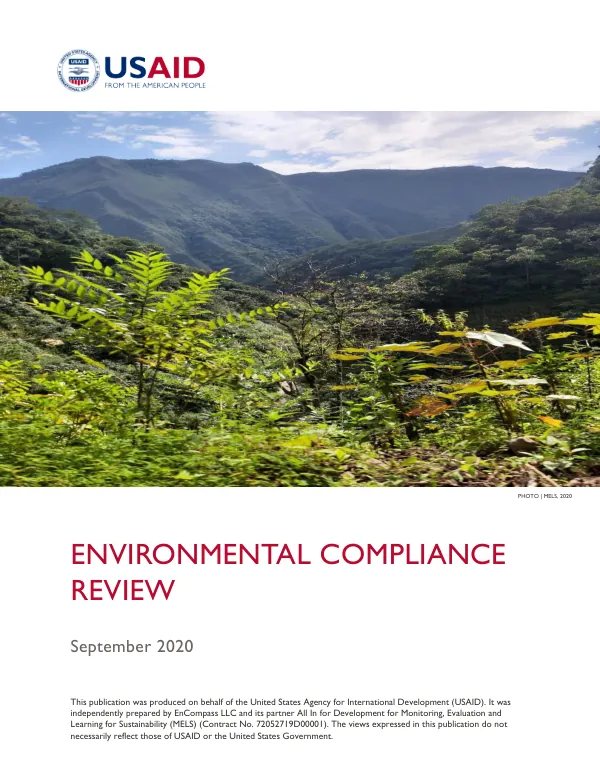
Environmental Compliance Review
The Alternative Development Program implemented by the United States Agency for International Development (USAID) in the regions of Huánuco, Ucayali, and San Martín includes several projects, including the Peru Cacao Alliance, Coffee Alliance for Excellence, and Alliance for Digital and Financial Services - CR3CE.
2020 · 155 pages
Sign in to readA free account is required to download.
Abstract
These projects are implemented by various partners, including Palladium, TechnoServe, and CEDRO, and are subject to environmental mitigation actions through annual Environmental Monitoring and Mitigation Plans (EMMP) and internal Environmental Compliance Review (ECR) studies. The EMMP of the CR3CE Alliance proposes actions aimed at mitigating potential environmental impacts on the Yachay project, including the installation, reinforcement, and maintenance of lifting towers, installation and maintenance of ground wells, and replacement of electronic equipment. The EMMP of the Coffee Alliance proposes mitigation actions to prevent possible environmental impacts resulting from coffee cultivation, such as the use of agrochemicals and proper waste management. The study reviewed the level of compliance with environmental mitigation measures contained in the EMMPs of the three USAID projects: the Peru Cacao Alliance - Phase II, the Coffee Alliance for Excellence, and the Alliance for Digital and Financial Services (CR3CE Alliance). The study applied quantitative and qualitative methods to obtain answers to the different questions raised. Results show that the levels of compliance with environmental measures are different for each project and are influenced by various institutional, economic, cultural, and contextual factors. The study found that the CR3CE Alliance project had a high level of compliance with environmental measures, with 90% of the proposed actions being implemented. In contrast, the Coffee Alliance project had a lower level of compliance, with only 60% of the proposed actions being implemented. The Peru Cacao Alliance - Phase II project had a moderate level of compliance, with 70% of the proposed actions being implemented. The study identified several factors that influenced compliance with environmental measures, including the level of institutional capacity, the availability of resources, and the level of community engagement. The study also found that the level of compliance with environmental measures varied across different regions and communities. Based on the findings of the study, recommendations were provided for each project, aimed at improving compliance with environmental measures. These recommendations included strengthening institutional capacity, increasing the availability of resources, and enhancing community engagement. The study also recommended that USAID and the Peruvian Government work together to develop a comprehensive environmental management plan for the region. The study's findings and recommendations are intended to support the implementation of environmental mitigation measures and to promote sustainable development in the regions of Huánuco, Ucayali, and San Martín. The study's results are expected to inform the development of future environmental management plans and to contribute to the achievement of the USAID's Alternative Development Program goals.
Related documents