USAID DEC
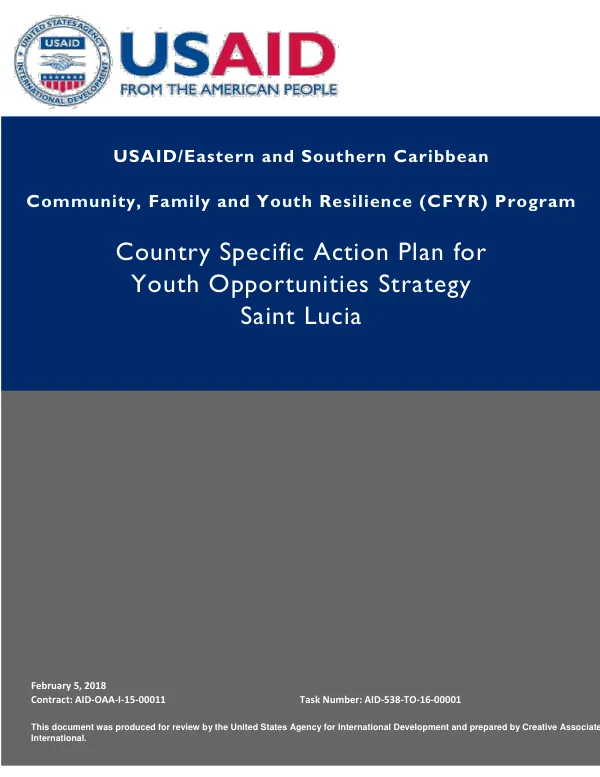
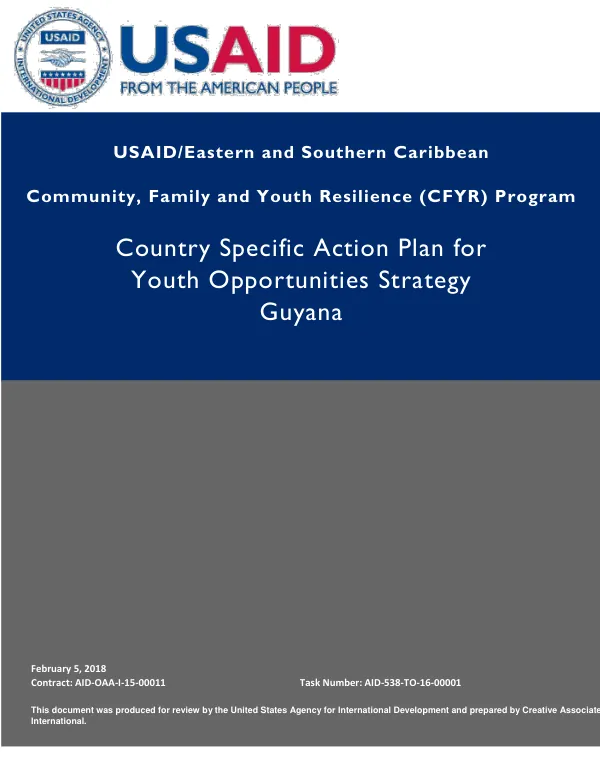
Community, Family and Youth Resilience Program: Country Specific Action Plan – Guyana
Sign inBANK FOR WEST AFRICAN DEVELOPMENT
Community, Family and Youth Resilience Program: Country Specific Action Plan – Guyana
The Community, Family and Youth Resilience (CFYR) Program operates in Guyana as part of the Youth Empowerment Services (YES) Project, which aims to reduce youth involvement in violence in the Eastern and Southern Caribbean.
2018 · 22 pages
Sign in to readA free account is required to download.
Abstract
The CFYR program focuses on improving youth resiliency and reducing youth violence in three countries, including Guyana. At-risk youth in Guyana face multiple constraints accessing training, jobs, and entrepreneurial opportunities due to a disconnect between available skills training and labor needs of the private sector. The CFYR program utilizes a public health model to identify causes and risk factors for violent behavior, assess the risk that youth have for engaging in violent behavior, and design interventions to disrupt those risk factors. Interventions are classified into three categories: primary, secondary, and tertiary, which align target services and interventions to prevent an increase in risk behaviors among the youth served. The program matches youth with interventions based on their level of risk and works to build positive alternatives to violence for young people. The Country Specific Action Plan serves as the primary implementation guide for the Youth Opportunities Strategy (YOS) and the CFYR workforce development component activities. The plan outlines the private sector engagement strategy, the workforce development implementation model, and implementation modalities and activities. The goal is to provide at-risk youth with skills that respond to the specific and unique requirements of industry, enabling them to emerge as superior candidates in the eyes of potential employers. The CFYR program aims to improve access to economic opportunities for at-risk youth, including employment and access to requisite demand-driven vocational training. The program's approach will enable trainees to emerge as superior candidates in the eyes of potential employers, supporting sustainability of the workforce development approach beyond the life of CFYR. The program's implementation model includes a private sector demand assessment, grantee and sub-contractor implementation modalities, a technical consultative network for curriculum and training development, and streamlined communication with private sector employers. The program's private sector engagement strategy focuses on the value added of at-risk youth for private sector employers, challenges faced by private sector employers, and the benefits of engaging with at-risk youth. The strategy aims to increase private sector participation in workforce development initiatives and provide at-risk youth with skills that respond to the specific and unique requirements of industry. The Target Table included at the conclusion of the plan identifies sectors of highest employment, private sector employers, and technical and soft skills desired by the included private sector employers. The table provides a comprehensive overview of the labor market in Guyana and the skills required by private sector employers, enabling the CFYR program to tailor its workforce development initiatives to meet the specific needs of the labor market. The CFYR program's workforce development component activities are designed to provide at-risk youth with skills that respond to the specific and unique requirements of industry. The program's approach will enable trainees to emerge as superior candidates in the eyes of potential employers, supporting sustainability of the workforce development approach beyond the life of CFYR. The program's implementation model and private sector engagement strategy are designed to increase private sector participation in workforce development initiatives and provide at-risk youth with skills that respond to the specific and unique requirements of industry. The CFYR program's Country Specific Action Plan for Guyana outlines the implementation of the YOS objectives and recommendations. The plan consists of four sections: Section I: Youth Opportunities Strategy (YOS) Objectives and Recommendations, Section II: Private Sector Engagement Strategy, Section III: Implementation Model, and Section IV: Target Table. The plan is an integral part of the larger CFYR USAID approved Work Plan and Performance Management Plan (PMP).