CREATIVE ASSOCIATES INTERNATIONAL INC.
USAID: El Salvador Crime and Violence Prevention Project (CVPP)
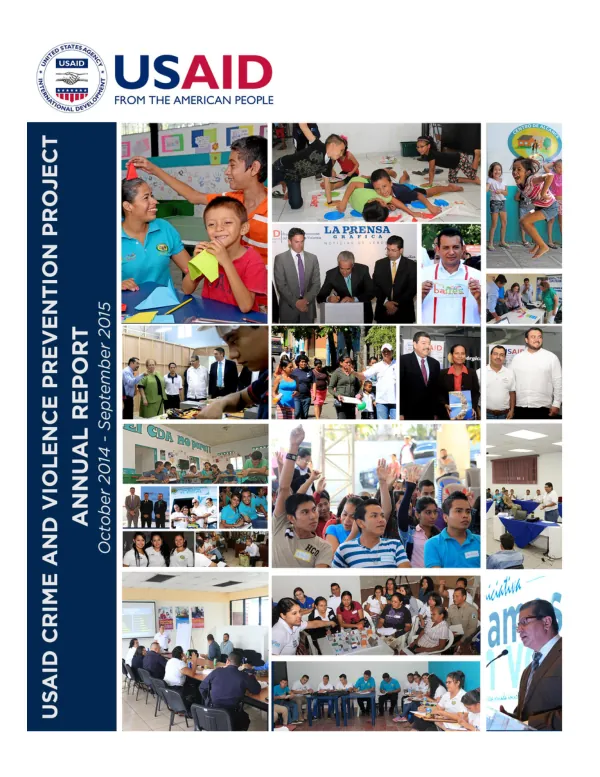
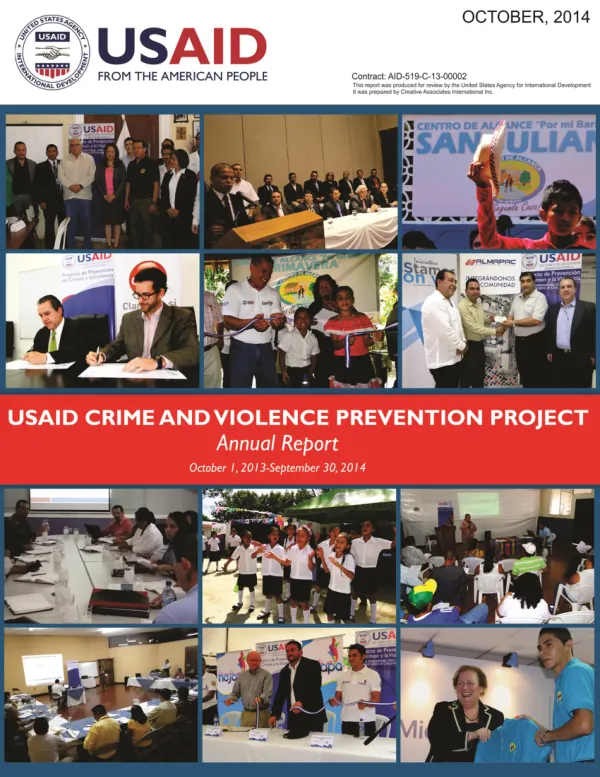
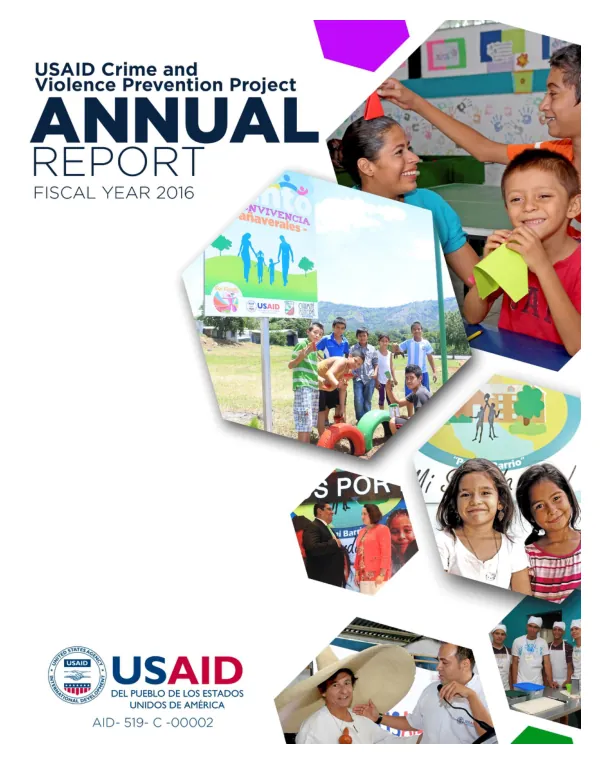
The USAID Crime and Violence Prevention Project (CVPP) is a five-year project that aims to increase citizen safety in El Salvador by working with the Ministry of Justice and Public Security, mayors, and community representatives across 56 high and medium-risk municipalities.
2016 · 218 pages
Sign in to readA free account is required to download.
Abstract
The project is designed to build ownership of crime and violence prevention at the community level, with a focus on addressing the root causes of crime and violence. The project operates across three components: Component 1, which aims to increase the Government of El Salvador's capacity to prevent violence and crime on a national scale; Component 2, which focuses on municipal-led, community-based crime and violence prevention; and Component 3, which explores innovative crime and violence prevention opportunities. Component 1 involves strengthening the capacity of the Ministry of Justice and Public Security, as well as municipal and community institutions, to address crime and violence prevention. This includes institutional strengthening of PRE-PAZ and its personnel, as well as the creation and strengthening of municipal committees and municipal crime and violence prevention plans. Component 2 focuses on municipal-led, community-based crime and violence prevention, with a focus on 13 municipalities. This component includes the selection of municipalities, establishment of municipal crime and violence prevention committees, development of municipal leaders' and community members' capacity for prevention, planning, and analysis, and the development of youth values and identity. Component 3 explores innovative crime and violence prevention opportunities, including the development of methodology for establishing and strengthening municipal crime prevention observatories, as well as the interconnection of these observatories with a national system. Throughout the project, the project has continued to implement programming across medium and high-risk municipalities, targeting pockets of youth in high-risk communities. The project has also strengthened institutional capacity at the central government, municipal, and community levels by working with public officials, mayors, municipal councils, and community organizations. The project has also implemented secondary pilot programming across Component 2 municipalities, which will soon become programming tools. Additionally, the project has developed more than 40 crime and violence prevention tools, which are being used across all intervention areas. The project has achieved significant results, including a 27% increase in household income among program participants compared to the control group, as well as improved food security across all target communities. The project has also seen a 38% adoption rate of prevention practices among women-headed households. The project has also established public-private alliances in selected municipalities, which have contributed to the development of infrastructure for prevention situational awareness. Furthermore, the project has strengthened vocational skills and employment opportunities for youth, as well as developed infrastructure for prevention situational awareness. The project has also implemented a monitoring and evaluation plan, which has allowed for the tracking of progress and the identification of areas for improvement. The project has also established a communications plan, which has facilitated the dissemination of information to stakeholders and the promotion of the project's activities. Overall, the USAID Crime and Violence Prevention Project (CVPP) has made significant progress in addressing crime and violence prevention in El Salvador, with a focus on building ownership and capacity at the community level. The project's achievements demonstrate the importance of a comprehensive approach to addressing crime and violence, and the need for continued support and resources to sustain and scale up these efforts.