USAID DEC
Conservacolombia: A Stimulus Package for Subnational Protected Area Establishment in Colombia
Sign inTNC
Conservacolombia: A Stimulus Package for Subnational Protected Area Establishment in Colombia
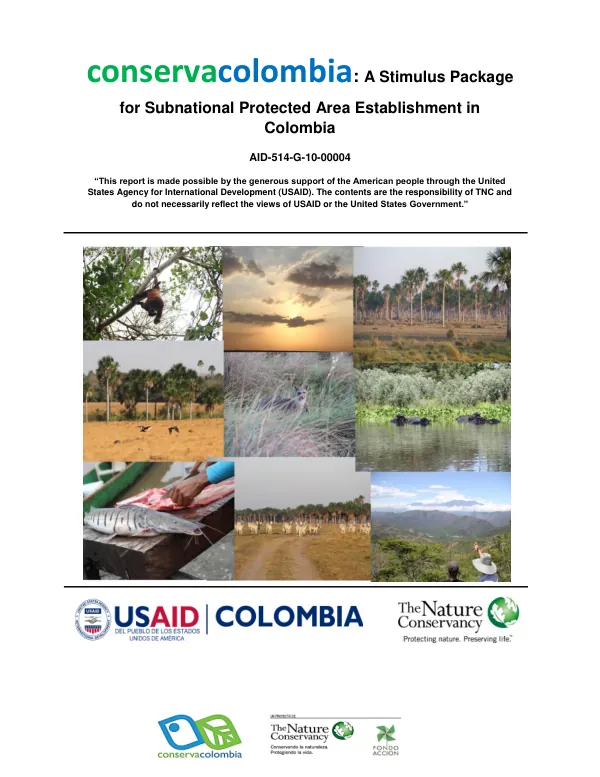
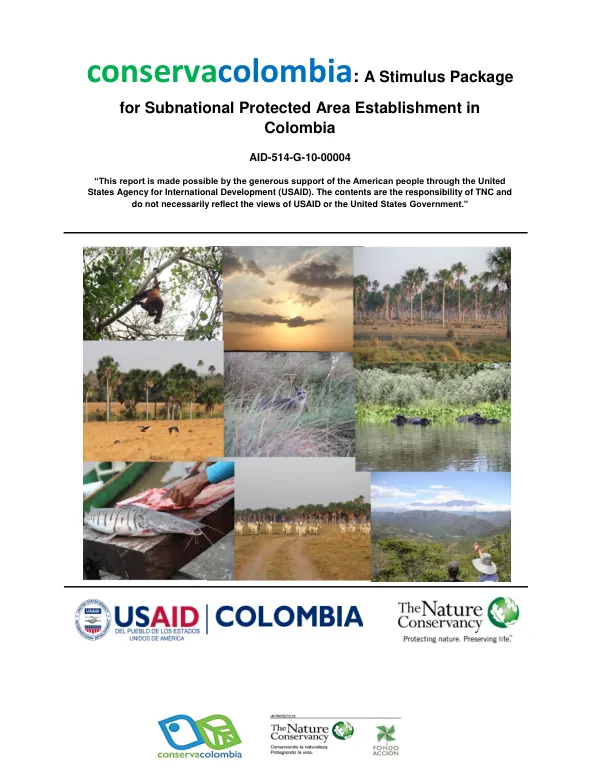
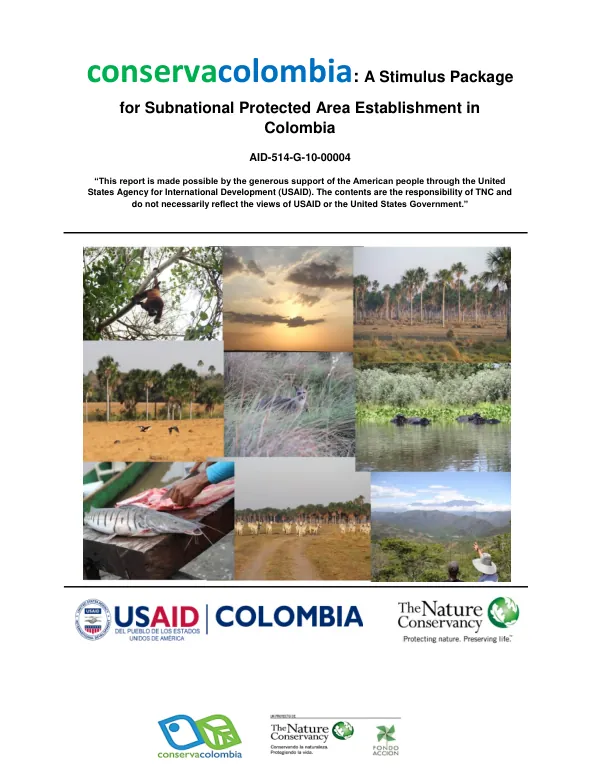
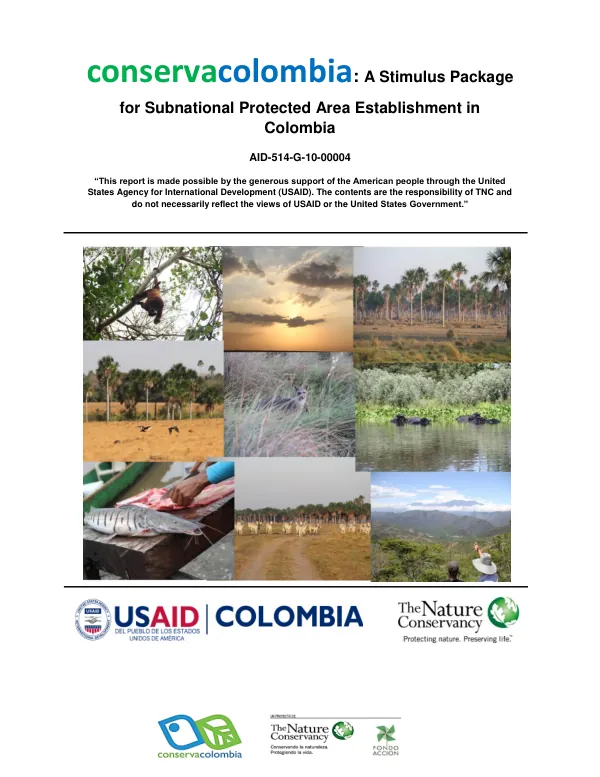
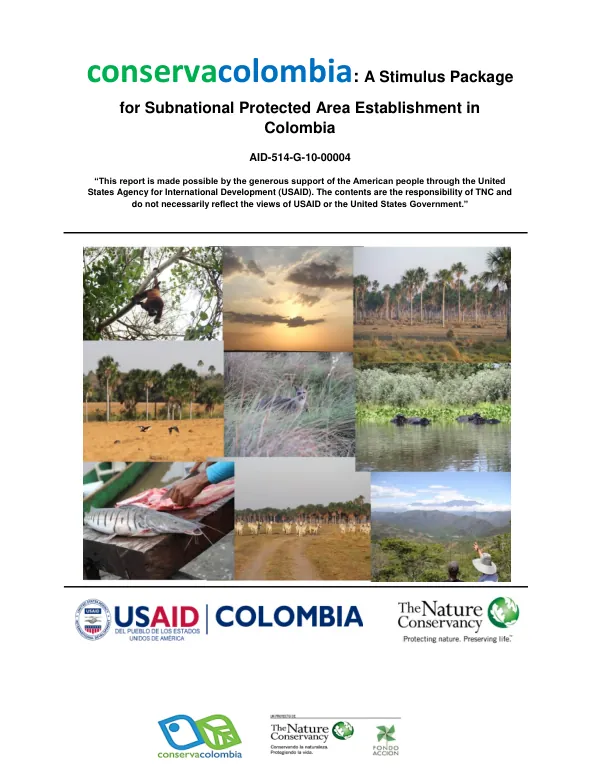
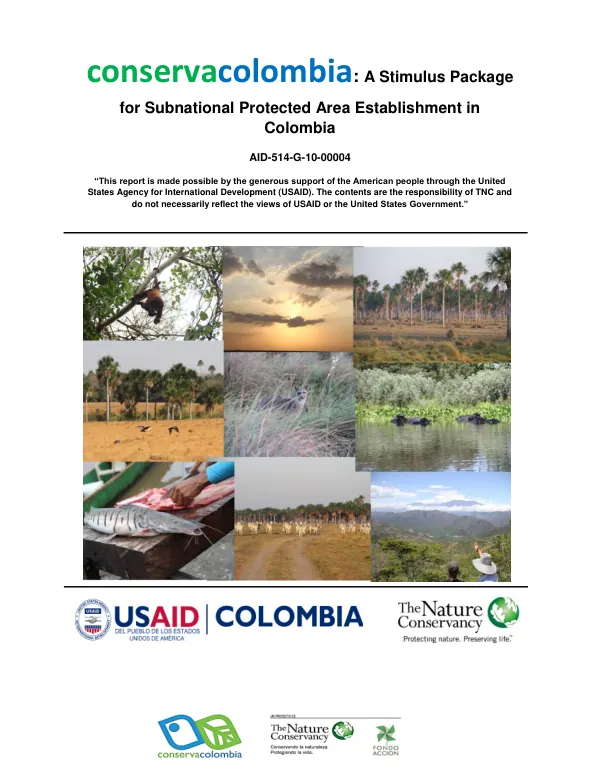
The study area, Reserva Cachicamo, is located in the Gran Paisaje de Altillanura del Vichada, a region characterized by a mix of savannas and forests.
2014 · 119 pages
Sign in to readA free account is required to download.
Abstract
The area is home to various ecosystems, including bosques de galería (gallery forests), sabanas altas (high savannas), and sabanas bajas (low savannas). The study aimed to inventory the ecosystems, flora, avifauna, and ictiofauna present in the area. A total of 376 species of plants were found, distributed across 247 genera and 87 families. The most diverse ecosystem was the bosque de galería, followed by the sabana and morichal ecosystems. The Fabaceae, Poaceae, Rubiaceae, and Melastomataceae families were among the most represented. The avifauna consisted of 130 species, with 75 found in the bosques de galería, 32 in open areas, and 23 in canyons and the river. The ictiofauna comprised 111 species, with 57% found in the Río Gavilán, 32% in the caños aldeanos, and 11% in the laguna. The study found that the Reserva Cachicamo presents a good state of conservation, with a considerable diversity of flora and fauna considering its surface area. The data suggest that the site is important for the conservation of flora and fauna in the region and merits registration as a Reserva Natural de la Sociedad Civil (RNSC). The study highlights the importance of understanding the composition of these ecosystems to plan their management. The region's sabanas are subject to intense human intervention, including livestock grazing, arroz, maíz, soya cultivation, and hydrocarbon extraction. Additionally, the introduction of non-native species has increased in recent years, making it essential to study their floristic composition and compare it with other savannas in the Altillanura region. The importance of these ecosystems is reflected in their biological, ecological, cultural, and economic aspects, but they are often overlooked in favor of agricultural and livestock interests. The study emphasizes the need to conserve the region's ecosystems, which provide essential services such as nutrient cycling, water regulation, erosion control, productivity, and CO2 retention. The systems ribereños, including bosques de galería, are areas of transition between terrestrial and aquatic environments, influenced by continental waters and extending from the riverbanks to the limits of terrestrial communities. These systems establish interactions between aquatic and terrestrial components of the landscape, making them crucial for understanding the functioning of these ecosystems. The study concludes that the Reserva Cachicamo is an important site for the conservation of flora and fauna in the region, and its registration as a RNSC is warranted. The findings highlight the need to conserve the region's ecosystems, which provide essential services and are essential to the culture and way of life of the llanero people.