WORLD WILDLIFE FUND INTERNATIONAL
Conservation and Adaptation in Asia’s High Mountain Landscapes and Communities
Conservation and Adaptation in Asia's High Mountain Landscapes and Communities Adapting to a changing world.
2012 · 4 pages
Sign in to readA free account is required to download.
Abstract
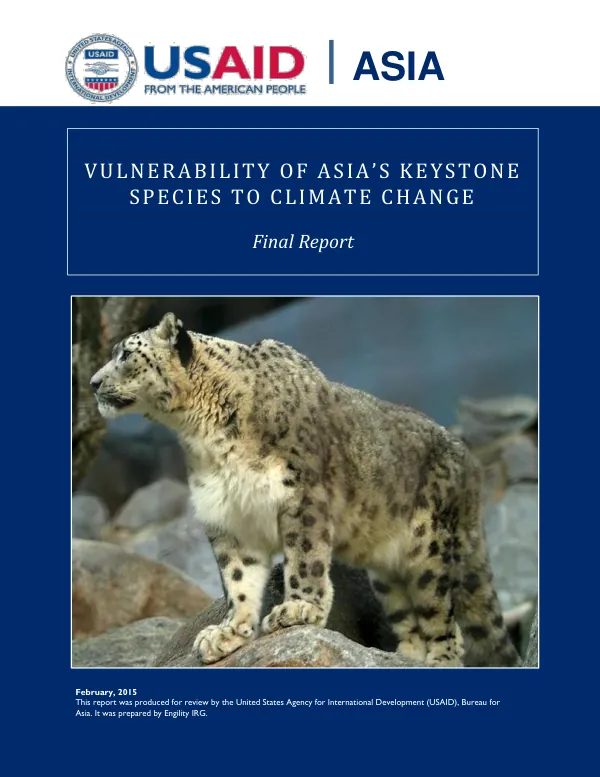
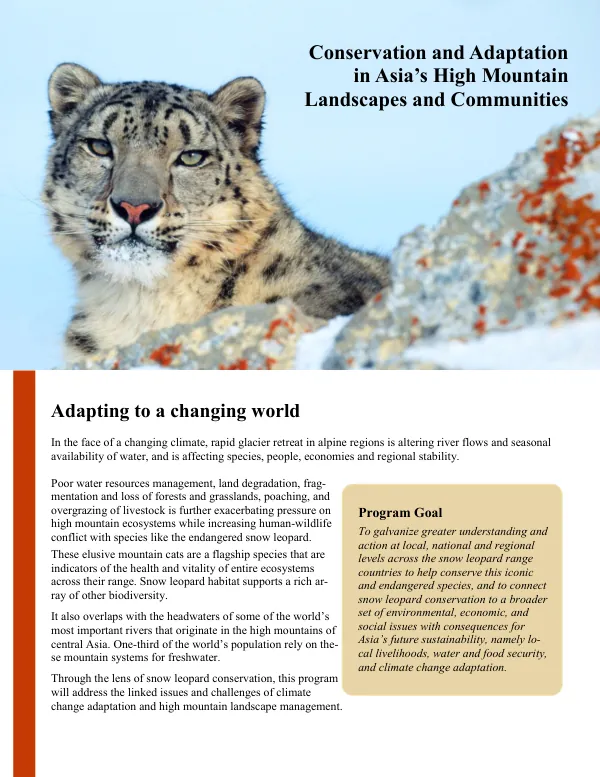
In the face of a changing climate, rapid glacier retreat in alpine regions is altering river flows and seasonal availability of water, and is affecting species, people, economies, and regional stability. Poor water resources management, land degradation, fragmentation, and loss of forests and grasslands, poaching, and overgrazing of livestock is further exacerbating pressure on high mountain ecosystems while increasing human-wildlife conflict with species like the endangered snow leopard. These elusive mountain cats are a flagship species that are indicators of the health and vitality of entire ecosystems across their range. Snow leopard habitat supports a rich array of other biodiversity. It also overlaps with the headwaters of some of the world's most important rivers that originate in the high mountains of central Asia. One-third of the world's population rely on these mountain systems for freshwater. Through the lens of snow leopard conservation, this program will address the linked issues and challenges of climate change adaptation and high mountain landscape management. The program's chief goal is to galvanize greater understanding and action at local, national, and regional levels across the snow leopard range countries to help conserve this iconic and endangered species, and to connect snow leopard conservation to a broader set of environmental, economic, and social issues with consequences for Asia's future sustainability, namely local livelihoods, water and food security, and climate change adaptation. The program will take stock of climate vulnerabilities across the high mountain landscapes of Asia to identify regional threats and opportunities for addressing climate adaptation and water resource needs. Implementation will focus on six countries, with priority landscapes integrating snow leopard conservation with climate-smart sustainable development, local governance, and citizen science capacity, and incentives for adaptation to climate change. A strong emphasis will be placed on sharing lessons with small-grants investments in other range countries. Project activities at the site-level will help improve livelihoods and motivate local communities to engage in both conservation of snow leopards and prey species as well as sustainable management of high mountain landscapes. This will strengthen community institutions and mechanisms related to management, equitable benefit sharing, and access to natural resources. Empowering indigenous, poor, marginalized, and vulnerable communities, especially women, will be an important aspect of the work. The program will support alternative livelihoods to reduce dependence on natural resources, which will include ecotourism development. Activities will be based on existing snow leopard strategies, including implementing adaptation actions identified by climate change vulnerability assessments, promoting better agricultural and grazing practices, conducting snow leopard-human conflict mitigation programs, and engaging local communities in species conservation activities through conservation education and training.
Related documents