USAID
Vulnerability of Asia’s Keystone Species to Climate Change: Final Report
Climate change is having a profound impact on the ecosystems of high mountain Asia, particularly on keystone species that play a crucial role in maintaining the balance of these ecosystems.
2015 · 59 pages
Sign in to readA free account is required to download.
Abstract
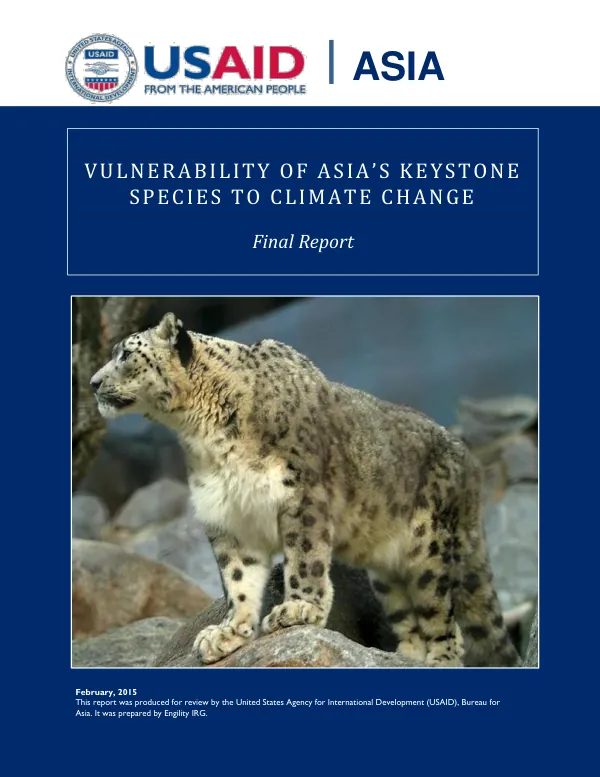
Keystone species, such as the snow leopard, Asian elephant, and Amur tiger, are facing increased vulnerability due to climate change, which is exacerbating human management of natural resources and sensitive landscapes. The Hindu Kush Himalayas, a mountainous sub-region of South Asia, is particularly vulnerable to climate change. Rising temperatures and changing precipitation patterns are altering the distribution and abundance of keystone species, leading to a decline in ecosystem services such as water filtration, soil conservation, and carbon sequestration. The snow leopard, for example, is facing habitat loss and fragmentation due to climate change, which is reducing its prey base and increasing human-leopard conflict. In Mongolia, permafrost melt is leading to biodiversity loss, as thawing permafrost is releasing greenhouse gases and altering the distribution of plant and animal species. The Asian elephant, a keystone species in this region, is facing habitat loss and fragmentation due to climate change, which is reducing its access to food and water. The Amur tiger, a subspecies of tiger found in the Russian Far East, is also facing increased vulnerability due to climate change. Habitat loss and fragmentation, as well as human-tiger conflict, are major threats to the survival of this species. Climate change is also altering the prey base of the Amur tiger, making it more difficult for the species to survive. In addition to these examples, the report highlights the importance of local communities in climate change adaptation planning and implementation. Local people have a good understanding of the changes that their environment has been undergoing and are essential for adaptation and mitigation planning. Community participation in monitoring changes in the environment and development of alternative livelihoods and changes in behaviors may be critically important to reducing pressures on vulnerable species, including keystone species. The report also emphasizes the role of national and sub-national government policy and regulation in the development and implementation of successful adaptation plans. Sound environment and natural resource management policies and regulations provide environmental and socio-economic benefits now and provide additional insurance against the likely damage to vulnerable ecosystems from climate change in the near and medium term future. Overall, the report highlights the urgent need for larger-scale climate change adaptation and mitigation action plans, particularly in high mountain Asia. The report emphasizes the importance of working at a landscape or multiple landscape level and cooperating across national borders to address the impacts of climate change on keystone species and ecosystems.