USAID DEC
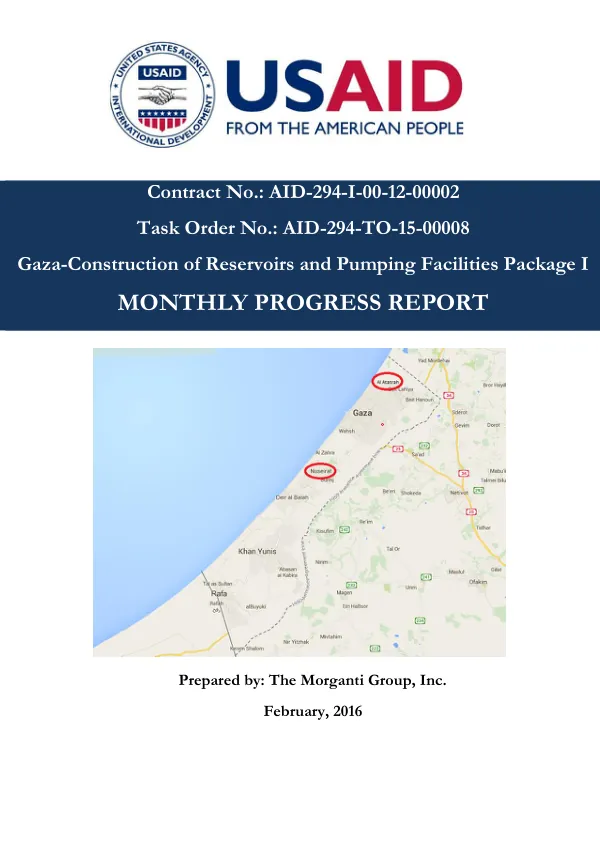
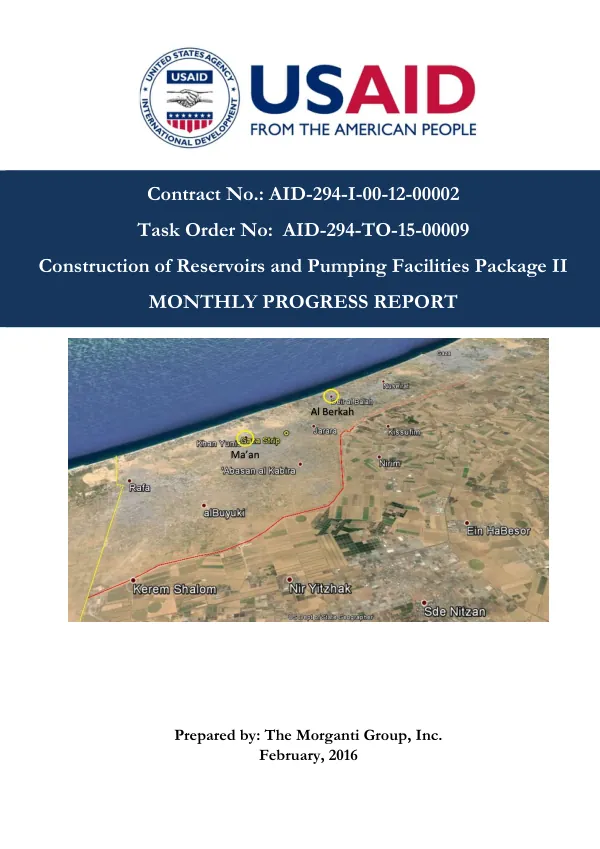
Construction Monthly Progress Report – February, 2016: Construction of Reservoirs and Pumping Facilities Package II
Sign inTHE MORGANTIE GROUP, INC.
Construction Monthly Progress Report – February, 2016: Construction of Reservoirs and Pumping Facilities Package II
The Construction of Reservoirs and Pumping Facilities Package II project is a key component of the USAID Mission Infrastructure Needs Program II (INP II) in Gaza.
2016 · 122 pages
Sign in to readA free account is required to download.
Abstract
The project aims to improve the distribution of clean drinking water and increase access to this essential service for the Palestinian population. The project's objective is to construct two new water reservoirs, two new booster pump stations, and their associated supply and distribution pipelines. The project's scope of work includes the construction of two new water reservoirs with a combined capacity of 10,000 cubic meters, two new booster pump stations, and the associated supply and distribution pipelines. The project also involves the rehabilitation of existing infrastructure, including the installation of new pipes and fittings. The construction of the reservoirs and pump stations will enable the Palestinian Water Authority (PWA) to increase the distribution of clean drinking water to the population, particularly in areas where access to this service is limited. The project's safety record is a top priority, with a focus on ensuring the health and safety of workers, contractors, and the general public. The project team has implemented a comprehensive safety plan, which includes regular training sessions, safety inspections, and emergency response procedures. The project also adheres to international safety standards, including those set by the Occupational Safety and Health Administration (OSHA). Environmental compliance is another critical aspect of the project, with a focus on minimizing the project's impact on the environment. The project team has implemented measures to prevent pollution, protect natural habitats, and conserve water resources. The project also involves the rehabilitation of existing infrastructure, which will help to reduce the project's environmental footprint. The project's community outreach program is designed to engage with local communities and stakeholders, providing them with information about the project's progress and benefits. The project team has established a community liaison office, which serves as a focal point for community concerns and feedback. The project also involves the training of local workers and contractors, which will help to build capacity and promote economic development in the region. The project's risk management plan is designed to identify and mitigate potential risks, including those related to safety, environmental impact, and community relations. The project team has established a risk register, which tracks and monitors potential risks, and implements measures to mitigate their impact. The project also involves regular monitoring and evaluation, which helps to identify areas for improvement and ensure that the project is on track to meet its objectives. The project's gender plan is designed to promote gender equality and empower women in the construction industry. The project team has established a gender plan, which includes measures to increase the participation of women in the construction workforce, provide training and capacity-building programs for women, and promote women's leadership and empowerment. The project's coordination and meetings plan is designed to ensure effective communication and collaboration among stakeholders, including the project team, contractors, and local authorities. The project team has established a coordination plan, which includes regular meetings, site visits, and communication protocols to ensure that all stakeholders are informed and engaged. The project's site visitors plan is designed to ensure that all site visitors, including contractors, engineers, and local authorities, are aware of the project's safety protocols and procedures. The project team has established a site visitors plan, which includes regular briefings, site tours, and safety training sessions to ensure that all site visitors are aware of the project's safety requirements. The project's progress and scheduling plan is designed to ensure that the project is completed on time and within budget. The project team has established a project schedule, which includes milestones, deadlines, and performance metrics to ensure that the project is on track to meet its objectives. The project also involves regular monitoring and evaluation, which helps to identify areas for improvement and ensure that the project is on track to meet its objectives. The project's indicators plan is designed to measure the project's progress and impact. The project team has established a set of indicators, which includes metrics related to safety, environmental impact, community relations, and project performance. The project also involves regular monitoring and evaluation, which helps to identify areas for improvement and ensure that the project is on track to meet its objectives. The project's working and non-working days plan is designed to ensure that the project team and contractors are aware of the project's working hours and days. The project team has established a working and non-working days plan, which includes regular briefings and communication protocols to ensure that all stakeholders are informed and engaged. The project's material and equipment delivery plan is designed to ensure that all materials and equipment are delivered to the site on time and in good condition. The project team has established a material and equipment delivery plan, which includes regular monitoring and evaluation to ensure that all materials and equipment are delivered as required. The project's site memos plan is designed to ensure that all site memos, including safety notices and project updates, are communicated to all stakeholders. The project team has established a site memos plan, which includes regular briefings and communication protocols to ensure that all stakeholders are informed and engaged. The project's procurement plan is designed to ensure that all procurement activities are conducted in accordance
Related documents