USAID DEC
Construction Monthly Progress Report for Construction of Reservoirs and Pumping Facilities Package II
Sign inTHE MORGANTIE GROUP, INC.
Construction Monthly Progress Report for Construction of Reservoirs and Pumping Facilities Package II
Construction of Reservoirs and Pumping Facilities Package II is a project aimed at improving access to clean water to the population of Gaza.
2016 · 202 pages
Sign in to readA free account is required to download.
Abstract
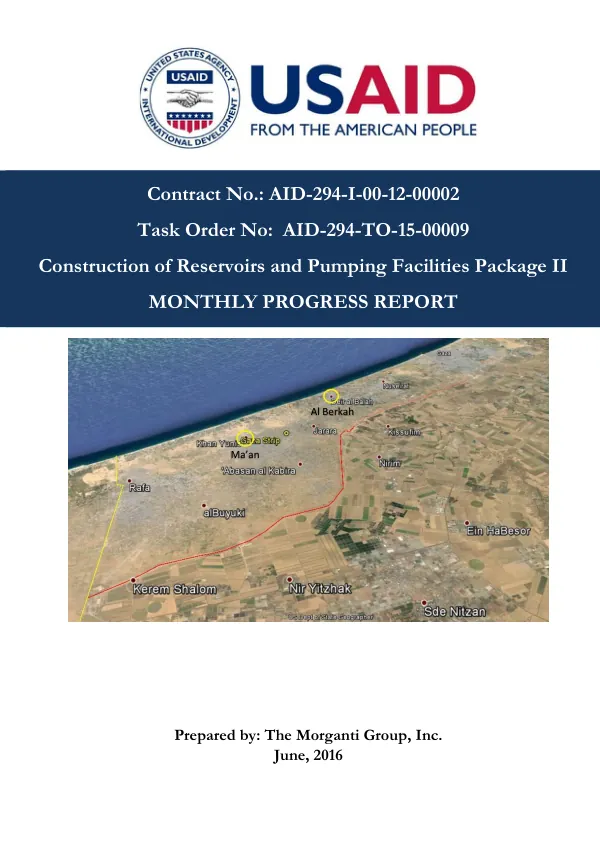
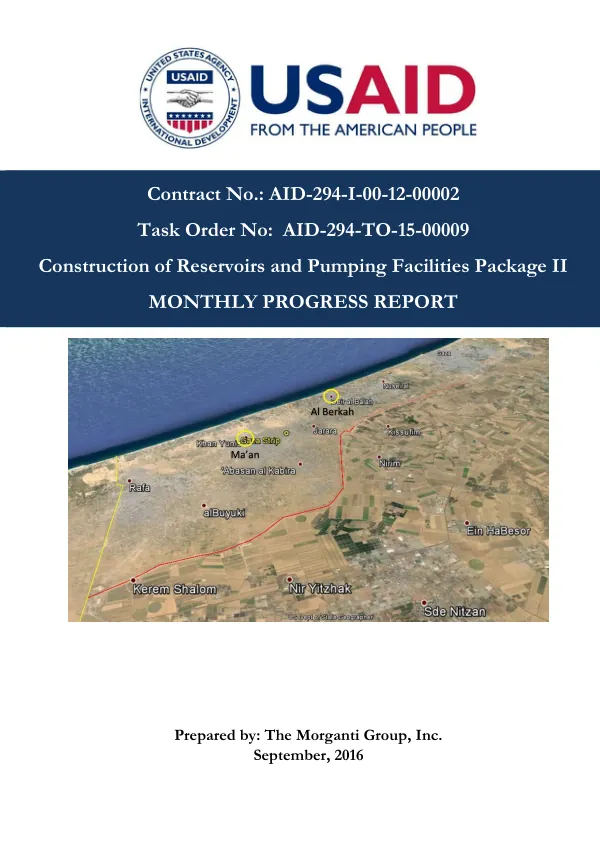
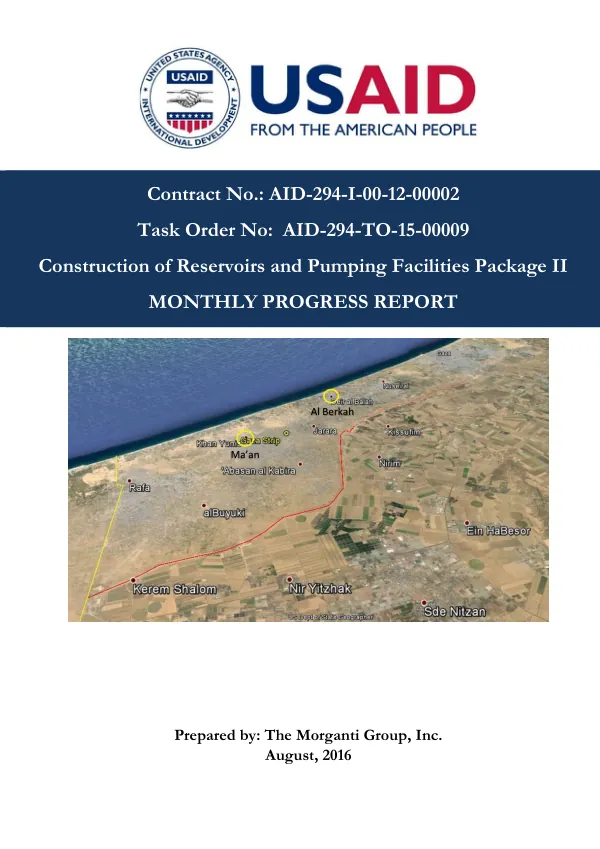
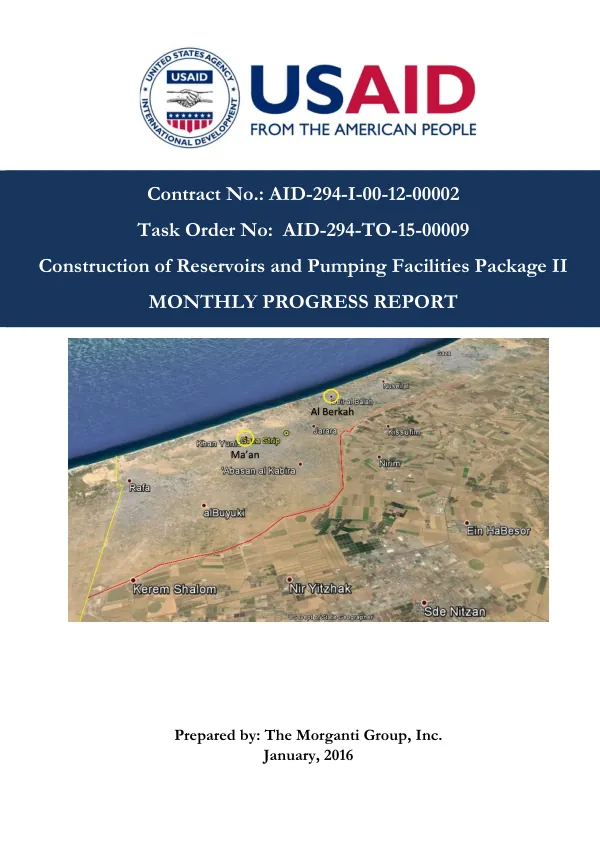
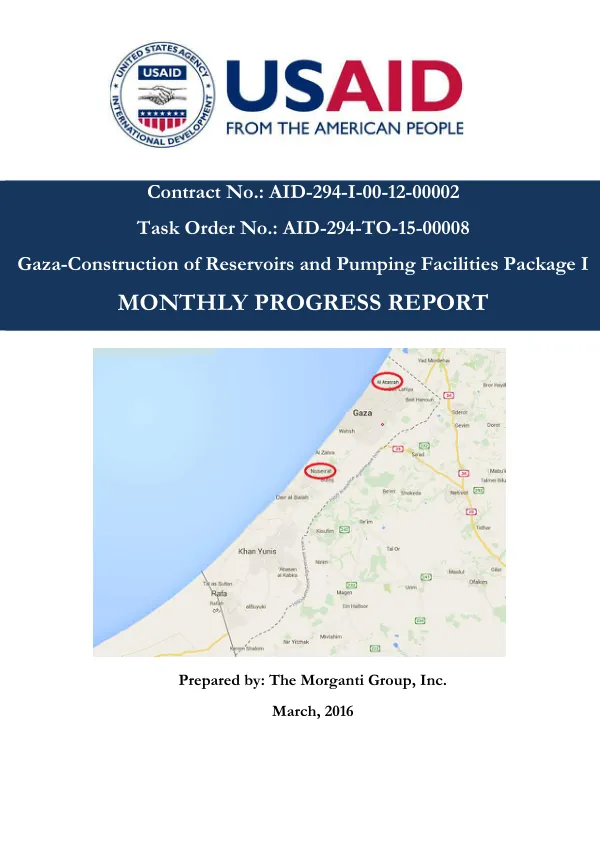
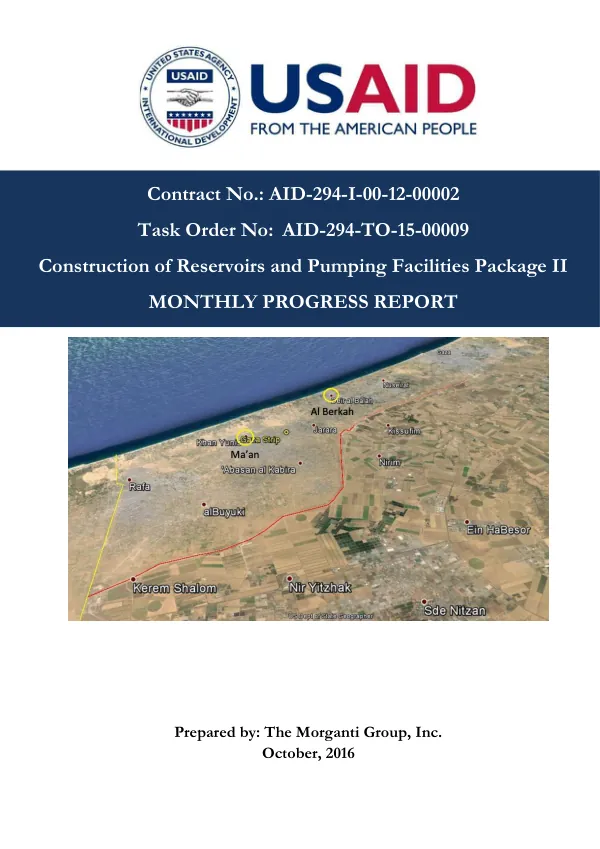
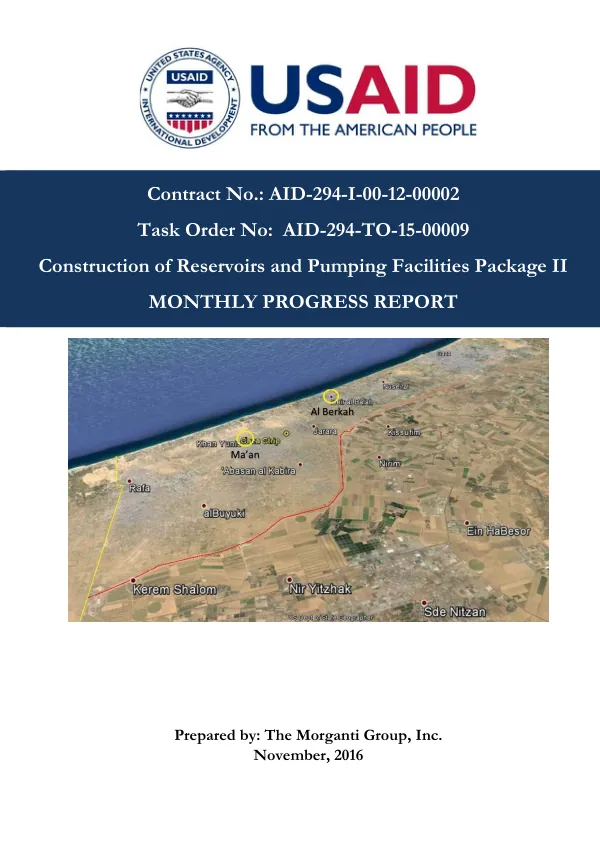
The project is part of the USAID Mission's Infrastructure Needs Program II, which focuses on the construction and rehabilitation of roads, schools, and water and sanitation projects. The objective of this Task Order is to construct two new reservoirs and two new booster pump stations, along with their associated supply and distribution pipelines, to increase access to clean water to the population of Gaza. The project is divided into two areas: Al Berkah, located in the Middle Area in Gaza, and Ma'an, located in the south of the Gaza Strip in Khan Younis. The Al Berkah project includes the construction of a 3800m3 ground reservoir and a new booster pump station connected to a new UPVC distribution network with an approximate total length of 4.6 KLM varying in diameter. The Ma'an project includes the construction of a 3800m3 ground reservoir and a new booster pump station connected to a new UPVC distribution network varying in diameter. The project is being implemented by The Morganti Group, Inc., a construction company with experience in infrastructure development. The company has a team of experienced engineers and technicians who are responsible for the design, construction, and construction management of the project. The project is expected to be completed within a certain timeframe, with a specific schedule and milestones to be followed. The project has several key components, including the construction of reservoirs, pump stations, and distribution networks. The reservoirs will be constructed using a combination of concrete and steel materials, while the pump stations will be equipped with high-capacity pumps and control systems. The distribution networks will be designed to provide a reliable and efficient supply of clean water to the population of Gaza. The project also includes a number of safety and environmental measures, including the implementation of a safety plan and the use of personal protective equipment (PPE) by workers. The project will also include a number of environmental mitigation measures, such as the use of dust suppression systems and the implementation of a waste management plan. The project is expected to have a significant impact on the population of Gaza, providing access to clean water and improving the overall quality of life. The project is also expected to create jobs and stimulate economic growth in the region. The project is being monitored and evaluated regularly, with regular progress reports submitted to the USAID Mission. The reports provide an update on the project's progress, including the completion of milestones, the implementation of safety and environmental measures, and the overall performance of the project. The project is also subject to a number of regulations and standards, including the USAID Mission's regulations and the Palestinian Authority's regulations. The project is also subject to regular inspections and audits to ensure compliance with these regulations. The project has a number of stakeholders, including the USAID Mission, the Palestinian Authority, and the local community. The stakeholders are involved in the project's planning, implementation, and implementation, and are expected to provide input and feedback throughout the project's lifecycle. The project's budget is approximately $10 million, which will be used to cover the costs of construction, equipment, and equipment maintenance. The project is expected to be completed within a certain timeframe, with a specific schedule and milestones to be followed. The project's implementation is being managed by a team of experienced engineers and technicians, who are responsible for the design, construction, and construction management of the project. The team is working closely with the local community and other stakeholders to ensure that the project is implemented in a way that meets the needs of the community and is consistent with the project's objectives. The project's progress is being monitored and evaluated regularly, with regular progress reports submitted to
Related documents