THE MORGANTIE GROUP, INC.
Construction Monthly Progress Report – March, 2016
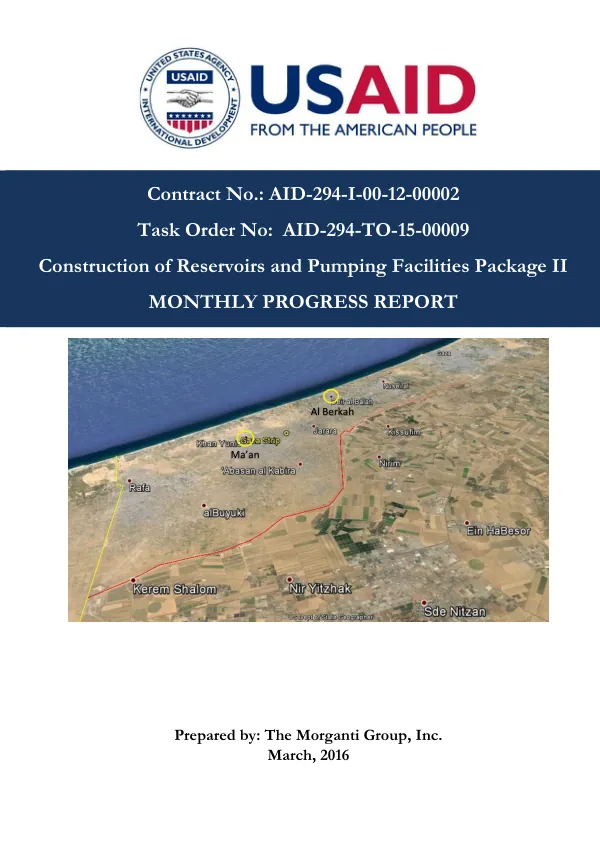
The Construction of Reservoirs and Pumping Facilities Package II project in Al Berkah, Ma'an, began in 2016 with funding from the United States Agency for International Development (USAID).
2016 · 123 pages
Sign in to readA free account is required to download.
Abstract
The project aims to improve the water supply infrastructure in the region, addressing the critical need for reliable and sustainable water resources. The project's scope of work involves the construction of reservoirs and pumping facilities to increase the water supply capacity and reduce the reliance on groundwater. The project is being implemented by The Morganti Group, Inc., a construction management contractor, in collaboration with the Palestinian Water Authority (PWA) and the Coastal Municipalities Water Utility (CMWU). The project's safety record is a top priority, with a comprehensive safety plan in place to mitigate risks and ensure a safe working environment for all personnel. The plan includes regular safety inspections, training programs, and emergency response procedures. The project also adheres to environmental compliance regulations, with measures in place to minimize the impact on the surrounding environment. Community outreach and engagement are essential components of the project, with regular meetings and updates provided to local stakeholders and community leaders. The project's risk management plan identifies potential risks and develops strategies to mitigate them, ensuring that the project is completed on time and within budget. The project's progress and scheduling are closely monitored, with regular updates provided to the project team and stakeholders. The project's activities during the reporting period included site preparation, excavation, and construction of the reservoirs and pumping facilities. The project's planned activities for the next month include completion of the reservoirs, installation of the pumping equipment, and testing of the system. The project's indicators, including the number of working and non-working days, material and equipment delivered to site, and site memos, are closely monitored to ensure that the project is progressing as planned. The project's procurement process is also closely monitored, with regular inspections and testing of materials and equipment to ensure compliance with quality standards. The project's quality control program is in place to ensure that the construction work meets the required standards and specifications. The program includes regular inspections, testing, and evaluation of the work to ensure that it meets the project's quality requirements. The project's testing program includes regular testing of the water supply system to ensure that it meets the required standards and specifications. The project's progress photos and site memos provide a visual record of the project's progress and any issues or challenges encountered during the reporting period. The project's risk register log and geo-mis data provide a detailed record of the project's risks and mitigation measures. The project's coordination and meetings with stakeholders, including the PWA, CMWU, and local community leaders, are regular and ongoing. The project's site visitors, including the Chief Engineer and Contracts Engineer, are responsible for ensuring that the project is progressing as planned and that any issues or challenges are addressed promptly. The project's implementation is being closely monitored, with regular updates provided to the project team and stakeholders. The project's progress and scheduling are closely monitored, with regular updates provided to the project team and stakeholders. The project's indicators, including the number of working and non-working days, material and equipment delivered to site, and site memos, are closely monitored to ensure that the project is progressing as planned.