CARE
Cooking Should Nurture, Not Kill: The Challenge of Traditional Cookstoves
Cooking Should Nurture, Not Kill highlights the significant health and environmental impacts of traditional cookstoves and open fires used by nearly 3 billion people in the developing world.
2014 · 2 pages
Sign in to readA free account is required to download.
Abstract
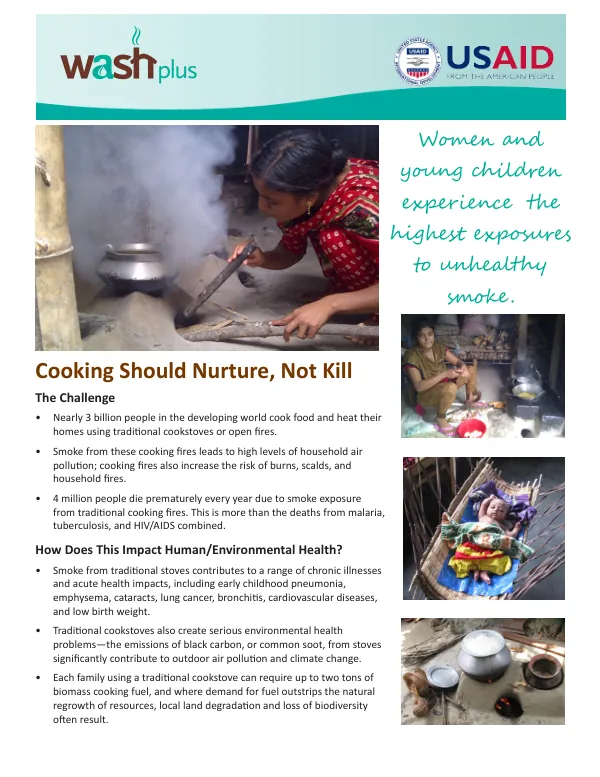
Smoke from these cooking fires leads to high levels of household air pollution, increasing the risk of burns, scalds, and household fires. The World Health Organization estimates that 4 million people die prematurely every year due to smoke exposure from traditional cooking fires, surpassing the number of deaths from malaria, tuberculosis, and HIV/AIDS combined. Smoke from traditional stoves contributes to a range of chronic illnesses and acute health impacts, including early childhood pneumonia, emphysema, cataracts, lung cancer, bronchitis, cardiovascular diseases, and low birth weight. Women and young children experience the highest exposures to unhealthy smoke, exacerbating existing health disparities. Traditional cookstoves also create serious environmental health problems, with emissions of black carbon significantly contributing to outdoor air pollution and climate change. Each family using a traditional cookstove can require up to two tons of biomass cooking fuel, leading to local land degradation and loss of biodiversity where demand for fuel outstrips natural regrowth. Clean cooking solutions are readily available, offering a range of technologies and solutions that reduce exposure to household air pollution. Advanced stoves that burn biomass or charcoal, cookstoves that burn ultra-clean fuels such as ethanol, biogas, or liquid petroleum gas, and solar cookers with no emissions at all are among the available options. Behavioral and structural solutions, including the use of chimneys, ventilation, and cooking outdoors, can also reduce human exposure to cookstove smoke. Well-maintained chimneys and well-ventilated kitchens can lower indoor air pollution, while keeping children away from stoves and cooking outdoors can further reduce exposure. The adoption and uptake of cleaner, more efficient cookstoves have multiple impacts, including household livelihoods, fire prevention, environmental benefits, and improved health outcomes. The USAID WASHplus project supports healthy households and communities by creating and delivering interventions that lead to improvements in WASH and indoor air pollution. This five-year project (2010-2015) is funded through USAID's Bureau for Global Health and led by FHI 360 in partnership with CARE and Winrock International. The project aims to create and deliver interventions that lead to improvements in WASH and indoor air pollution, ultimately reducing the health and environmental impacts of traditional cookstoves and open fires.
Related documents