USAID DEC
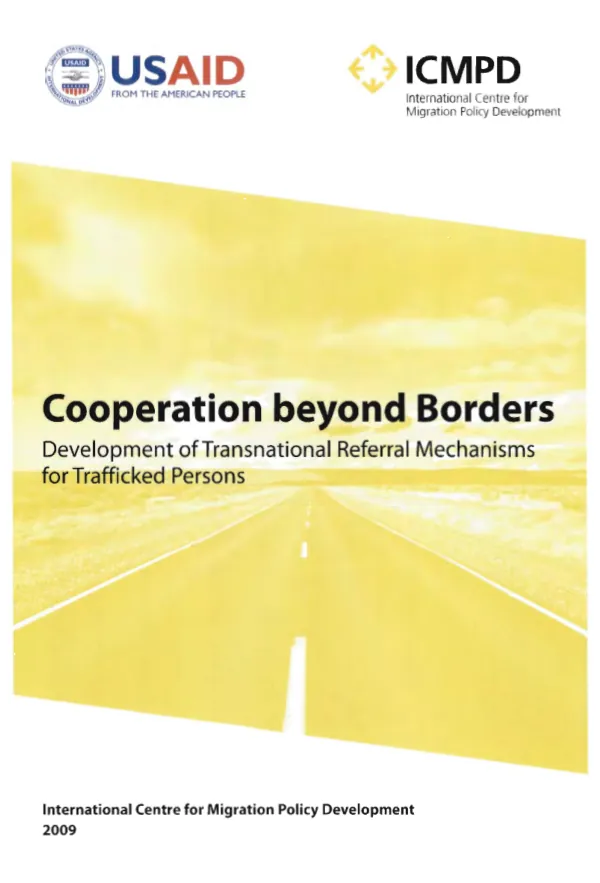
Cooperation beyond Borders: Development of Transnational Referral Mechanisms for Trafficked Persons
Sign inUSAID
Cooperation beyond Borders: Development of Transnational Referral Mechanisms for Trafficked Persons
The Programme to Support the Development of Transnational Referral Mechanisms (TRM) for Trafficked Persons in South-Eastern Europe aimed to ensure comprehensive and effective assistance and protection for victims of trafficking.
2009 · 47 pages
Sign in to readA free account is required to download.
Abstract
The programme was launched in 2006 and implemented over a period of 40 months, concluding in October 2009. The key challenge to a human rights-based and victim-centred anti-trafficking response was to ensure that all trafficked persons had access to comprehensive assistance and protection schemes. Institutionalised cooperative frameworks, including all concerned state and non-state actors, were deemed indispensable to ensure comprehensive and effective assistance and protection for victims of trafficking. These frameworks should focus on the process management of individual trafficking cases and cover the entire sequence of case measures, from identification, assistance, and protection to participation in and support during legal proceedings and legal redress, to return/resettlement and/or social inclusion of the victims in their destination-, origin-, or third country. The TRM programme was designed to develop mechanisms necessary for comprehensive transnational victim support and institutionalised cooperation on transnational cases between countries/actors in South-Eastern Europe. The programme's immediate objectives were to develop mechanisms for comprehensive transnational victim support and institutionalised cooperation on transnational cases between countries/actors in South-Eastern Europe, with the aim of contributing to empower trafficked persons to restart a self-determined life, being aware of their rights and of the role they might play in criminal proceedings. The programme's activities were structured into several phases, including the Induction and Assessment Phase, which lasted for 10 months. During this phase, the programme established a transnational referral mechanism for the management of individual transnational trafficking cases, along with agreed quality standards and with due respect of data protection and privacy regulations. The programme also implemented a series of transnational seminars, which brought together multidisciplinary actors to discuss and develop policies on trafficking in human beings. These seminars were an essential part of the programme's efforts to promote institutionalised international cooperation and to develop effective and targeted partnership for the prevention and combating of trafficking in human beings. The TRM programme was funded by the United States Agency for International Development (USAID) and implemented by the International Centre for Migration Policy Development (ICMPD). The programme's success was measured by its ability to develop effective and sustainable mechanisms for comprehensive transnational victim support and institutionalised cooperation on transnational cases between countries/actors in South-Eastern Europe. The programme's achievements were significant, with the development of a transnational referral mechanism for the management of individual transnational trafficking cases, along with agreed quality standards and with due respect of data protection and privacy regulations. The programme also promoted institutionalised international cooperation and developed effective and targeted partnership for the prevention and combating of trafficking in human beings. The TRM programme's impact was felt beyond the region, with the development of a transnational referral mechanism that could be replicated in other regions. The programme's success was also reflected in the increased number of countries developing similar mechanisms, with 14 countries currently involved in the TRM programme, including some EU member states. The programme's lessons learned and recommendations highlighted the importance of institutionalised cooperative frameworks, including all concerned state and non-state actors, in ensuring comprehensive and effective assistance and protection for victims of trafficking. The programme also stressed the need for flexibility in responding to the individual circumstances and needs of victims of trafficking crimes. The TRM programme's legacy continues to be felt, with the development of effective and sustainable mechanisms for comprehensive transnational victim support and institutionalised cooperation on transnational cases between countries/actors in South-Eastern Europe. The programme's success serves as a model for future initiatives aimed at preventing and combating trafficking in human beings.