USAID DEC
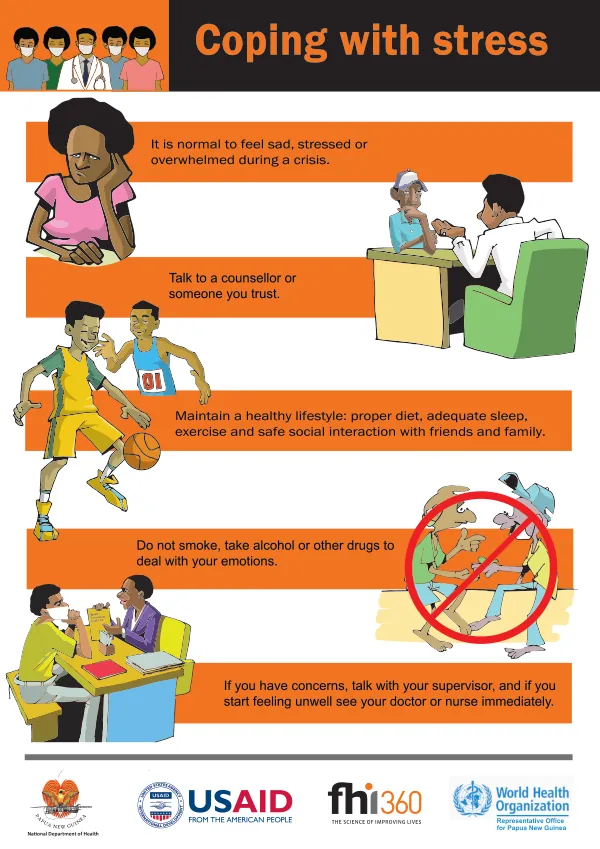
Coping With Stress Poster
The National Department of Health's National Cancer Control Program was launched in 2015 with the goal of reducing cancer incidence and mortality rates in the country.
1 pages
Sign in to readA free account is required to download.
Abstract
The program's scope encompasses prevention, early detection, treatment, and palliative care for all types of cancer. Key objectives include improving cancer diagnosis and treatment outcomes, enhancing patient care and support services, and promoting cancer awareness and education among the general public. The program's implementation strategy involves the establishment of a national cancer registry to track cancer incidence and mortality rates. This registry will provide valuable data for program evaluation and inform policy decisions. The program also aims to increase access to cancer screening services, particularly for high-risk populations such as those with a family history of cancer or those with certain genetic predispositions. A key component of the program is the development of a national cancer treatment protocol, which will standardize cancer treatment approaches and ensure that patients receive evidence-based care. The protocol will be implemented in all public healthcare facilities, and healthcare providers will receive training on its implementation. The program also aims to improve cancer pain management and palliative care services, with a focus on reducing suffering and improving quality of life for cancer patients. The program's geographic focus is on all regions of the country, with a particular emphasis on rural and underserved areas where access to cancer care is often limited. The program will work closely with local healthcare providers and community organizations to ensure that cancer services are accessible and equitable for all populations. The program's timeframes include a five-year implementation plan, with regular evaluation and review to ensure that progress is being made towards the program's objectives. Recommendations from the program include the establishment of a national cancer task force to oversee program implementation and coordination. The task force will comprise representatives from the National Department of Health, healthcare providers, and community organizations. The program also recommends the development of a national cancer awareness campaign to promote cancer awareness and education among the general public.