USAID DEC
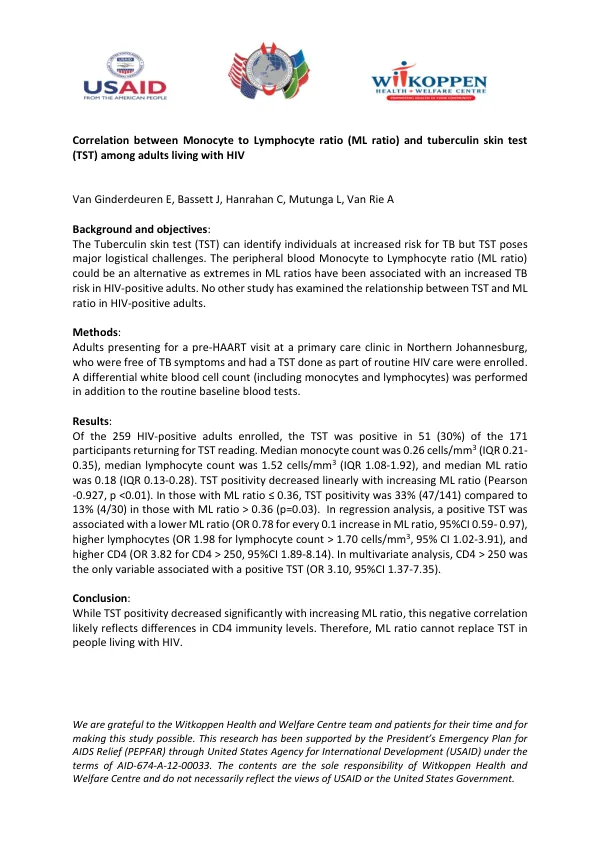
Correlation between Monocyte to Lymphocyte ratio (ML ratio) and tuberculin skin test (TST) among adults living with HIV
Sign inUSAID
Correlation between Monocyte to Lymphocyte ratio (ML ratio) and tuberculin skin test (TST) among adults living with HIV
The Tuberculin skin test (TST) is a widely used method to identify individuals at increased risk for tuberculosis (TB) among adults living with HIV.
2018 · 1 pages
Sign in to readA free account is required to download.
Abstract
However, TST poses significant logistical challenges. Researchers have explored the peripheral blood Monocyte to Lymphocyte ratio (ML ratio) as an alternative for identifying TB risk in HIV-positive adults. The ML ratio has been associated with an increased TB risk in HIV-positive adults, particularly in cases where the ratio is at extremes. Adults presenting for a pre-HAART visit at a primary care clinic in Northern Johannesburg, who were free of TB symptoms and had a TST done as part of routine HIV care, were enrolled in the study. A differential white blood cell count, including monocytes and lymphocytes, was performed in addition to routine baseline blood tests. The study found that of the 259 HIV-positive adults enrolled, the TST was positive in 51 (30%) of the 171 participants returning for TST reading. The median monocyte count was 0.26 cells/mm3, the median lymphocyte count was 1.52 cells/mm3, and the median ML ratio was 0.18. A significant linear relationship was observed between TST positivity and increasing ML ratio. In participants with an ML ratio of 0.36 or less, TST positivity was 33%, compared to 13% in those with an ML ratio greater than 0.36. Regression analysis revealed that a positive TST was associated with a lower ML ratio, higher lymphocyte counts, and higher CD4 cell counts. In multivariate analysis, CD4 cell counts greater than 250 were the only variable associated with a positive TST. The study concluded that while TST positivity decreased significantly with increasing ML ratio, this negative correlation likely reflects differences in CD4 immunity levels. Therefore, the ML ratio cannot replace TST in people living with HIV. The findings suggest that CD4 cell counts remain a critical factor in identifying individuals at increased risk for TB among HIV-positive adults.
Related documents
Documents in this collection
 2015
2015USAID DEC
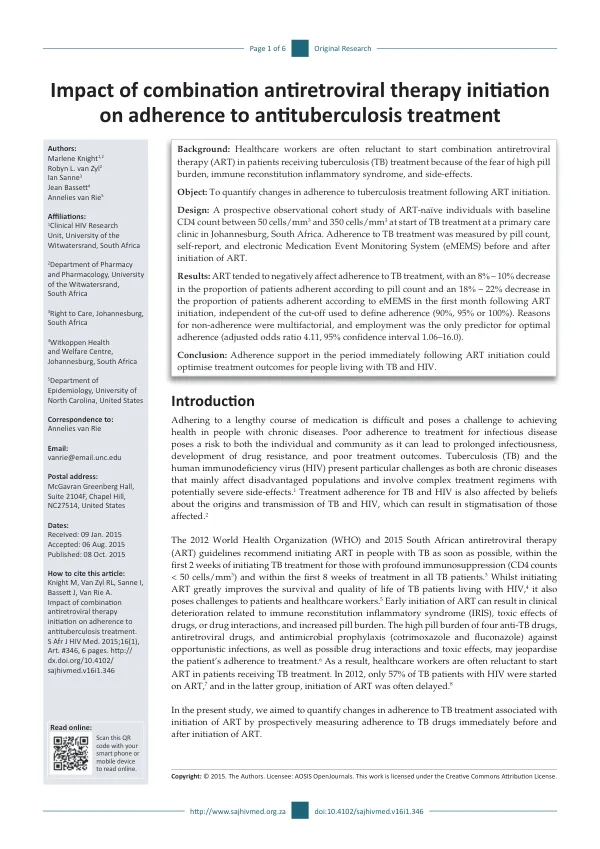
Impact of combination antiretroviral therapy initiation on adherence to antituberculosis treatment
Open record 2013
2013USAID DEC