USAID DEC
Impact of combination antiretroviral therapy initiation on adherence to antituberculosis treatment
Sign inNORTH CAROLINA A&T STATE UNIVERSITY
Impact of combination antiretroviral therapy initiation on adherence to antituberculosis treatment
Healthcare workers often hesitate to initiate combination antiretroviral therapy (ART) in patients receiving tuberculosis (TB) treatment due to concerns about high pill burden, immune reconstitution inflammatory syndrome, and side effects.
2015 · 6 pages
Sign in to readA free account is required to download.
Abstract
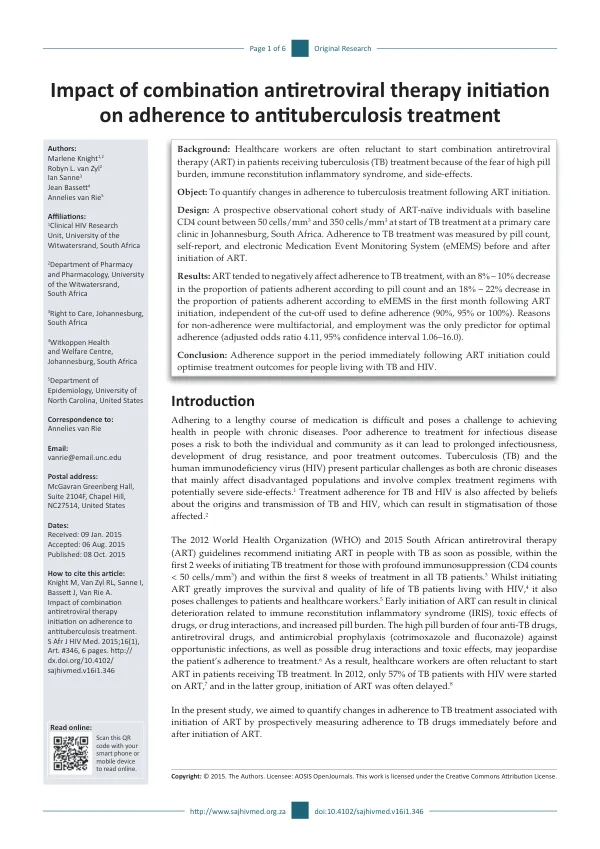
This reluctance can lead to delayed initiation of ART, which is essential for improving the survival and quality of life of TB patients living with HIV. The 2012 World Health Organization (WHO) and 2015 South African ART guidelines recommend initiating ART in people with TB as soon as possible, within the first 2 weeks of initiating TB treatment for those with profound immunosuppression (CD4 counts < 50 cells/mm3) and within the first 8 weeks of treatment in all TB patients. However, early initiation of ART can result in clinical deterioration related to immune reconstitution inflammatory syndrome (IRIS), toxic effects of drugs, or drug interactions, and increased pill burden. A prospective observational cohort study was conducted at Witkoppen Health and Welfare Centre, a primary care clinic in Johannesburg, South Africa, to quantify changes in adherence to TB treatment following ART initiation. The study included ART-naïve individuals with baseline CD4 count between 50 cells/mm3 and 350 cells/mm3 at the start of TB treatment. Adherence to TB treatment was measured by pill count, self-report, and electronic Medication Event Monitoring System (eMEMS) before and after initiation of ART. The study found that ART tended to negatively affect adherence to TB treatment, with an 8% – 10% decrease in the proportion of patients adherent according to pill count and an 18% – 22% decrease in the proportion of patients adherent according to eMEMS in the first month following ART initiation, independent of the cut-off used to define adherence (90%, 95% or 100%). Reasons for non-adherence were multifactorial, and employment was the only predictor for optimal adherence (adjusted odds ratio 4.11, 95% confidence interval 1.06–16.0). The study's findings suggest that adherence support in the period immediately following ART initiation could optimize treatment outcomes for people living with TB and HIV. This is particularly important in South Africa, where TB and HIV are prevalent and often co-occur. The study's results highlight the need for healthcare workers to provide adequate support and guidance to patients initiating ART, particularly in the first month after treatment initiation.
Related documents
Documents in this collection
 2015
2015USAID DEC
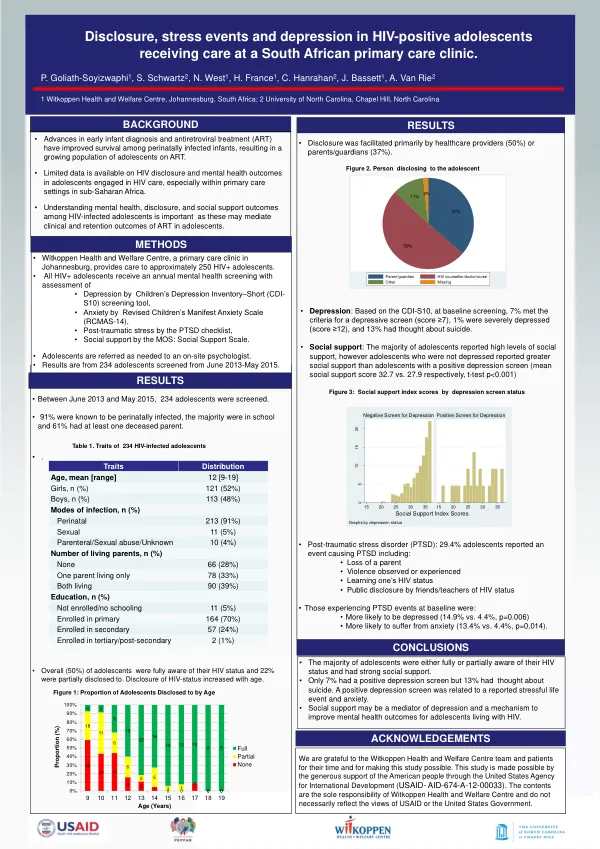
Disclosure, stress events and depression in HIV-positive adolescents receiving care at a South African primary care clinic
Open record 2018
2018USAID DEC