JHPIEGO
Course Outline for Training on Oral Contraceptives
The course on oral contraceptives is designed to provide comprehensive training to healthcare professionals on the use, management, and counseling of various oral contraceptive methods.
2016 · 5 pages
Sign in to readA free account is required to download.
Abstract
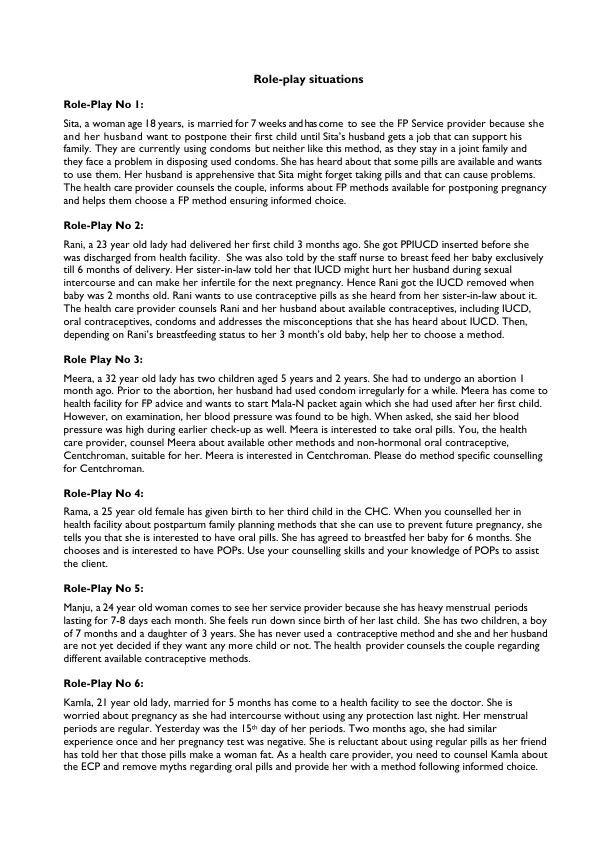
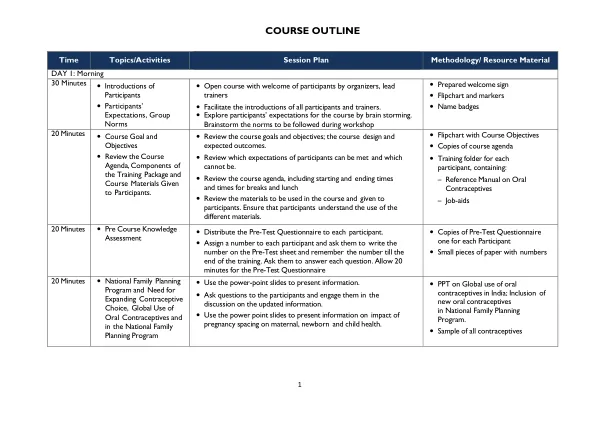
The course is structured into five days, with each day focusing on specific topics and activities. Day 1 of the course begins with introductions and setting of expectations among participants. The course goals and objectives are reviewed, and participants are familiarized with the course agenda, materials, and expected outcomes. A pre-course knowledge assessment is conducted to gauge participants' prior knowledge on oral contraceptives. The day concludes with a presentation on the national family planning program and the need for expanding contraceptive choice, including the global use of oral contraceptives in India. Day 2 focuses on technical updates on combined oral contraceptives, progestin-only pills, and emergency contraceptive pills. Participants engage in a participatory discussion on the mechanism of action, effectiveness, benefits, and limitations of each method. The day also includes a presentation on Centchroman (Ormeloxifene), a non-steroidal oral contraceptive. Participants are encouraged to share their answers to questions on the different oral contraceptive methods, and a role-play on counseling is conducted to demonstrate method-specific counseling. Day 3 covers medical eligibility criteria and client assessment for oral contraceptives. Participants learn how to use the Medical Eligibility Criteria (MEC) wheel to assess clients for different oral contraceptive methods. A role-play on counseling is conducted to demonstrate how to manage common side effects and complications related to the use of oral contraceptives. Day 4 focuses on helping continuing users and managing side effects and problems of oral contraceptives. Participants engage in an exercise to identify possible side effects of each oral contraceptive method and discuss how to manage them. The day also includes a presentation on addressing misconceptions on oral contraceptives, where participants are divided into small groups to discuss and share answers to questions on different oral contraceptive methods. Day 5 concludes the course with skill practice using a checklist on counseling skills. Participants are assessed on their counseling skills using a skill assessment checklist for family planning and method-specific counseling on oral contraceptives. The day also includes a presentation on contraceptive logistics and record keeping for oral contraceptives, where participants learn how to collect and maintain data, procure and maintain stock of oral contraceptives, and report to higher managers. The course concludes with a post-course knowledge assessment and course evaluation, where participants are graded on their knowledge and provide feedback on the course.