JHPIEGO
A New Generation of Indian Men Take Up Family Planning
The Maternal Child Survival Program (MCSP) is a global initiative aimed at preventing child and maternal deaths in 25 high-priority countries.
2019 · 8 pages
Sign in to readA free account is required to download.
Abstract
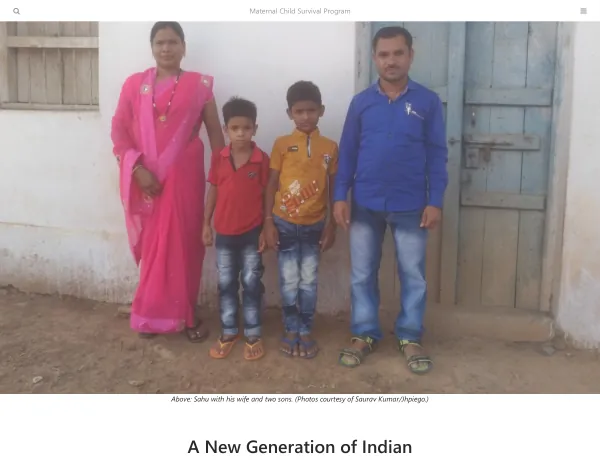
In Chhattisgarh, India, MCSP is working to strengthen male permanent family planning (FP) services, which currently account for only 0.62% of modern contraceptive methods used in the country. The program is employing the Fixed Day Service (FDS) approach, which ensures routine provision of permanent FP services at health facilities by trained providers on fixed days throughout the year. This approach has been successfully used to improve the provision of female permanent FP services in Chhattisgarh and is being replicated to strengthen NSV services in the state. Initially, only one facility each from Raipur and Dhamtari districts was providing NSV, resulting in long waiting periods and discouragement for men seeking services. To address this, MCSP supported participating facilities to establish FDS calendars and rosters of trained providers for NSV services. This, along with the implementation of innovative quality improvement and quality assurance tools, helped to standardize the provision of permanent male FP services. As a result of these efforts, regular services of both male and female permanent FP methods are now available at six program facilities in Raipur and Dhamtari districts in the state. Providers are encouraged by this success, but recognize that it will take more than their skills to make India a more gender-equitable FP environment. It will take a new generation of men, like Sahu, taking responsibility for FP and chipping away at the social stigma by sharing their choice with their communities. MCSP has also worked with frontline workers (FLWs) to strengthen their FP messaging for couples and to teach them how to pre-register men and women interested in permanent FP services. The program has trained approximately 32,000 FLWs to improve provision of services and client satisfaction, and a cadre of counselors to share correct messages on all modern FP methods. These efforts are not only ensuring the provision of regular, high-quality permanent male FP services in India, but also promoting male engagement in FP and supporting a gender-transformative health strategy.