GLOBAL COMMUNITIES
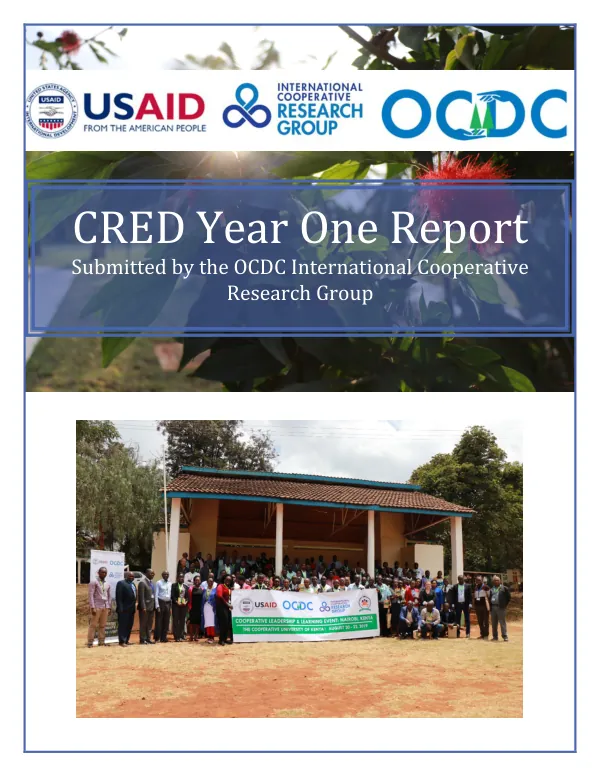
CRED Year One Report
The Cooperative Research, Education, and Dissemination (CRED) activity is a research-based learning initiative implemented by the US Overseas Cooperative Development Council (OCDC) through its International Cooperative Research Group (RG).
2019 · 16 pages
Sign in to readA free account is required to download.
Abstract
The purpose of CRED is to increase effective international cooperative development through knowledge-based enhancement of impact and through increased uptake of cooperative development as a strategy in a country's journey to self-reliance. CRED is structured around three central and mutually reinforcing pillars of research, education, and dissemination. The central challenge for RG under CRED is for its work to make a real difference by influencing practice and policy. CRED's strategy is to undertake activities and develop products that will increase both the effectiveness and uptake of cooperative development through attentive listening to CDO and other stakeholders and engagement with them throughout its research, learning, and dissemination activities. The CRED activity is designed to address three objectives: research to develop evidence that strengthens program design and enhances impact, learning and education to facilitate collaboration among CDOs and uptake of evidence-informed practice to enhance impact by CDOs and others, and broad as well as targeted dissemination to practitioners, governments, and donors in support of USAID's objectives of sustainability, local ownership, and self-reliance. Collaboration is at the heart of CRED, with all three pillars designed to promote partnerships with and between CDOs, as well as other important stakeholders internationally and in the USAID-assisted countries where the CDP is active. The RG collaborates with its Research Advisory Committee (RAC), composed of internationally recognized cooperative scholars, to review study methodology, peer review research reports, participate in Learning Events and research fora, and add to RG's ability to impact. During the first year of CRED, the RG has enhanced its collaborative activities with CDOs, actively engaged with research partners in-country, worked with other research actors to raise the profile of USAID-assisted cooperative development, and initiated partnerships that use the platform provided by research to bring cooperatives into national policy discussions. The RG has also initiated the "What Difference Do Cooperatives Make?" (WDDCM) study, a four-country study aimed at decision-makers who are able to increase support for cooperative development. The study examines the social and economic benefits of cooperative membership at the primary society level and serves the purpose of re-aligning CDO interests beyond their specific sectoral interests. The WDDCM study is a major RG initiative with representative RG Research Advisory Committee Members, including Dr. Linda Shaw, Head of Research at the Co-operative College, and Dr. Sonja Novkovic, Academic at Saint Mary's University. The study design reflects the cross-sectoral interests of OCDC members and is aimed at understanding the "cooperative difference" regardless of sector. The study is a high-level and representative national comparison of people who are cooperative members and those who are not, to understand the benefits of cooperative membership. The CRED activity has made significant progress in its first year, with enhanced collaborative activities with CDOs, active engagement with research partners in-country, and initiated partnerships that use the platform provided by research to bring cooperatives into national policy discussions. The WDDCM study is a major initiative that aims to increase support for cooperative development and understand the benefits of cooperative membership. The CRED activity is well-positioned to make a real difference in the field of cooperative development and contribute to USAID's objectives of sustainability, local ownership, and self-reliance.
Related documents