USAID DEC
Critical Points for Safe Removal, Disposal of Fecal Sludge
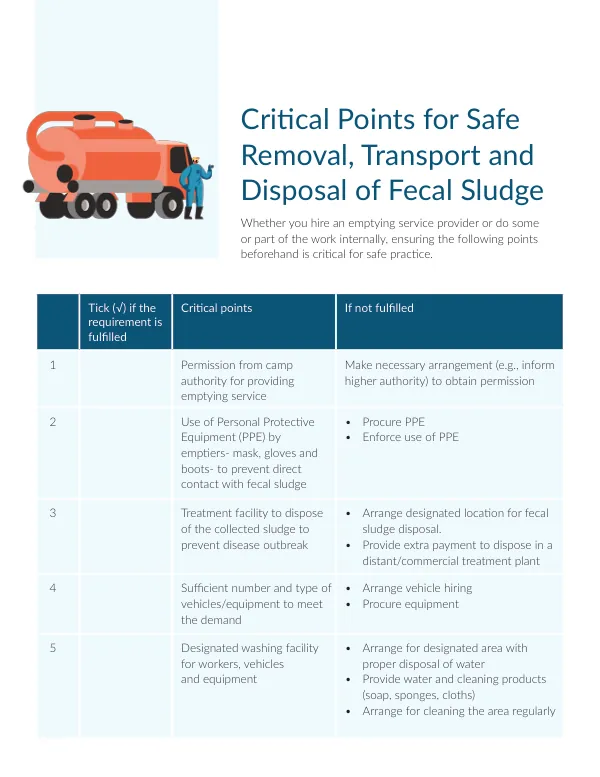
Critical Points for Safe Removal, Transport, and Disposal of Fecal Sludge involve several key considerations to ensure the health and safety of individuals and the environment.
2 pages
Sign in to readA free account is required to download.
Abstract
Permission from camp authorities is essential for providing emptying services, and arrangements should be made to obtain necessary approvals. Personal Protective Equipment (PPE) is crucial for preventing direct contact with fecal sludge. This includes the use of masks, gloves, and boots by emptiers. Procurement and enforcement of PPE use are critical to prevent exposure to pathogens. A designated treatment facility is also necessary to dispose of collected sludge and prevent disease outbreaks. The availability of sufficient vehicles and equipment is vital to meet the demand for emptying services. This includes arranging for vehicle hiring and procuring necessary equipment. A designated washing facility for workers, vehicles, and equipment is also essential to maintain hygiene standards. This facility should have proper disposal of water, provision of cleaning products, and regular cleaning. Spill-proof containers must be properly fixed and fastened on vehicles to prevent accidents. Durable equipment is also necessary, with regular service and repair, availability of spare parts, and regular check-ups and maintenance. A list of local suppliers for spare parts should be maintained, and equipment service records should be kept. The use of Standard Operating Procedures (SOPs) is critical to ensure safe emptying and transportation of fecal sludge. SOPs should be developed and enforced to ensure adherence to safe practices. In the event of difficulties in arranging service providers, contingency plans should be discussed with supervisors to ensure the health and safety of individuals and the environment. The American people, through the United States Agency for International Development (USAID), have generously supported this project. The contents of this document are the responsibility of CAWST (Centre for Affordable Water and Sanitation Technology) and do not necessarily reflect the views of USAID or the United States Government. In areas where service providers do not meet the specified criteria, contingency plans should be developed to ensure the safe emptying of latrines. This may involve discussing alternative arrangements with supervisors to maintain health and safety standards.