USAID DEC
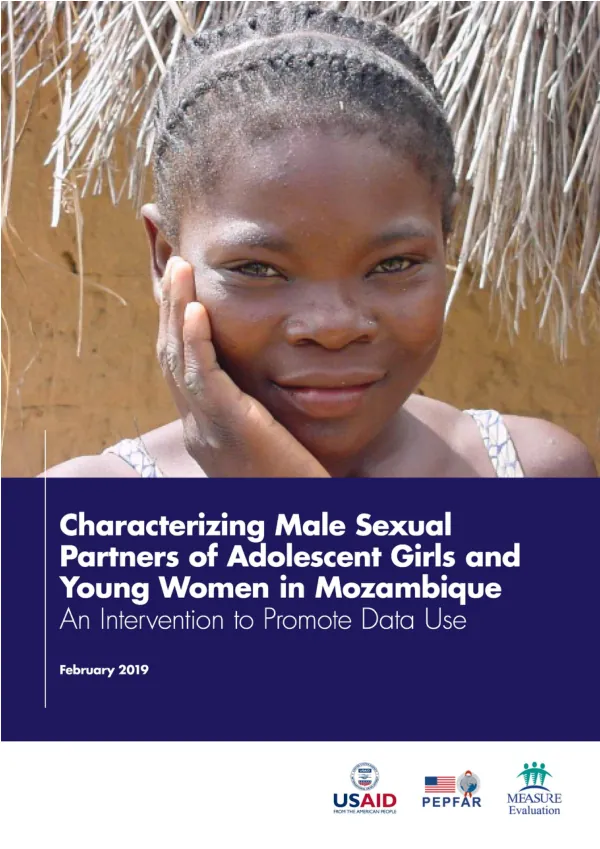
Data Use and Coaching in Mozambique Study Characterizing Male Partners of Adolescent Girls and Young Women
Sign inELIZABETH GLASER PEDIATRIC AIDS FOUNDATION
Data Use and Coaching in Mozambique Study Characterizing Male Partners of Adolescent Girls and Young Women
Adolescent girls and young women (AGYW) ages 15-24 have been identified as a population extremely vulnerable to HIV.
2019 · 34 pages
Sign in to readA free account is required to download.
Abstract
Globally, in 2016, approximately 400,000 AGYW in this age group were newly HIV-positive. In sub-Saharan Africa, adolescence marks an increase in HIV prevalence, and gender disparities in that prevalence emerge and expand dramatically. Recent estimates from seven African countries indicate that the prevalence of HIV among women ages 15-25 is more than twice that among their male counterparts. In Mozambique, the epidemiological challenges are vast, even compared with the global statistics. Thirteen percent of adults ages 15-49 are living with HIV, compared to 11.5 percent in 2009. A higher prevalence of HIV exists among women (15.4%) compared to men (10.1%). The difference between sexes is much starker among youth ages 15-24: the prevalence of HIV among females is more than three times that of males. The United States President's Emergency Plan for AIDS Relief (PEPFAR), through the Determined, Resilient, Empowered, AIDS-free, Mentored, and Safe (DREAMS) initiative, has recognized the importance of reaching AGYW. One of the programming strategies of DREAMS is to prevent HIV among male sexual partners of AGYW and reduce the infectiousness of those partners who are HIV-positive, thereby reducing HIV incidence among AGYW. This approach requires information about the characteristics of AGYW's sexual partners―who they are and how they can be reached. To fill this knowledge gap, the United States Agency for International Development (USAID) in Mozambique asked MEASURE Evaluation to undertake a study that would characterize men who have recently engaged in sexual activity with AGYW, the relationship dynamics, and factors that influence men's engagement with HIV and AIDS prevention and care services. The study consisted of two parts. Part I was a qualitative study of AGYW using focus group discussions (FGDs) to obtain information on their male sexual partners. Part II was a brief, anonymous intercept survey of boys and men ages 18 and above, conducted at venues identified by AGYW. The survey aimed to gather information on the characteristics of male partners, their relationship dynamics, and factors influencing their engagement with HIV and AIDS prevention and care services. The study's findings are crucial for informing programming strategies to prevent HIV among AGYW and their male partners. The results of the study will help to identify effective ways to reach and engage male partners in HIV prevention and care services, ultimately reducing HIV incidence among AGYW. The study's recommendations will inform the development of targeted interventions to address the unique needs of AGYW and their male partners in Mozambique. The study's methodology involved conducting focus group discussions with AGYW to gather information on their male sexual partners. The discussions were used to identify key themes and issues related to the characteristics of male partners, their relationship dynamics, and factors influencing their engagement with HIV and AIDS prevention and care services. The findings from the focus group discussions were used to inform the development of the survey instrument for Part II of the study. The survey instrument was designed to gather information on the characteristics of male partners, their relationship dynamics, and factors influencing their engagement with HIV and AIDS prevention and care services. The survey was conducted at venues identified by AGYW, including markets, bus stations, and other public areas. The survey aimed to gather information from a representative sample of boys and men ages 18 and above who had recently engaged in sexual activity with AGYW. The survey results provided valuable insights into the characteristics of male partners, their relationship dynamics, and factors influencing their engagement with HIV and AIDS prevention and care services. The findings highlighted the importance of addressing the unique needs of AGYW and their male partners in Mozambique. The study's recommendations will inform the development of targeted interventions to address the identified needs and reduce HIV incidence among AGYW. The study's findings have significant implications for HIV prevention and care programming in Mozambique. The results highlight the need for targeted interventions to address the unique needs of AGYW and their male partners. The study's recommendations will inform the development of effective programming strategies to prevent HIV among AGYW and their male partners, ultimately reducing HIV incidence among AGYW.