GOVERNMENT OF COLOMBIA
DDR and Child Soldier Issues: A Monthly Review
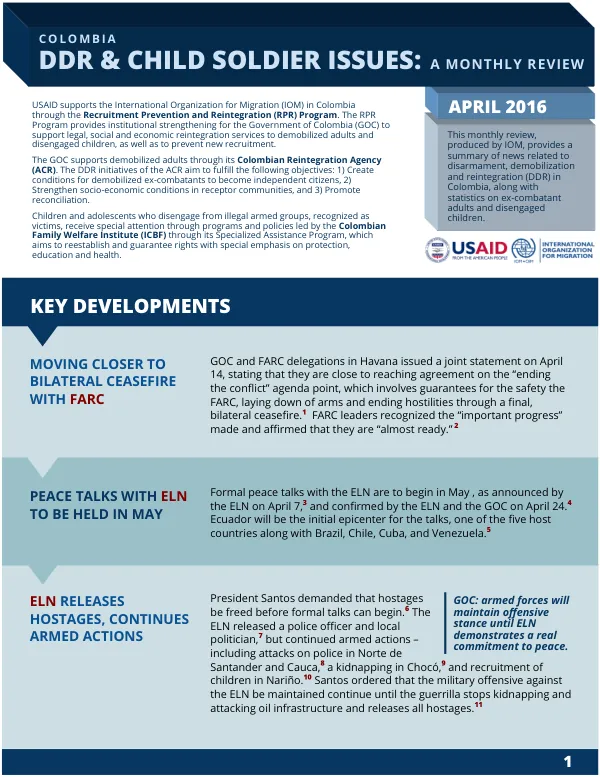
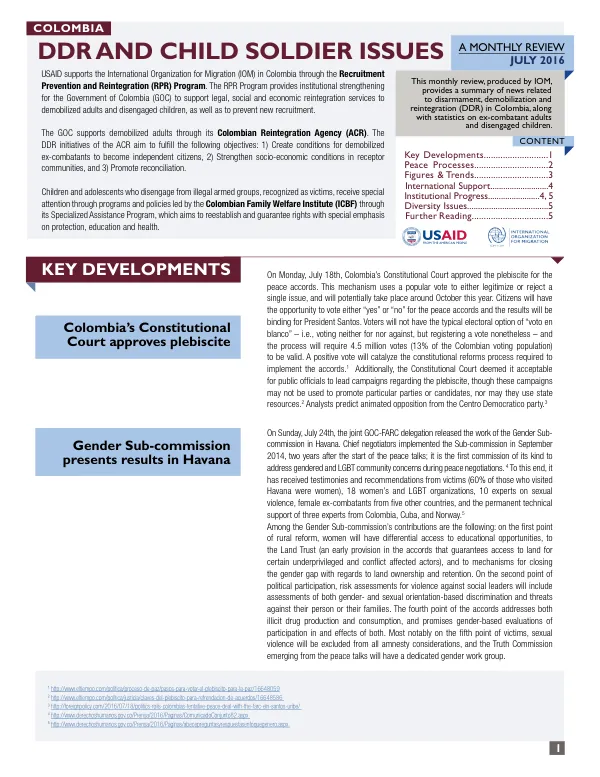
The Peace Accord implementation in Colombia is a complex process that involves the disarmament, demobilization, and reintegration (DDR) of former combatants, as well as the reintegration of child soldiers.
2020 · 4 pages
Sign in to readA free account is required to download.
Abstract
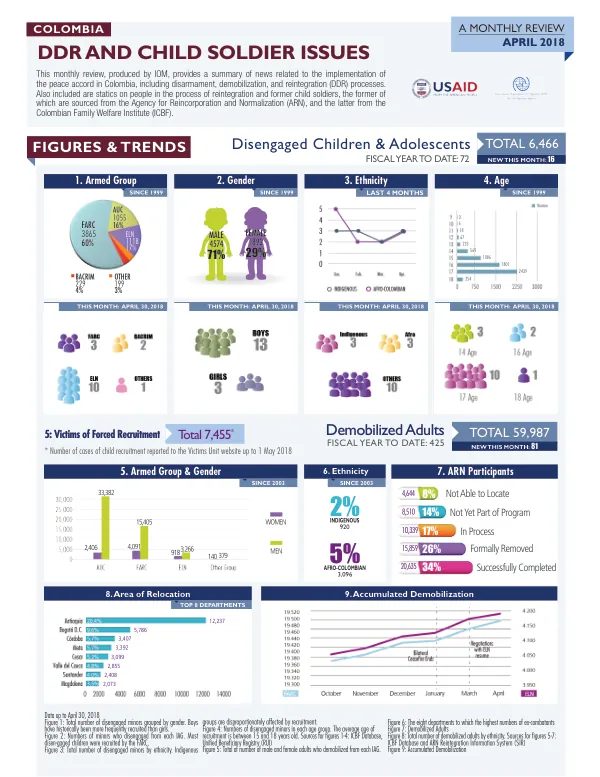
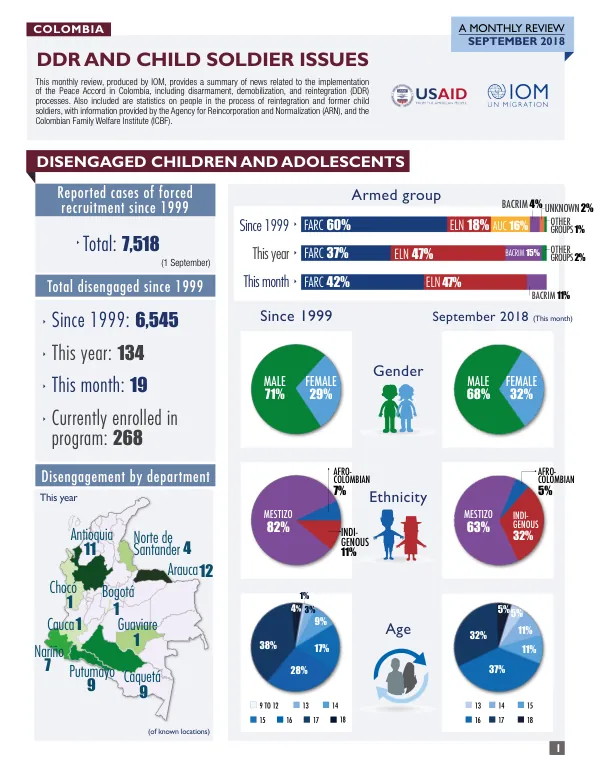
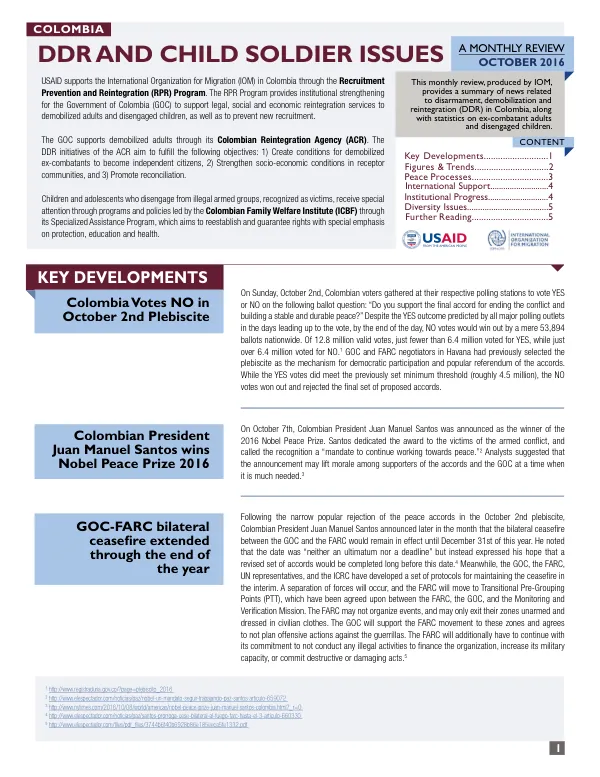
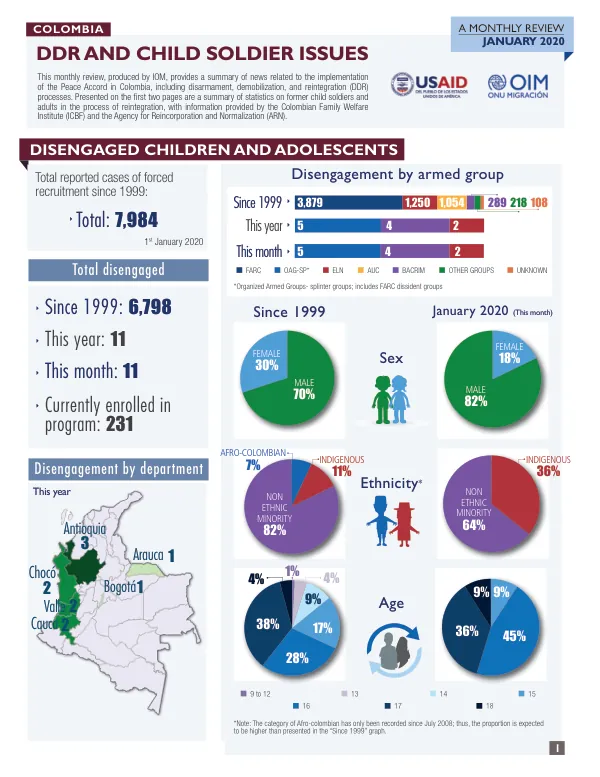
According to the Colombian Family Welfare Institute (ICBF) and the Agency for Reincorporation and Normalization (ARN), a total of 6,798 children and adolescents have been disengaged from armed groups since 1999, with 11 disengaged in January 2020. Currently, 231 children and adolescents are enrolled in reintegration programs. The majority of disengaged children and adolescents are male, accounting for 70% of the total since 1999, and 82% in January 2020. The most common age range for disengagement is between 18 and 25 years old, with 36% of disengaged individuals falling within this range. The majority of disengaged individuals are from non-ethnic minority backgrounds, accounting for 82% of the total since 1999. In terms of reintegration, a total of 5,689 adults are currently active in the reintegration process, with 14 new entrants in January 2020. The majority of reintegration participants are male, accounting for 100% of the total in January 2020. The most common age range for reintegration participants is between 18 and 25 years old, with 36% of participants falling within this range. The implementation of the Peace Accord faces several challenges, including ensuring the commitment of new local administrations, guaranteeing security, and consolidating the transitional justice system. The six points of the Accord are intrinsically interdependent, and advances need to be made in all sectors to bring about tangible results. For example, although significant progress has been made in voluntary and assisted eradication, substitution is lagging and may lead to a resumption of coca cultivation. The Special Jurisdiction for Peace (JEP) has made significant progress in its two years of existence, solving most conflicts of competences and improving its public image. The JEP has opened seven cases on serious violations of Human Rights, committed both by the former guerrilla and State security forces, in the context of the armed conflict. The JEP has also recognized 120,000 victims, including the Indigenous Regional Council of Cauca (CRIC) and the Association of Indigenous Councils of Northern Cauca (ACIN) as collective victims of the armed conflict. Fractures within the Common Alternative Revolutionary Force (FARC) party are becoming increasingly visible, with dissenting voices vocal about the absence of adequate spaces for debate, opposition, and diverging views. The FARC party has been criticized for its delays in implementing the Accord and the pressure exercised by the lack of security guarantees. The Government of Colombia (GoC) has called on Cuba to extradite the ELN leader, alias "Gabino", and has reiterated its call for the protection of the lives of social leaders, human rights defenders, and those involved in the implementation of the Peace Agreement. The GoC has also announced six measures for the protection of FARC ex-combatants, including a risk analysis in violence-torn municipalities and facilitating the reporting of threats and protection requests. The situation in Arauca and Apure has been described as a state of lawlessness, with armed groups replacing the police in these regions. A recent Human Rights Watch (HRW) report has denounced the prevailing lawlessness in these borderland regions.