GOVERNMENT OF COLOMBIA
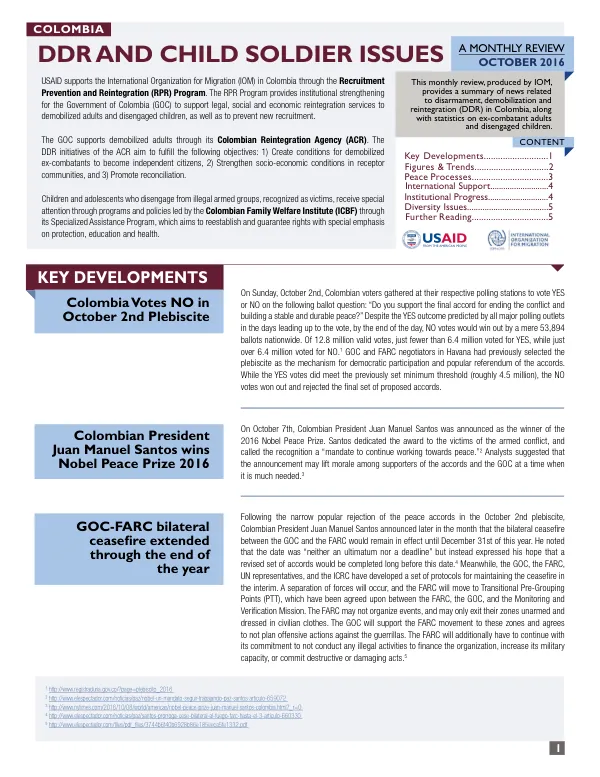
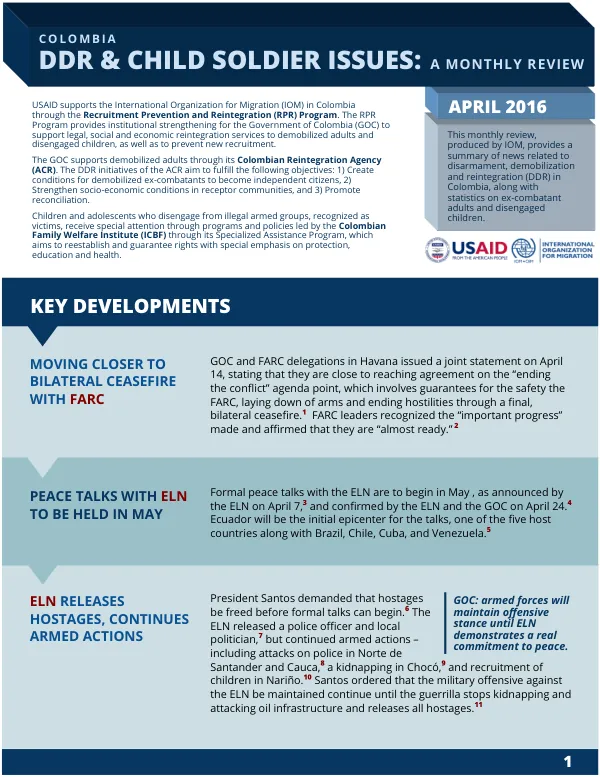
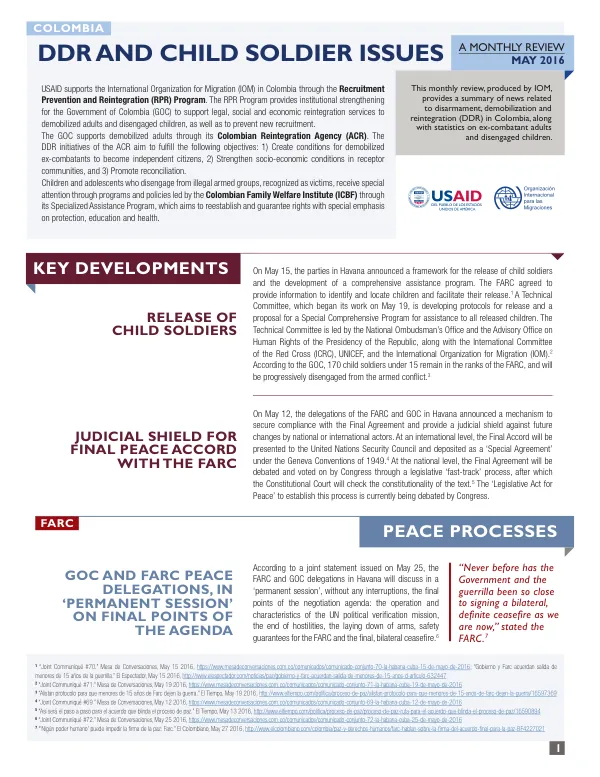
DDR and Child Soldier Issues: A Monthly Review, April 2018
The peace process in Colombia is a complex and multifaceted issue, with various stakeholders and developments contributing to its progress.
2018 · 4 pages
Sign in to readA free account is required to download.
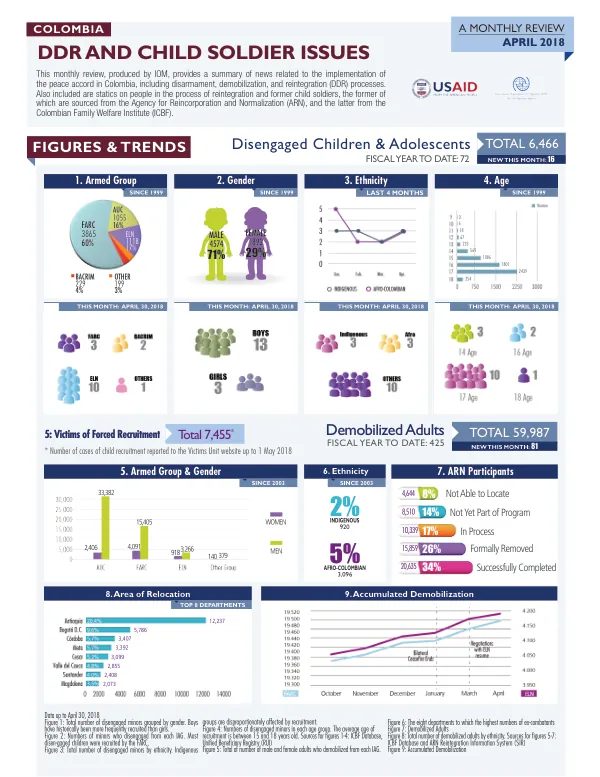
Abstract
The implementation of the peace accord, signed in 2016, has been a major focus of efforts to rebuild and reintegrate former combatants and affected communities. Demobilization and reintegration efforts have been underway since 2017, with the Agency for Reincorporation and Normalization (ARN) playing a key role in facilitating the process. As of April 2018, a total of 59,987 demobilized adults had been registered, with the majority coming from the FARC. The breakdown by armed group shows that 60% of demobilized adults were from the FARC, followed by the AUC (16%), ELN (17%), BACRIM (4%), and other groups (3%). The reintegration process has also seen significant progress, with 8,510 individuals successfully completing the program. However, challenges remain, particularly in terms of providing adequate support and resources to former combatants and affected communities. The Colombian government has taken steps to address these challenges, including the launch of a new oversight system to monitor the use and implementation of post-conflict resources. This system, which includes auditing and transparency measures, aims to ensure that funds are being used effectively and efficiently. In addition to these efforts, the government has also been working to address the humanitarian crisis in the Catatumbo region, where confrontations between the EPL and the ELN have resulted in significant displacement and human rights abuses. A unified command post has been established to coordinate humanitarian efforts and ensure the safe passage of goods and people. The peace process has also been marked by significant developments in the implementation of post-conflict resources. The Colombian Peace Fund, which manages funds donated by Norway, Sweden, and Switzerland, has been the subject of scrutiny and criticism. In response, the government has launched a new oversight system, which includes auditing and transparency measures. The peace process with the ELN has also seen significant developments, with the two sides meeting in Quito for the last time on 20 April. The meeting discussed the possibility of moving the negotiations to Chile, which offered to act as host after Ecuadorian President Lenin Moreno announced that his country would no longer act as guarantor. International support for the peace process remains strong, with Norway, Sweden, and Switzerland continuing to provide significant funding and support. The three European countries have also requested a meeting with the Colombian government to discuss the use and implementation of post-conflict funds. The peace process in Colombia is a complex and ongoing effort, with various stakeholders and developments contributing to its progress. While significant challenges remain, the government and international community are working together to address these challenges and ensure a successful and sustainable peace.