FUNDACIÓN IDEAS PARA LA PAZ
DDR and Child Soldier Issues: A Monthly Review
The implementation of the Peace Accord in Colombia has been a complex and ongoing process.
2018 · 4 pages
Sign in to readA free account is required to download.
Abstract
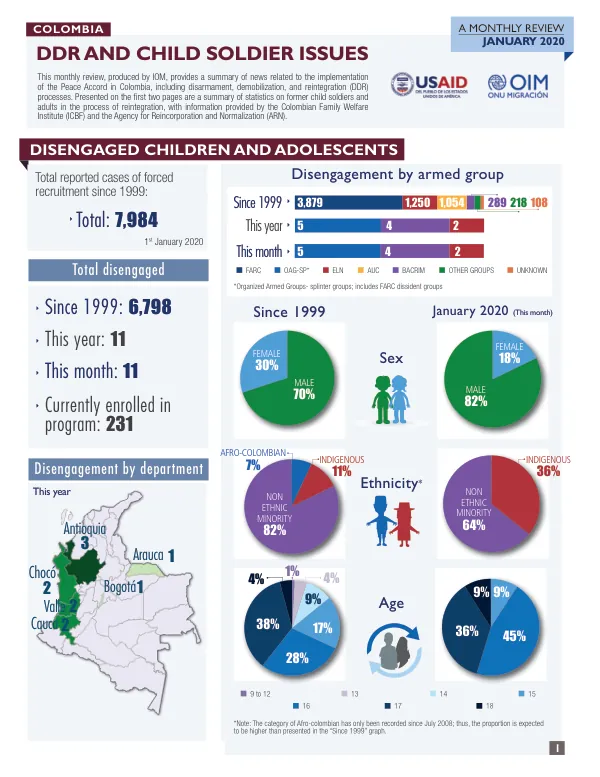
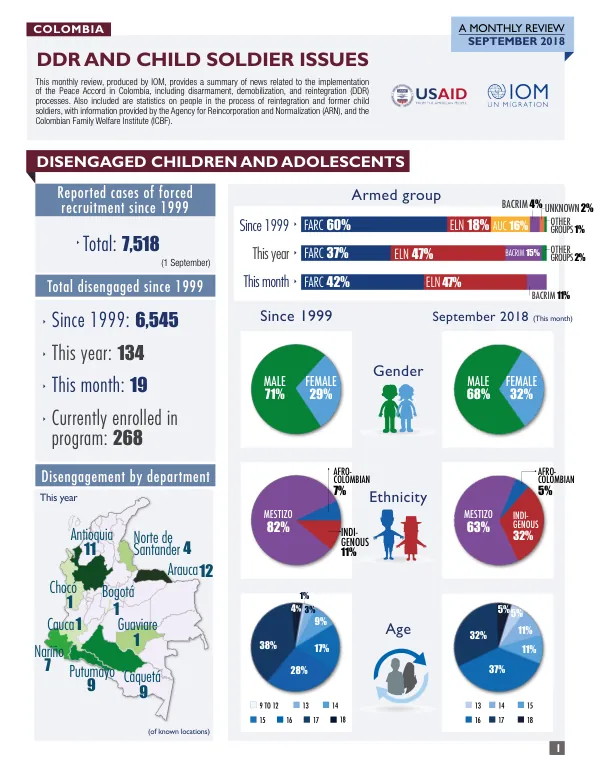
Since 1999, a total of 6,545 children and adolescents have been disengaged from armed groups, with 134 disengagements reported this year. Currently, 268 individuals are enrolled in reintegration programs, with 19 disengagements reported this month. The majority of disengaged individuals are from the FARC, accounting for 71% of male disengagements and 29% of female disengagements. The ethnic composition of disengaged individuals is predominantly Mestizo, with 82% of disengagements, followed by Afro-Colombian and Indigenous groups. The age range of disengaged individuals is predominantly between 13 and 17 years old, with 38% of disengagements in this age group. Disengagement by department shows that the majority of disengagements have occurred in the departments of Nariño, Bogotá, and Guaviare. The armed groups responsible for disengagement are predominantly FARC, with 60% of disengagements attributed to this group. Other armed groups, such as ELN and BACRIM, have also been involved in disengagement efforts. The reintegration process has been ongoing since 1999, with a total of 7,402 individuals currently in the process. The majority of reintegration efforts have focused on providing economic support and training to former combatants. However, challenges remain, including the provision of security guarantees and the implementation of the Peace Accord. The FARC has been at the forefront of the reintegration process, with 60% of disengagements attributed to this group. However, concerns have been raised about the leadership's commitment to the peace process, with some leaders failing to fulfill their obligations to actively contribute to the success of the reincorporation process. The UN Verification Mission has expressed concerns about the lack of leadership and the high levels of uncertainty surrounding the peace process. The implementation of the Peace Accord has been hindered by a lack of institutional capacity and insufficient funds. The Comptroller's Office has announced that there are insufficient funds to implement the Peace Accord, and the UN Verification Mission has been renewed until 25 September 2019. The JEP has given 31 former FARC combatants involved in the illegal retentions case 10 working days to report on their reintegration and contributions to the truth and the search for missing persons. The report highlights the need for security guarantees to be implemented to protect communities, social leaders, and former combatants and their families. The Fundación Ideas para la Paz (FIP) has published a report addressing the factors that explain the deterioration of security in these territories and how to contribute to the implementation of security guarantees. The Victims' Law project has ignited a debate over the scope of land restitution, with criticism focusing on its relegation of victims' rights to the needs of current occupants of lands which were forcefully abandoned or dispossessed. The GOC has presented a judicial reform project, which has been met with criticism from some quarters. In Putumayo, 15 indigenous populations have actively participated in the construction of an Action Plan for Regional Transformation (PATR), using this to request assistance from central government in providing for their basic needs and responding to the growth of illegal activities in the department. The Ministry of Health has reported a high rate of attempted suicide in Vaupés, with 128 cases per 100,000 inhabitants in 2017, compared to a national average of 52 per 100,000 inhabitants. An agreement has been signed with the French Embassy to support the United Nations Verification Mission in Colombia, with a focus on providing assistance to indigenous groups in Vaupés. The agreement includes a provision for 116,000 euros to support the mission's activities.