USAID DEC
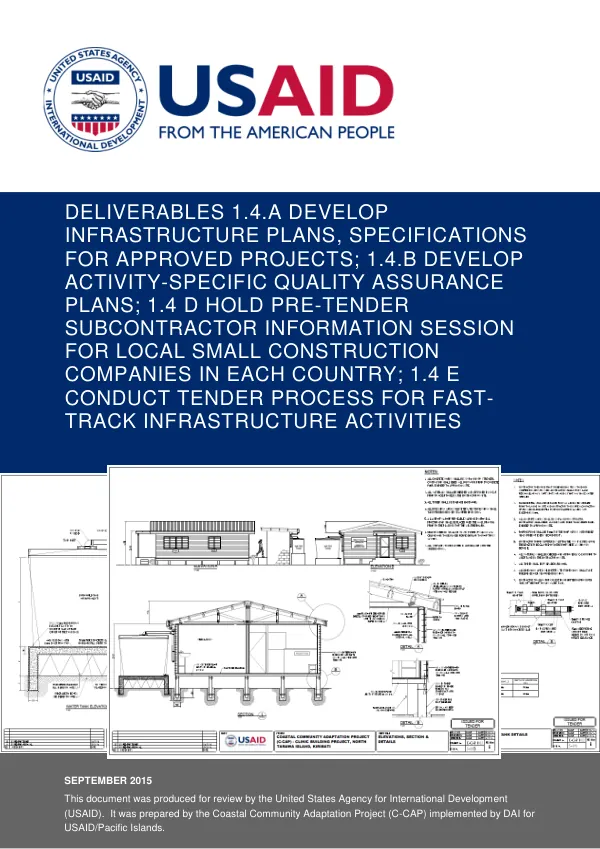
Deliverables 1.4.A Develop Infrastructure Plans, Specifications for Approved Projects 1.4.B Develop Activity-Specific Quality Assurance Plans 1.4 D Hold Pre-Tender Subcontractor Information Session for Local Small Construction Companies in Each Country 1.4 E Conduct Tender Process for Fast-Track Infrastructure Activities
Sign inDEVELOPMENT ALTERNATIVES, INC./FINNET
Deliverables 1.4.A Develop Infrastructure Plans, Specifications for Approved Projects 1.4.B Develop Activity-Specific Quality Assurance Plans 1.4 D Hold Pre-Tender Subcontractor Information Session for Local Small Construction Companies in Each Country 1.4 E Conduct Tender Process for Fast-Track Infrastructure Activities
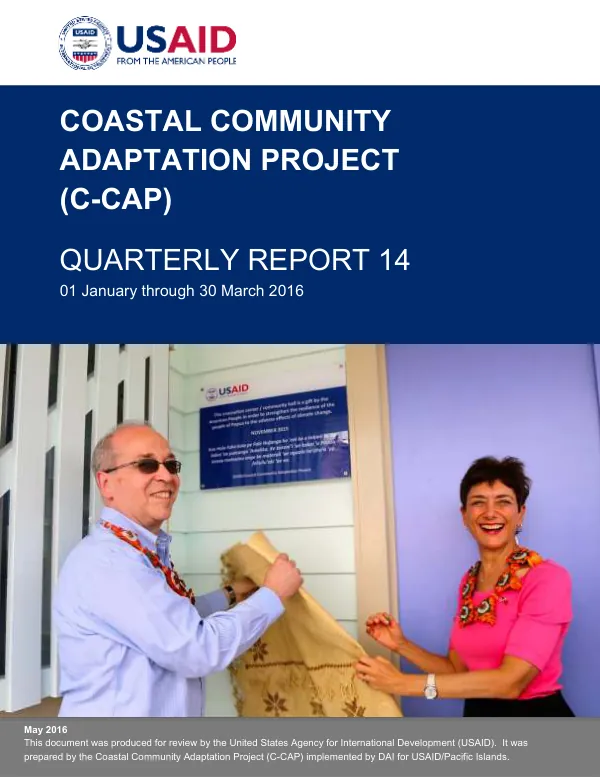
The Pacific Islands Coastal Community Adaptation Project (C-CAP) is a United States Agency for International Development (USAID) funded activity focused on assisting coastal communities to adapt to the impacts of climate change.
2015 · 10 pages
Sign in to readA free account is required to download.
Abstract
C-CAP is based in Port Moresby, PNG with a regional office in Suva, Fiji, and current operations in nine (9) South Pacific island nations, including Papua New Guinea (PNG), Fiji, Tonga, Samoa, Kiribati, Tuvalu, Solomon Islands, and Nauru. Component 1 of the project includes delivery of small-scale community infrastructure across C-CAP countries. The interventions aim to better prepare the communities for the projected impacts of climate change through a variety of hard and soft engineered options calibrated to the climate change risks and vulnerabilities identified in the risk assessment phase and the community-selected preference identified in the Infrastructure Needs Assessment. The project focuses on assisting coastal communities to adapt to the impacts of climate change, including sea-level rise, increased storm intensity, and saltwater intrusion into freshwater sources. Infrastructure plans and specifications for approved projects were developed in accordance with the project's objectives. Activity-specific quality assurance plans were also developed to ensure that the infrastructure projects meet the required standards. Pre-tender subcontractor information sessions were held for local small construction companies in each country to provide them with information on the project requirements and to facilitate their participation in the tender process. The tender process for fast-track infrastructure activities was conducted in September 2015. The process involved the evaluation of bids from local construction companies and the selection of the most suitable contractors for each project. The project's infrastructure plans and specifications were developed in consultation with local stakeholders, including community leaders and government officials, to ensure that the projects meet the needs of the communities. The project's infrastructure interventions aim to improve the resilience of coastal communities to climate change impacts. The interventions include the construction of medical aid posts, schools, and other community facilities that are designed to withstand the projected impacts of climate change. The project also focuses on improving the capacity of local communities to manage and maintain their infrastructure, through training and capacity-building programs for local contractors and community members. The project's geographic focus is on the nine (9) South Pacific island nations where C-CAP is currently operating. The project's timeframes are aligned with the project's objectives and the needs of the communities. The project's recommendations are based on the project's findings and the needs of the communities, and are intended to inform the development of future infrastructure projects in the region.
Related documents