ARD INC
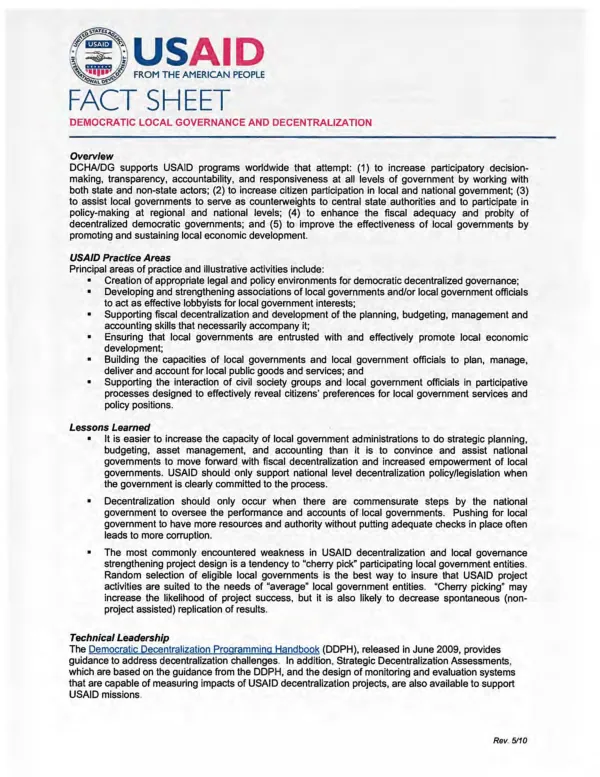
Democratic Local Governance and Decentralization Fact Sheet
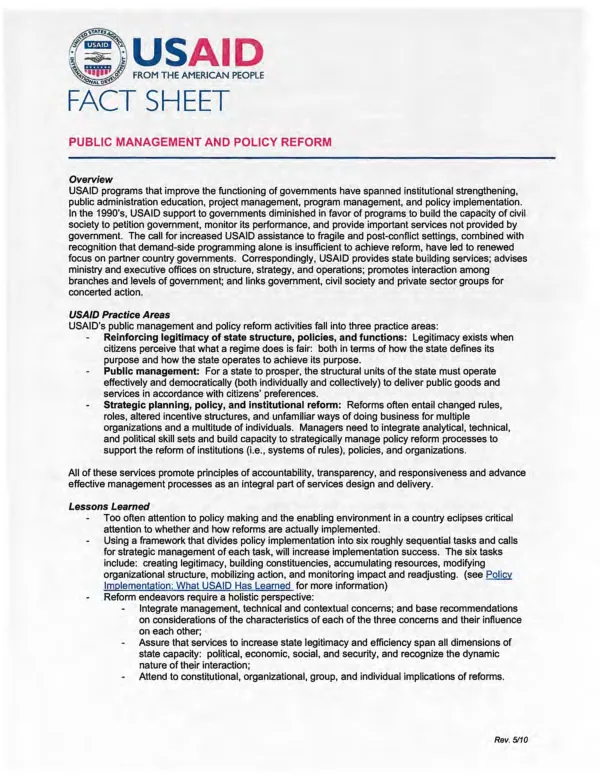
The Democratic Local Governance and Decentralization (DCHAlDG) initiative supports USAID programs worldwide that aim to increase participatory decision-making, transparency, accountability, and responsiveness at all levels of government.
2013 · 2 pages
Sign in to readA free account is required to download.
Abstract
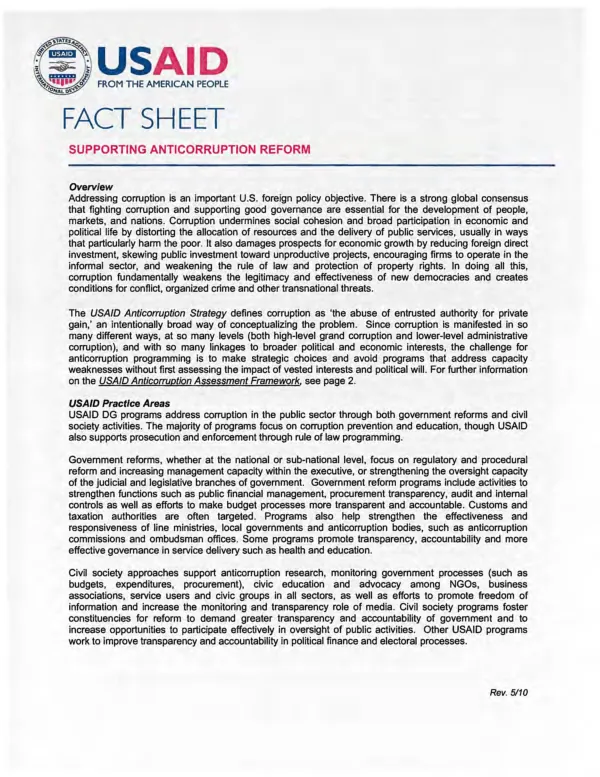
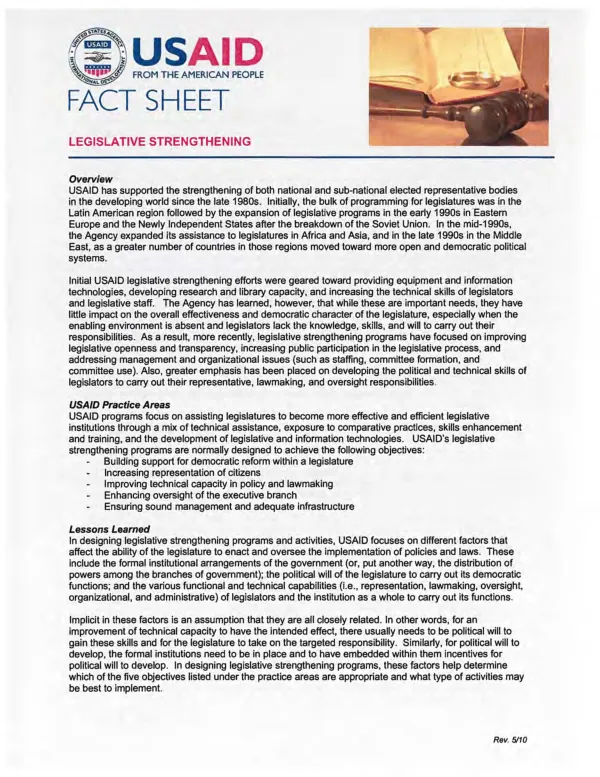
This is achieved by working with both state and non-state actors to increase citizen participation in local and national government, assist local governments in serving as counterweights to central state authorities, and enhance the fiscal adequacy and probity of decentralized democratic governments. Key areas of practice under DCHAlDG include creating appropriate legal and policy environments for democratic decentralized governance, developing and strengthening associations of local governments and/or local government officials to act as effective lobbyists for local government interests, and supporting fiscal decentralization and development of planning, budgeting, management, and accounting skills. Additionally, the initiative focuses on ensuring that local governments are entrusted with and effectively promote local economic development, building the capacities of local governments and local government officials to plan, manage, deliver, and account for local public goods and services, and supporting the interaction of civil society groups and local government officials in participative processes. Lessons learned from DCHAlDG highlight the importance of increasing the capacity of local government administrations to do strategic planning, budgeting, asset management, and accounting, as well as the need for national governments to be committed to the decentralization process. Decentralization should only occur when there are commensurate steps by the national government to oversee the performance and accounts of local governments, as pushing for local government to have more resources and authority without adequate checks in place can lead to more corruption. Technical leadership is provided through the Democratic Decentralization Programming Handbook (DDPH), released in June 2009, which offers guidance to address decentralization challenges. Strategic Decentralization Assessments, based on the guidance from the DDPH, and the design of monitoring and evaluation systems that are capable of measuring impacts of USAID decentralization projects are also available to support USAID missions. Furthermore, USAID must seek knowledge of the requisites and requirements of decentralization in conflict-post-conflict settings, in fragile states, and in transformational development states. USAID missions and other entities may obtain decentralization and local governance services under the Democratic Local Governance and Decentralization IQCs, which include ARD, Inc., PADCO-AECOM International, Inc., Development Alternatives, Inc., Research Triangle Institute, and The Urban Institute. The implementation period for these contracts runs through June 2011. Additionally, Sustainable Urban Management III IQCs are available, which include ARD, Inc., The Louis Berger Group, Mendez, England and Associates, Planning and Development Collaborative International, Research Triangle Institute, and The Urban Institute.
Related documents