TETRA TECH ESI, INC.
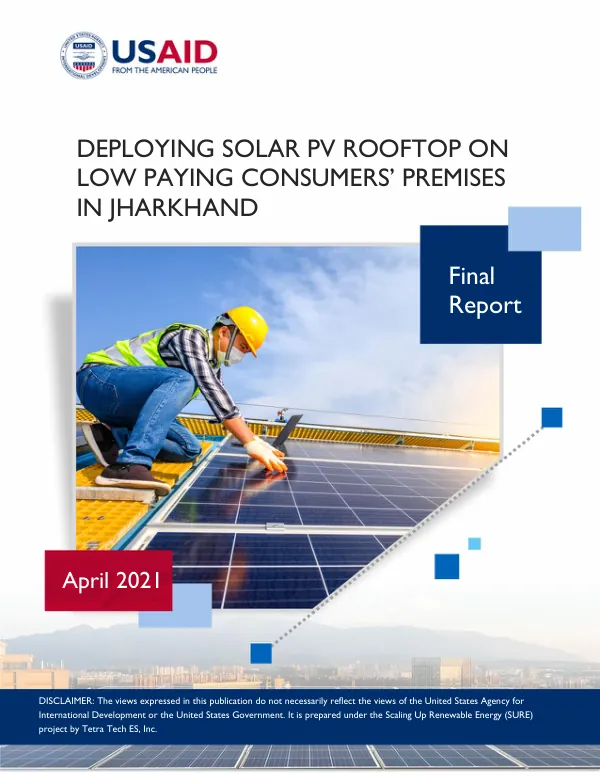
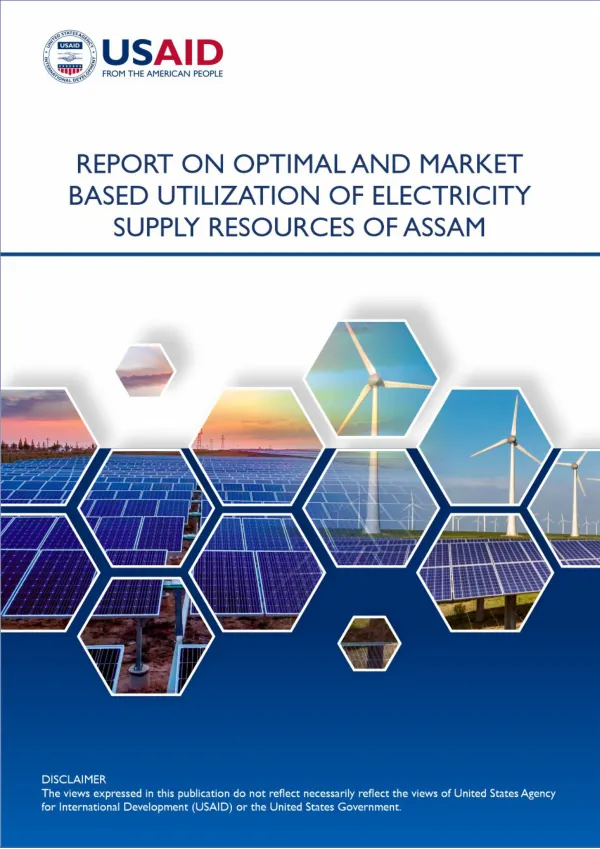
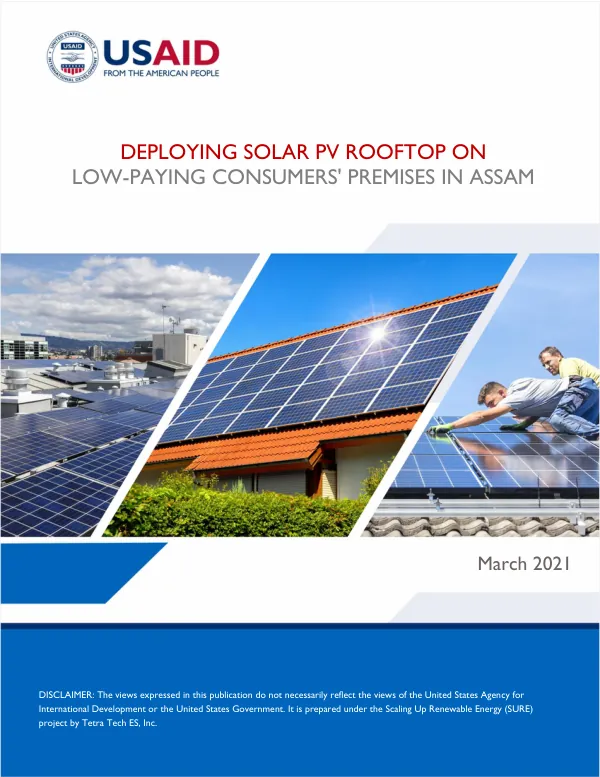
Deploying Solar PV Rooftop on Low-Paying Consumers' Premises in Assam
The agricultural development initiative in Assam, India, began in 2018 with funding from the United States Agency for International Development (USAID).
2021 · 41 pages
Sign in to readA free account is required to download.
Abstract
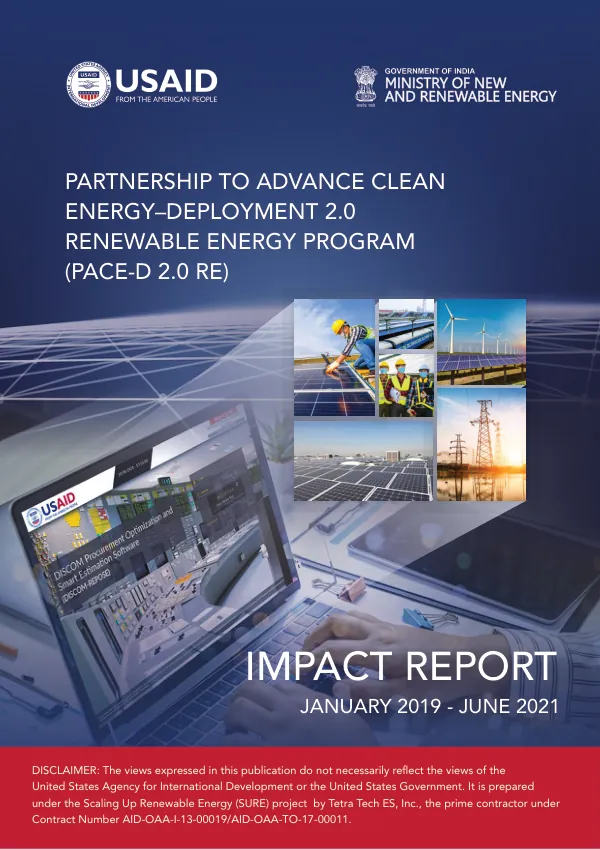
The initiative aimed to deploy solar photovoltaic (PV) rooftop systems on low-paying consumers' premises in Assam. The project was implemented by Tetra Tech ES, Inc. under the Partnership to Advance Clean Energy-Deployment (PACE-D 2.0 RE) Technical Assistance Program. The report highlights the challenges in deploying solar PV rooftop systems for low-paying consumers in Assam. The main challenges include a higher cost of supply, low average billing rate, and high aggregate technical and commercial (AT&C) losses. The report notes that the average cost of supply for domestic A consumers in Assam is significantly higher than the average billing rate, resulting in a loss of revenue for the distribution company. The report also discusses the relevance and applicability of the innovative business model developed by PACE-D 2.0 RE. The model, known as the Super RESCO (Renewable Energy Service Company) model, aims to address the challenges of SPVRT deployment by providing a framework for distribution companies to partner with renewable energy service companies. The model involves the distribution company providing the infrastructure and the renewable energy service company providing the solar PV systems and maintenance services. The financial analysis of the report reveals that the deployment of 250 MW of SPVRT can result in significant savings for the distribution company. The report estimates that the savings from T&D (Transmission and Distribution) losses can be as high as INR 1.5 billion (approximately USD 20 million) per year. The report also notes that the sensitivity analysis of savings to SPVRT capacity and T&D losses indicates that the savings can be substantial even at lower capacities. The economic analysis of the report highlights the benefits of SPVRT deployment for low-paying consumers. The report notes that the deployment of SPVRT can result in significant reductions in the cost of supply for low-paying consumers, making electricity more affordable for them. The report also notes that the deployment of SPVRT can create jobs and stimulate economic growth in the region. The report provides a detailed implementation plan for the Super RESCO model, including the roles and responsibilities of key stakeholders. The report also provides a list of meetings and communications with stakeholders, including the Assam Power Distribution Company Limited (APDCL) and the Ministry of New and Renewable Energy (MNRE). The report concludes with key recommendations and a way forward for the deployment of SPVRT in Assam. The report recommends that the distribution company should partner with renewable energy service companies to deploy SPVRT systems on low-paying consumers' premises. The report also recommends that the government should provide incentives and subsidies to support the deployment of SPVRT systems. The report provides a comprehensive analysis of the challenges and opportunities for SPVRT deployment in Assam. The report highlights the potential benefits of SPVRT deployment for low-paying consumers, including reduced costs and improved access to electricity. The report also provides a detailed implementation plan for the Super RESCO model, which can be used as a framework for other distribution companies to deploy SPVRT systems in their respective regions.