USAID DEC
Designing Financial Services to Respond to Household Shocks: A Case Study of RCPB’s Health Savings and Loan Product
Sign inABT ASSOCIATES
Designing Financial Services to Respond to Household Shocks: A Case Study of RCPB’s Health Savings and Loan Product
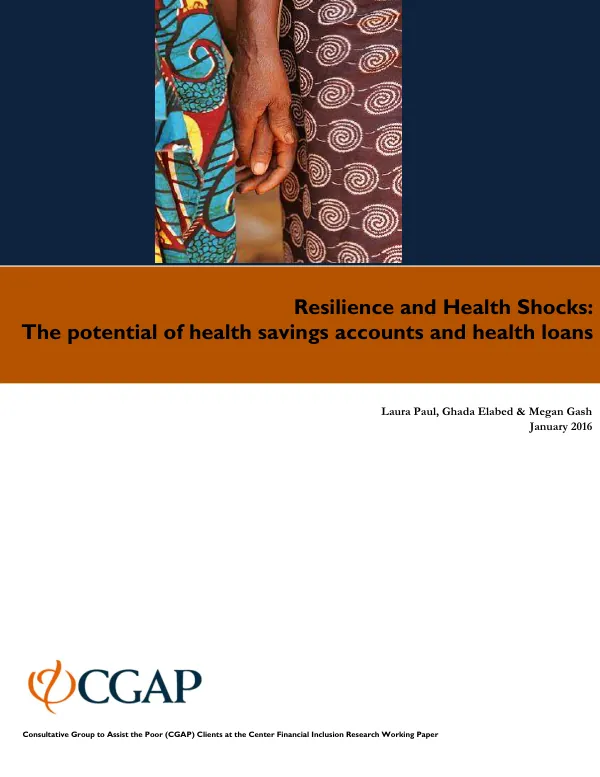
The health savings and loan product offered by Reseau des Caisses Populaires du Burkina Faso (RCPB) was designed to help clients anticipate and respond to health expenses.
2016 · 7 pages
Sign in to readA free account is required to download.
Abstract
The product allowed clients to deposit a set amount of money into a special account devoted only for health expenses. During the first six months after opening the account, clients may not access these funds. After the six-month capitalization period, clients may withdraw health savings only upon presentation of proof of health expense. The health savings account did not earn interest, but possession of an active account that had exceeded the capitalization period entitled clients to apply for a health loan in the case of a verifiable, major health cost for the client or any family member. Health loans were offered at lower interest than RCPB's microenterprise loans and carried more flexible repayment terms. By December 2009, at the conclusion of the Microfinance and Health Protection (MAHP) initiative, 12,539 RCPB clients had health savings accounts, amounting to approximately $55,000 in current deposits. Initial MAHP research showed that clients were making active deposits and withdrawals in the first year of having their account. Clients were overwhelmingly pleased with their health savings accounts, even when they had regular savings accounts with RCPB, because the health savings account allowed them to build savings specifically for health and created a level of discipline for saving for costs they knew they would eventually incur. They could also keep their health problems more private by not having to borrow from family members or neighbors for a health event for which they did not have the money on hand to cover the costs. The case study highlights key findings from the CGAP resilience research that can help guide further thinking about how to best design financial products for anticipating and covering health shock expenses. One key finding was that health savings accounts were not successfully reaching RCPB's poorest clients. Although RCPB had made efforts at marketing this product via sales agents, this did not result in active account openings among village-bank clients. The management information system (MIS) was not set up to track the number of "specialized" or commitment health savings accounts. Another key finding was that adapting or offering a health savings account to a group of clients proved to be challenging. Many women within village banks lacked identification cards that make it possible to have an individual account with RCPB, including an individual health savings account. RCPB worked to accommodate the groups by making it possible for groups to save in group accounts, but the physical presence of the group management committee was required to make the deposits and withdrawals at the branch on behalf of group members. This requirement made it difficult to access the account in a timely manner. The resilience research also found that clients resorted to traditional means to cover health costs, including using savings held at home, reducing food consumption, and selling livestock or grain. As a result, accounts were being closed or not actively used since the product was not helping cover health expenses in a timely manner. The research highlighted the need for further interventions to improve the village-bank health savings-account experience, particularly for urban or employed members.