USAID DEC
Adolescent female empowerment, ideations, and health behavior—Insights for improving malaria, family planning, and maternal and child health outcomes in northwestern Nigeria through social and behavior change programming
Sign inBREAKTHROUGH ACTION
Adolescent female empowerment, ideations, and health behavior—Insights for improving malaria, family planning, and maternal and child health outcomes in northwestern Nigeria through social and behavior change programming
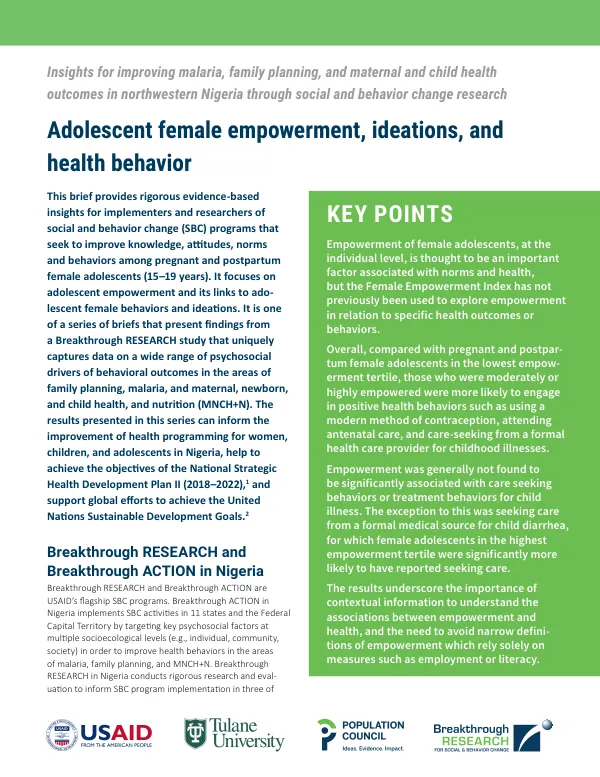
Empowerment of female adolescents, at the individual level, is thought to be an important factor associated with norms and health.
2021 · 6 pages
Sign in to readA free account is required to download.
Abstract
The Female Empowerment Index (FEMI) was developed utilizing data from Nigeria and designed to capture sub-national variation in female empowerment by including aspects of empowerment not included in previous studies. The FEMI index was developed in the Nigerian context but has not been used to explore empowerment in relation to specific health outcomes or behaviors. Empowerment was generally not found to be significantly associated with care-seeking behaviors or treatment behaviors for child illness. However, female adolescents in the highest empowerment tertile were significantly more likely to have reported seeking care from a formal medical source for child diarrhea. The results underscore the importance of contextual information to understand the associations between empowerment and health, and the need to avoid narrow definitions of empowerment which rely solely on measures such as employment or literacy. The study used a baseline survey conducted between September and October 2019 in Breakthrough ACTION program areas in Kebbi, Sokoto, and Zamfara States of northwestern Nigeria. The survey contained information on 590 currently pregnant and 353 postpartum adolescents aged 15-19 years. An index of empowerment was constructed based on the existing literature on female empowerment in Nigeria and sub-Saharan Africa. The index was adapted with components for specific health areas of interest to Breakthrough RESEARCH, including relevant items from the Behavioral Sentinel Surveillance (BSS) for that health area, along with measures of self-efficacy where appropriate. The variables of the base empowerment index that were included in each health outcome-specific index are shown in Table 1. The table includes measures of household decision-making, education, and health outcome-specific variables such as current use of modern contraception, immediate breastfeeding, 4+ antenatal care (ANC) visits with a skilled provider and intermittent preventative treatment in pregnancy for malaria (IPTp), child immunization, and fever and diarrhea care-seeking and treatment. The study found that compared with pregnant and postpartum female adolescents in the lowest empowerment tertile, those who were moderately or highly empowered were more likely to engage in positive health behaviors such as using a modern method of contraception, attending antenatal care, and care-seeking from a formal healthcare provider for childhood illnesses. The results suggest that empowerment is an important factor associated with health behaviors among pregnant and postpartum female adolescents in northwestern Nigeria.
Related documents
Documents in this collection
 2021
2021USAID DEC
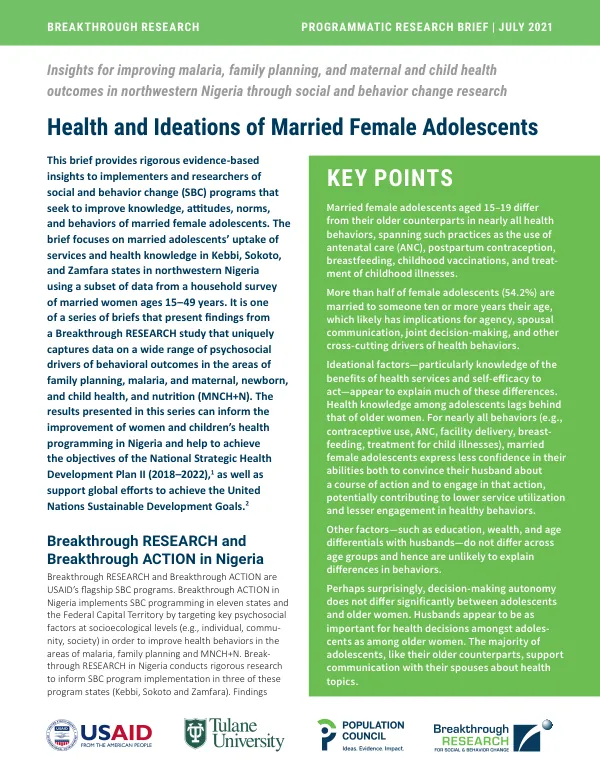
Health and Ideations of Married Female Adolescents—Insights for Improving Malaria, Family Planning, and Maternal and Child Health Outcomes in Northwestern Nigeria through Social and Behavior Change Programming
Open record 2021
2021USAID DEC