USAID DEC
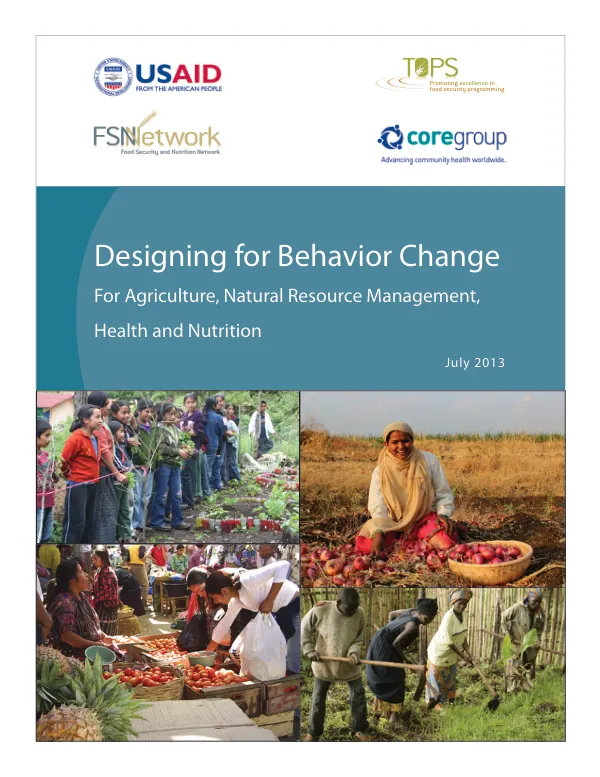
Designing for Behavior Change: For Agriculture, Natural Resource Management, Health and Nutrition
Sign inCARE
Designing for Behavior Change: For Agriculture, Natural Resource Management, Health and Nutrition
The Designing for Behavior Change curriculum was developed by the CORE Group Social and Behavioral Change Working Group and later modified for multiple sectors by members of the Food Security and Nutrition Network Social and Behavioral Change Task Force.
2013 · 257 pages
Sign in to readA free account is required to download.
Abstract
The Technical and Operational Performance Support (TOPS) Program, funded by the American people through the United States Agency for International Development (USAID), made this training curriculum possible. This six-day curriculum is a field-tested, practical behavioral framework that aids community development managers, program planners, and behavior change officers in planning for maximum effectiveness. The curriculum was originally adapted from the Academy of Educational Development's BEHAVE tool and developed into a maternal and child health curriculum by the CORE Group Social and Behavioral Change Working Group. It has now been tailored, updated, and extensively field-tested for food security field-based staff to include more case studies, stories, and examples; clarification of determinants and key factors; Barrier Analysis; a half-day of field work using formative research; guidelines for selecting appropriate behavior change activities; and more. The curriculum is designed to help participants understand the process of planned change and how to apply the Designing for Behavior Change (DBC) framework to their work. The DBC framework is a structured approach to planning behavior change that involves selecting and defining a feasible and effective behavior, identifying determinants that influence behavior, and developing a behavior change strategy. The curriculum is organized into six days of training, with each day focusing on a different aspect of the DBC framework. Day one introduces the concept of behavior change and the DBC framework, while day two focuses on selecting and defining a feasible and effective behavior. Day three explores the priority group and influencing groups, and day four involves conducting formative research to find key determinants. Day five focuses on preparing and practicing the DBC framework, and day six involves incorporating final feedback into the DBC frameworks and developing program strategy implementation plans. Throughout the curriculum, participants will engage in a variety of activities, including group exercises, case studies, and field work. The curriculum also includes a range of tools and resources, including a process of planned change game, key terminology, and answer keys. The TOPS Program, funded by USAID's Office of Food for Peace (FFP), is strengthening the capacity of FFP grantees to deliver high-quality and effective food aid by fostering collaboration, innovation, and knowledge sharing about improved food security and nutrition practices. The FSN Network is an open community of practice of food security and nutrition implementers seeking to share information, shape agendas, understand and influence donor priorities, build consensus on promising practices, and widely diffuse technical knowledge. The curriculum is designed to be flexible and adaptable to different contexts and settings. It can be used by a range of stakeholders, including community development managers, program planners, behavior change officers, and other professionals working in the fields of agriculture, natural resource management, health, and nutrition.