USAID
Diasporas: Seeding Development
Diasporas play a significant role in seeding development in countries of origin or affinity.
2016 · 2 pages
Sign in to readA free account is required to download.
Abstract
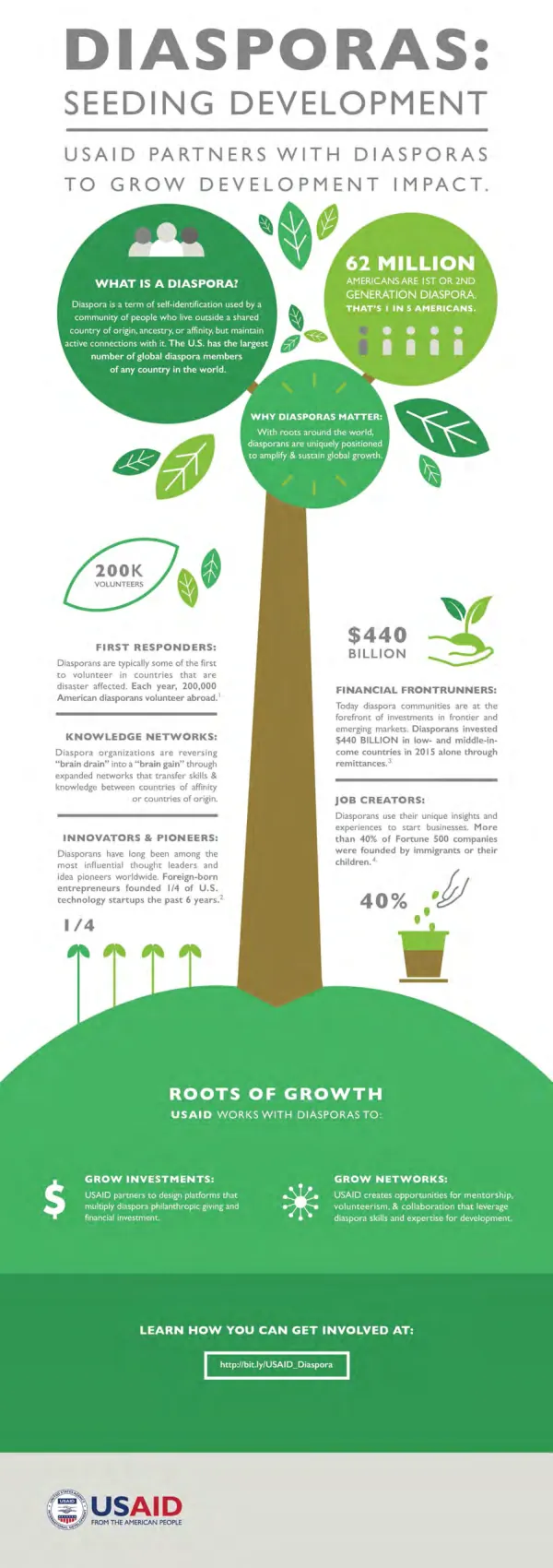
Diasporans are often among the first to volunteer in disaster-affected countries, with approximately 200,000 American diasporans volunteering abroad each year. This volunteer work not only provides immediate support but also fosters a sense of community and shared responsibility among diasporans. Diaspora organizations have successfully reversed the phenomenon of "brain drain" by creating expanded networks that transfer skills and knowledge between countries. This "brain gain" enables diasporans to share their expertise and contribute to the development of their countries of origin or affinity. The influence of diasporans extends beyond their professional networks, as they have long been among the most influential thought leaders and idea pioneers worldwide. Foreign-born entrepreneurs have founded nearly one-quarter of U.S. technology startups over the past six years, demonstrating the significant impact of diasporans on innovation and entrepreneurship. Furthermore, diasporans have invested heavily in low- and middle-income countries, with $440 billion in remittances sent in 2015 alone. This financial support not only benefits the recipients but also contributes to the economic growth of the diasporans' countries of origin or affinity. Diasporans use their unique insights and experiences to start businesses, with more than 40% of Fortune 500 companies founded by immigrants or their children. This entrepreneurial spirit not only creates jobs but also drives economic growth and development in the diasporans' countries of origin or affinity. The contributions of diasporans to development are multifaceted, ranging from volunteer work and knowledge transfer to financial investments and entrepreneurship. The impact of diasporas on development is significant, with their contributions extending beyond traditional aid and development programs. By leveraging their skills, knowledge, and experiences, diasporans can drive positive change and foster sustainable development in their countries of origin or affinity.