USAID DEC
Dietary diversity of 6- to 59-month-old children in rural areas of Moramanga and Morondava districts, Madagascar
Sign inUSAID
Dietary diversity of 6- to 59-month-old children in rural areas of Moramanga and Morondava districts, Madagascar
The dietary diversity of 6- to 59-month-old children in rural areas of Moramanga and Morondava districts, Madagascar, was assessed in a study conducted in 2014.
2018 · 14 pages
Sign in to readA free account is required to download.
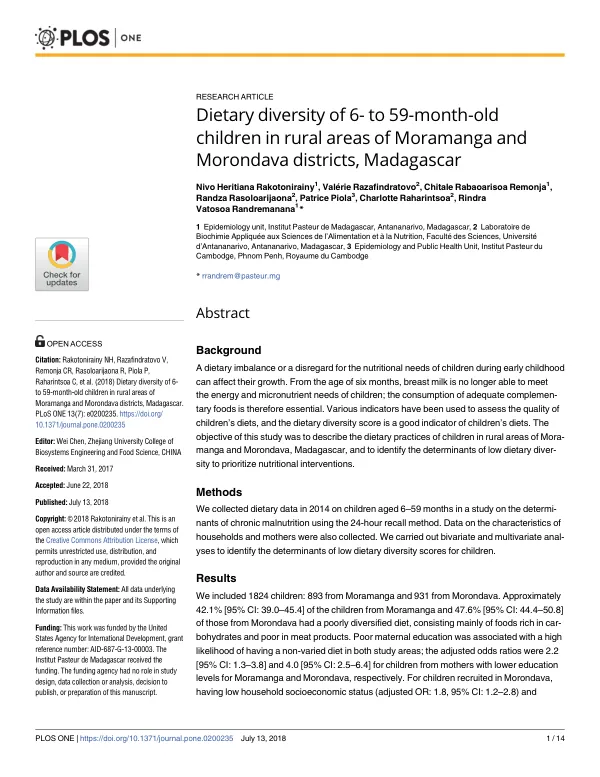
Abstract
The study aimed to describe the dietary practices of children in these areas and identify the determinants of low dietary diversity scores. The study was carried out in two rural areas, the Health and Demographic Surveillance Site (HDSS) of Moramanga and the Bemanonga Commune of the Morondava district. The study included 1824 children, with 893 from Moramanga and 931 from Morondava. Approximately 42.1% of the children from Moramanga and 47.6% of those from Morondava had a poorly diversified diet, consisting mainly of foods rich in carbohydrates and poor in meat products. Poor maternal education was associated with a high likelihood of having a non-varied diet in both study areas. The adjusted odds ratios were 2.2 [95% CI: 1.3-3.8] and 4.0 [95% CI: 2.5-6.4] for children from mothers with lower education levels for Moramanga and Morondava, respectively. In Morondava, having low household socioeconomic status and belonging to a household without livestock were also associated with a low dietary diversity score. The adjusted odds ratios were 1.8 [95% CI: 1.2-2.8] and 1.8 [95% CI: 1.2-2.7], respectively. These findings suggest that improving girls' education, adapting nutrition education programs for mothers based on their level of education, and strengthening poverty reduction programs are essential for improving the dietary diversity of children in these areas. The study was conducted in two regions with different nutritional profiles. The Alaotra-Mangoro region, where Moramanga is located, has a high prevalence of chronic malnutrition, estimated at 59.6% in 2010. In contrast, the Menabe region, where Morondava is located, has an average stunting prevalence. The study sites have distinct climate and agricultural characteristics, with Moramanga having a hot and humid tropical climate and Morondava having a dry and irregular climate. The study used a 24-hour recall method to collect dietary data from the mothers or caregivers of the children. The questionnaire also collected information on the child's age and sex, feeding practices, the mother's age, education, and occupation, and household characteristics. The study protocol was approved by the Ethics Committee of the Ministry of Public Health of Madagascar, and the parents of the children gave their written consent after being informed about the purpose and practical issues of the study. The study's findings have implications for improving the nutritional status of children in rural areas of Madagascar. The results suggest that addressing the determinants of low dietary diversity, such as poor maternal education and low household socioeconomic status, is essential for improving the dietary diversity of children in these areas.