USAID
Disaster Risk Reduction Building Resilience and Investing for a Safer Tomorrow
Disaster risk reduction is a comprehensive approach to preventing or reducing the damage caused by natural hazards such as earthquakes, floods, droughts, and storms.
2010 · 4 pages
Sign in to readA free account is required to download.
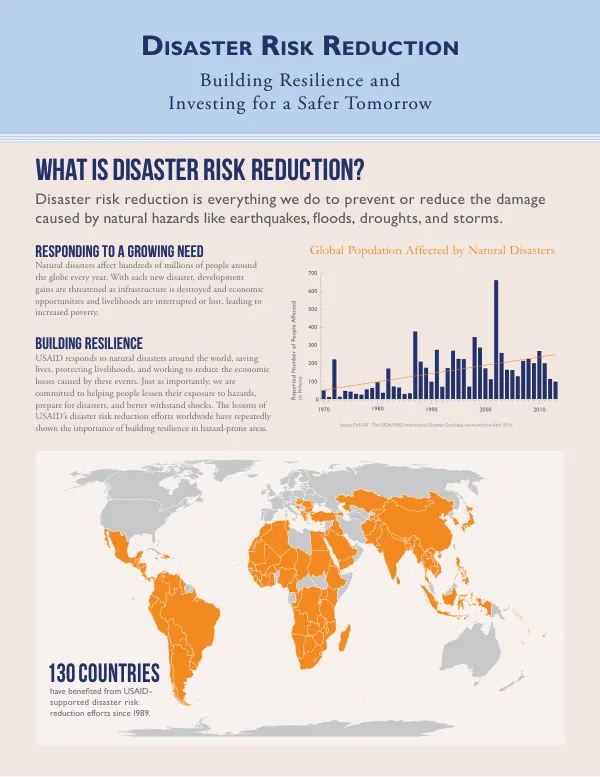
Abstract
This approach involves a wide array of activities, including the development of early warning systems, investing in hazard-resistant structures, and constructing irrigation systems to help farmers grow crops despite dry conditions. Early warning systems are critical in saving lives and reducing the loss of property. USAID has helped establish global, regional, and local early warning systems for various hazards, including cyclones, floods, and volcanic eruptions. For example, in 2013, warnings issued before Cyclone Phail's arrival in India allowed authorities to evacuate 1 million people from coastal areas, preventing any fatalities. Disaster risk reduction programs also focus on supporting livelihoods by reducing the vulnerability of various activities to specific hazards. By adopting conservation agriculture techniques, farmers can significantly increase their yields even during drought years. In Namibia, pearl millet yields increased an average of five times after introducing conservation agriculture techniques, despite the country experiencing its most severe drought in 30 years. Improved shelters and settlements can become more resilient and durable when risk reduction measures are incorporated into structures that incorporate local conditions, local materials, and local building practices. In Bangladesh, USAID-funded transitional shelters built after Cyclone Sidr in 2007 remained occupied and structurally intact during Cyclone Aila in 2009, demonstrating the effectiveness of disaster risk reduction efforts. Disaster risk reduction efforts also involve integrating disaster risk reduction with emergency response programs to build the resilience of communities over time and mitigate the impact of future crises. By incorporating design elements that withstand different hazards, shelters and settlements can become more effective in reducing the loss of life and property. Overall, disaster risk reduction is a critical component of USAID's efforts to save lives, protect livelihoods, and reduce the economic impacts of disasters. By investing in early warning systems, supporting livelihoods, and improving shelters and settlements, USAID can help communities become more resilient and better equipped to withstand the effects of natural disasters.