CARE
Gender-Based Violence Portfolio Performance Evaluation
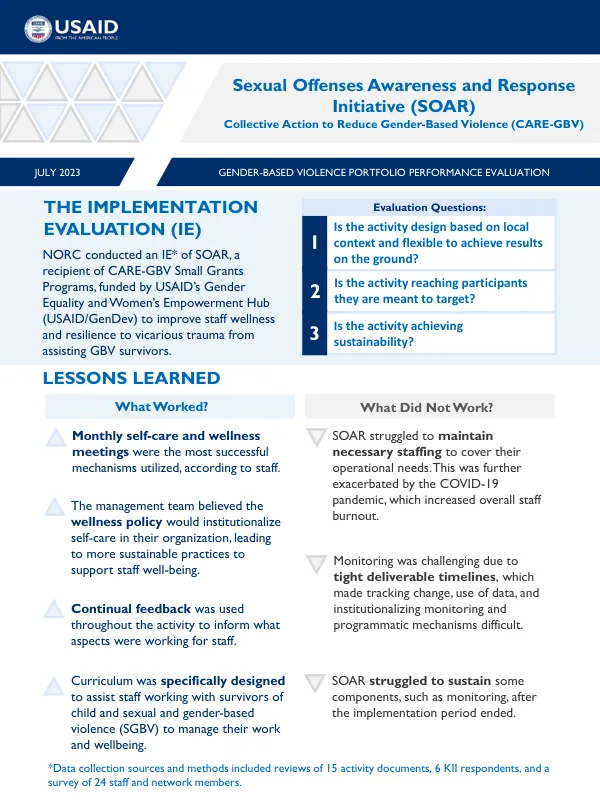
The Sexual Offenses Awareness and Response Initiative (SOAR) aimed to improve staff wellness and resilience to vicarious trauma from assisting GBV survivors.
2023 · 2 pages
Sign in to readA free account is required to download.
Abstract
Funded by USAID's Gender Equality and Women's Empowerment Hub, SOAR received support from the Collective Action to Reduce Gender-Based Violence (CARE-GBV) Small Grants Programs. The initiative focused on providing staff with the necessary tools and resources to manage their work and well-being while working with survivors of child and sexual and gender-based violence (SGBV). Monthly self-care and wellness meetings were identified as the most successful mechanisms utilized by SOAR staff. These meetings allowed staff to share their experiences and receive support from their colleagues. The management team believed that the wellness policy would institutionalize self-care in their organization, leading to more sustainable practices to support staff well-being. However, SOAR struggled to maintain necessary staffing to cover their operational needs, which was further exacerbated by the COVID-19 pandemic. The management team used continual feedback throughout the activity to inform what aspects were working for staff. Curriculum was specifically designed to assist staff working with SGBV survivors to manage their work and well-being. Despite these efforts, SOAR struggled to sustain some components, such as monitoring, after the implementation period ended. Monitoring was challenging due to tight deliverable timelines, which made tracking change, use of data, and institutionalizing monitoring and programmatic mechanisms difficult. The evaluation of SOAR highlighted the importance of investing in further self-care and wellness interventions for professionals supporting violence survivors. Findings clearly indicated that attention to self-care was valued and beneficial to care providers. The evaluation also recommended encouraging greater activities that bring GBV workers together, such as workshops, meetings, and focus groups. Additionally, the evaluation suggested increasing funding to support longer projects, expanding training topics to help GBV responders better serve survivors of child sexual abuse, and embedding components to support monitoring and adaptations to self-care interventions. The evaluation also emphasized the need to encourage knowledge and resource sharing across different agencies likely to experience vicarious trauma and burnout. Based on lessons learned about implementing wellness programs and self-care by recipients, the next funding round could offer the opportunity for learning to be shared across more care sectors, making these resources more cost-effective and sustainable.
Related documents