FAMILY HEALTH INTERNATIONAL
Dismantling Stigma and Discrimination in Health Services in the Dominican Republic
The Dominican Republic's healthcare system has historically been plagued by stigma and discrimination against key populations, including men who have sex with men, transgender individuals, and sex workers.
2016 · 2 pages
Sign in to readA free account is required to download.
Abstract
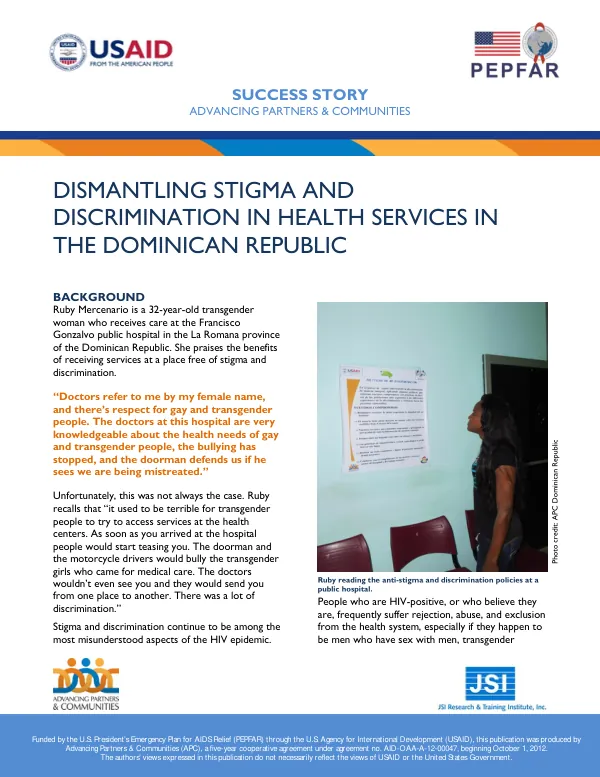
These individuals often face rejection, abuse, and exclusion from healthcare services, exacerbating the HIV epidemic. Ruby Mercenario, a 32-year-old transgender woman, recalls the difficulties she faced in accessing healthcare services at the Francisco Gonzalvo public hospital in La Romana province. However, under the guidance of the hospital's director, Ruby has experienced a significant improvement in her treatment, with healthcare providers referring to her by her female name and showing respect. The Advancing Partners & Communities (APC) project, funded by the U.S. President's Emergency Plan for AIDS Relief (PEPFAR) through the U.S. Agency for International Development (USAID), implemented a series of interventions to reduce stigma and discrimination against key populations in 17 public and private sector health centers. The project strengthened institutional capacity, sensitized and trained healthcare personnel, facilitated collaboration between hospital authorities and civil society organizations, and established procedures for anonymous reporting of cases of stigma and discrimination. APC's efforts have led to a significant improvement in the treatment of key populations at the healthcare centers. Beneficiaries are now able to access services in an environment where they are treated with respect and supported. Ruby Mercenario notes that the hospital director is actively involved in ensuring the well-being of transgender women, and healthcare staff now treat them with respect when they visit the hospital. The implementation of anti-stigma and discrimination policies and procedures has resulted in a substantial change in the way key populations are treated at the healthcare centers. The APC project has also facilitated exchange of experiences and best practices between healthcare centers and representatives of key populations. This collaboration has enabled healthcare providers to better understand the needs of key populations and provide more effective services. The project's outcomes demonstrate the importance of addressing stigma and discrimination in healthcare settings to improve the lives of key populations and ultimately combat the HIV epidemic. The success of the APC project in reducing stigma and discrimination against key populations in the Dominican Republic has set a precedent for other healthcare settings. By promoting respect, understanding, and inclusivity, healthcare providers can create a more supportive environment for individuals who have historically been marginalized. The project's outcomes serve as a model for future initiatives aimed at addressing the complex issues surrounding stigma and discrimination in healthcare settings.
Related documents