USAID DEC
Doña Martha Huanca Utiliza Biogás para Incrementar Sus Ingresos
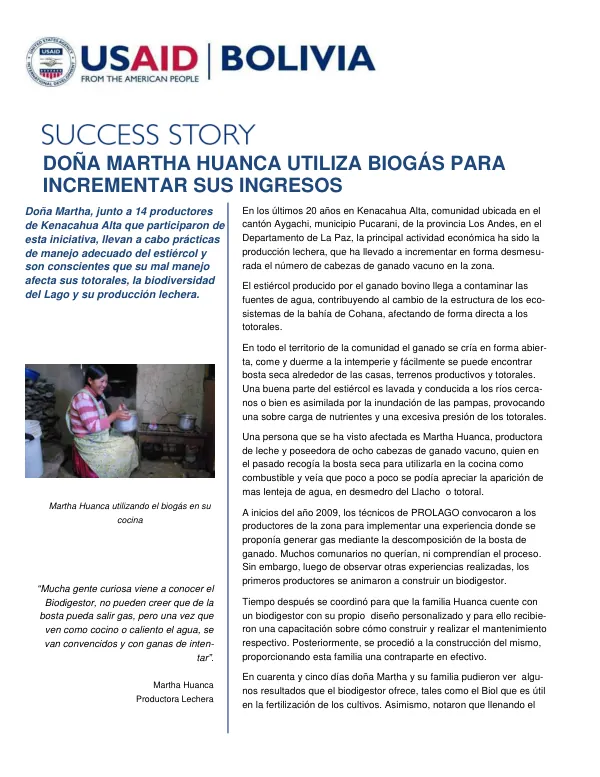
Martha Huanca, a dairy producer from Kenacahua Alta, has implemented the use of biogas in her kitchen to increase her income.
2013 · 2 pages
Sign in to readA free account is required to download.
Abstract
She is one of 14 producers in the area who participated in an initiative to manage cattle manure properly and are aware that improper management affects their totorales, the biodiversity of the Lago, and their dairy production. The community of Kenacahua Alta, located in the canton of Aygachi, municipality of Pucarani, in the province of Los Andes, Department of La Paz, has primarily relied on dairy production as its main economic activity over the past 20 years. This has led to an excessive increase in the number of cattle heads in the area, resulting in contaminated water sources and a change in the ecosystem structure of the Cohana bay, directly affecting the totorales. The cattle are raised in an open manner, eating and sleeping outdoors, and dried manure is easily found around homes, productive lands, and totorales. A significant portion of the manure is washed and carried to nearby rivers or absorbed by the flooding of the pampas, causing an overload of nutrients and excessive pressure on the totorales. Martha Huanca, who owns eight heads of cattle, previously collected dried manure to use as fuel in her kitchen and noticed the appearance of more water lilies, at the expense of the Llacho or totoral. In 2009, PROLAGO technicians invited producers from the area to implement an experience where biogas would be generated through the decomposition of cattle manure. Many community members were hesitant and did not understand the process. However, after observing other experiences, the first producers were encouraged to build a biodigestor. Martha Huanca's family later received a customized biodigestor design and training on how to construct and maintain it. They provided a financial counterpart for the construction. Within 45 days, Martha and her family observed the benefits of the biodigestor, including the production of Biol, a fertilizer for crops. They also noticed that filling the biodigestor once a week and maintaining it properly could produce up to 80 liters of Biol per week. By September 2011, the community had undergone a transformation, becoming more equipped, productive, and clean, with producers adopting new practices related to manure management. The biogas generated through the biodigestor is now appreciated by Martha's family, as they have noticed a reduction in dried manure around their homes and an improvement in their living conditions. Martha particularly appreciates the domestic benefits, as the biogas is used permanently, even during rainy seasons, and has generated a savings of at least one gas cylinder per month. She also notes that the Biol has helped improve potato production, increasing her income.