USAID DEC
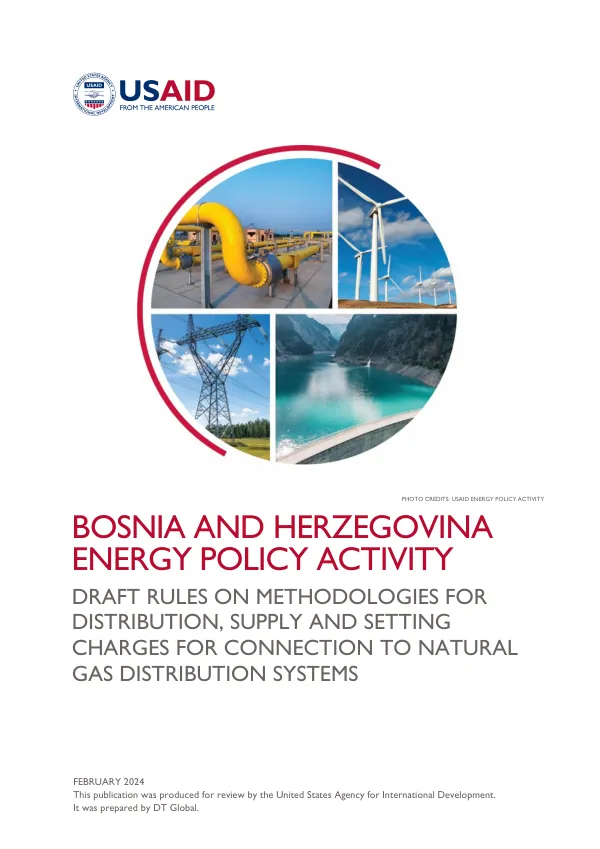
Draft Rules on Methodologies for Distribution, Supply and Setting Charges for Connection to Natural Gas Distribution Systems
Sign inDT GLOBAL
Draft Rules on Methodologies for Distribution, Supply and Setting Charges for Connection to Natural Gas Distribution Systems
The draft rules on methodologies for distribution, supply, and setting charges for connection to natural gas distribution systems in Bosnia and Herzegovina aim to establish a regulatory framework for the natural gas distribution sector.
2024 · 59 pages
Sign in to readA free account is required to download.
Abstract
The rules are designed to ensure a fair and transparent pricing mechanism for natural gas distribution services. The regulatory model adopted in the draft rules is based on a revenue requirement approach, where the revenue requirement is determined by the regulatory body. The revenue requirement is calculated by considering the operating expenses, capital costs, and other relevant factors. The operating expenses are categorized into controllable and non-controllable expenses, with the former being subject to regulatory approval. The draft rules also outline the principles for determining the revenue requirement, including the regulatory period, basis for determining the revenue requirement, and assessment of operating expenses efficiency. The regulatory period is defined as a five-year period, during which the revenue requirement is calculated and approved by the regulatory body. The draft rules also provide guidance on the calculation of operating expenses, including depreciation, profit tax, and adjustment mechanism for deviations of realized revenues from the revenue requirement. The regulatory account is also established to track the revenue requirement and operating expenses. The natural gas distribution tariff system design is also outlined in the draft rules, including the tariff elements, customer groups, and calculation of tariff rates. The tariff elements include distribution network charges, capacity charges, commodity charges, and fixed charges. The draft rules also provide guidance on the allocation of natural gas distribution costs to cost centers and network users. The supply tariffs are also regulated under the draft rules, including tariffs for the supply of end customers, regulation of default supplier tariffs, and regulation of supplier of last resort tariffs. The connection charges are also outlined in the draft rules, including the basis for the connection charge and principles for its calculation. The rate case is also established under the draft rules, including tasks and responsibilities of the DSO, supplier, and regulatory body. The submission of data and forms, establishing responsibility and consequences for missed deadlines, conditions for the extraordinary adjustment of required revenues, costs of supply, and tariffs, publication and transparency requirements, and dispute resolution procedure are also outlined in the draft rules. The draft rules provide a comprehensive framework for the regulation of the natural gas distribution sector in Bosnia and Herzegovina, ensuring a fair and transparent pricing mechanism for natural gas distribution services. The rules are designed to promote competition, efficiency, and investment in the sector, while protecting the interests of consumers. The regulatory body is responsible for implementing and enforcing the draft rules, ensuring that the natural gas distribution sector operates in a fair and transparent manner. The draft rules are an important step towards establishing a well-functioning regulatory framework for the natural gas distribution sector in Bosnia and Herzegovina. The draft rules are based on international best practices and are designed to be consistent with the EU acquis. The rules are also aligned with the Energy Community Treaty and the EU's Third Energy Package. The draft rules are an important step towards integrating the natural gas distribution sector in Bosnia and Herzegovina into the EU's energy market. The implementation of the draft rules will require significant efforts from the regulatory body, DSOs, suppliers, and other stakeholders. The regulatory body will need to establish a robust regulatory framework, including rules and procedures for the calculation of revenue requirement, operating expenses, and other relevant factors. The DSOs and suppliers will need to comply with the regulatory requirements, including the submission of data and forms, and the implementation of the tariff system design.