USAID
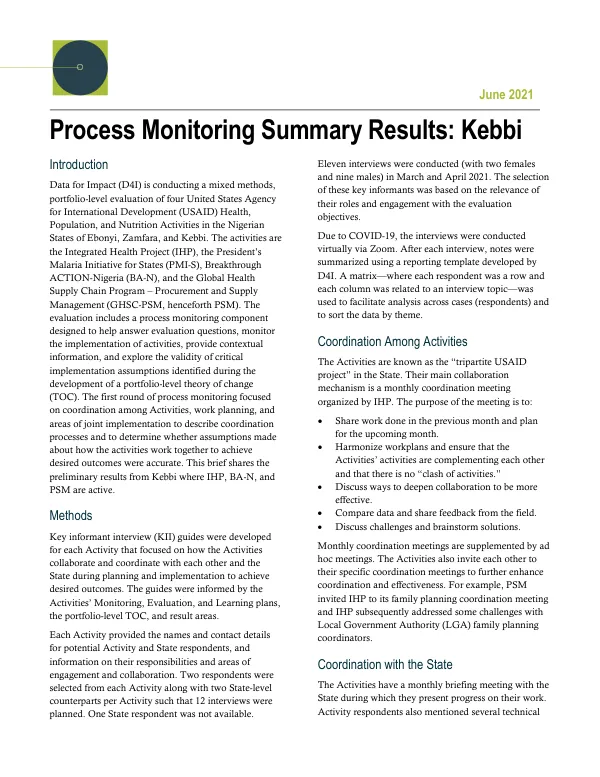
Ebonyi Process Monitoring Results_FS-21-518 D4I
Ebonyi State is one of the Nigerian states where the United States Agency for International Development (USAID) Health, Population, and Nutrition Activities are being implemented.
2021 · 6 pages
Sign in to readA free account is required to download.
Abstract
The activities include the Integrated Health Project (IHP), the President's Malaria Initiative for States (PMI-S), Breakthrough ACTION-Nigeria (BA-N), and the Global Health Supply Chain Program – Procurement and Supply Management (GHSC-PSM). A mixed-methods evaluation of these activities is being conducted by Data for Impact (D4I) to assess their effectiveness and identify areas for improvement. The evaluation includes a process monitoring component that aims to provide contextual information and explore the validity of critical implementation assumptions. The first round of process monitoring focused on coordination among activities, work planning, and areas of joint implementation. The results from Ebonyi State are presented in this brief. The activities in Ebonyi State are implementing all four programs, and the evaluation aimed to describe coordination processes and determine whether assumptions made about how the activities work together to achieve desired outcomes were accurate. The evaluation used a mixed-methods approach, combining both qualitative and quantitative data collection and analysis methods. Interview guides were developed for each activity, focusing on how the activities collaborated and coordinated with each other and the State to achieve desired outcomes. The guides were informed by the activities' Monitoring, Evaluation, and Learning plans and result areas, as well as the portfolio-level Theory of Change (TOC). A total of 16 interviews were conducted with respondents from each activity and the State, with a balance of men and women. The results of the process monitoring component indicate that the activities in Ebonyi State have established a robust coordination mechanism to ensure effective collaboration and communication. The activities hold monthly coordination meetings to review progress, share work plans, and identify areas for improvement. They also communicate through one-on-one ad hoc meetings and a WhatsApp group to address emerging issues. The activities have quarterly meetings with the State to present their contributions to desired outcomes and provide technical and financial support for State coordination meetings. The evaluation found that the activities' coordination meetings provided a useful forum for presenting successes, gaps, and sharing insights to address gaps. The meetings allowed the activities to harmonize their work plans to avoid duplication and leverage resources. The activities and the State felt that co-location of activity offices with the State helped them have strong relationships, promoted integration between the State Ministry of Health and key activity staff, and facilitated coordination. However, the evaluation also identified some challenges, including funding constraints, COVID-19-related issues, and difficulties in coordinating with the State. The activities reported that they had no challenges coordinating with each other, but one activity respondent noted that the "clash of activities" occurred occasionally due to each activity's monthly mandate to report on progress and achievements to USAID. COVID-19 reduced the number of quarterly meetings with the State and caused Internet connectivity issues during virtual meetings. The evaluation also examined the work planning processes of each activity. BA-N's work plan was based on its intermediate results and activities that contribute to those results. The plan was drafted in Abuja and shared with the State for input and with other activities through virtual meetings. IHP's planning process was partly virtual due to COVID-19, and they conducted a desk review of State policies and reports from previous projects to identify gaps and challenges. PMI-S first met with State representatives to find out their priorities and then held consultations with other activities to identify areas for collaboration and leveraging. Overall, the evaluation found that the activities in Ebonyi State have established a robust coordination mechanism and have made progress in implementing their work plans. However, they face challenges related to funding, COVID-19, and coordination with the State. The evaluation provides recommendations for improving the coordination and work planning processes of the activities in Ebonyi State.
Related documents