USAID DEC
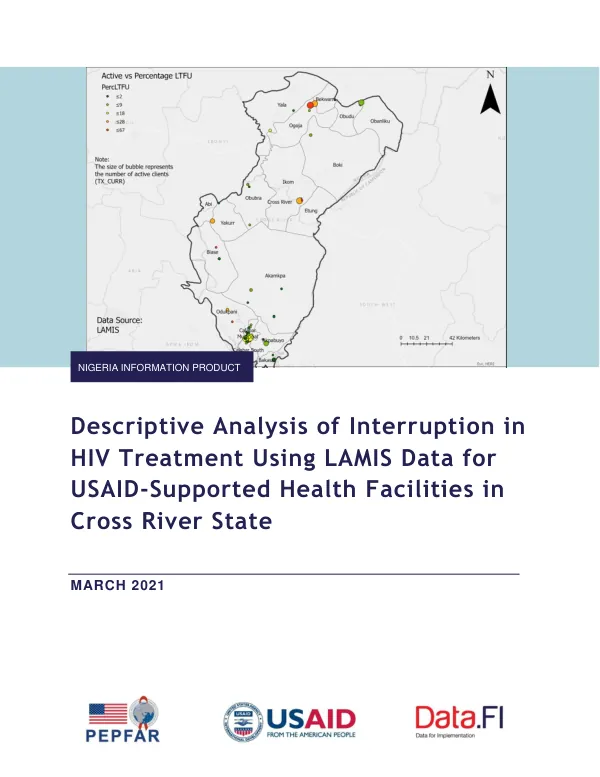
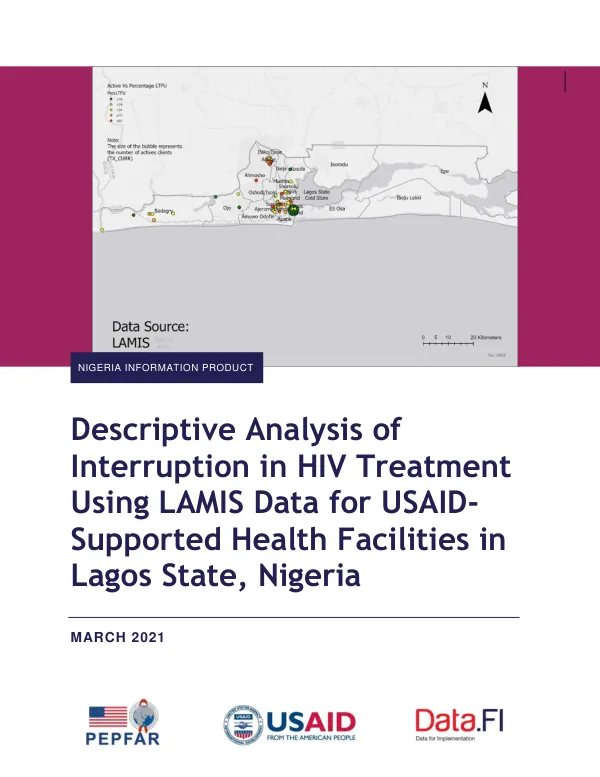
Descriptive Analysis of Interruption in HIV Treatment Using LAMIS Data for USAID-Supported Health Facilities in Lagos State, Nigeria
Sign inPALLADIUM INTERNATIONAL, LLC
Descriptive Analysis of Interruption in HIV Treatment Using LAMIS Data for USAID-Supported Health Facilities in Lagos State, Nigeria
The analysis of interruption in HIV treatment using LAMIS data for USAID-supported health facilities in Lagos State, Nigeria, reveals a complex issue affecting the HIV care and treatment program.
2021 · 25 pages
Sign in to readA free account is required to download.
Abstract
Over the last 15 years, significant progress has been made in realizing the goal of an AIDS-free generation, with the President's Emergency Plan for AIDS Relief (PEPFAR) partnering with the Nigerian government, civil society, and implementing partners to achieve this goal. Critical to sustaining these accomplishments are developing and implementing client-centered care models to support people living with HIV (PLHIV) in continuing to engage in treatment and achieving viral suppression. Understanding facility and client data trends related to engagement in treatment is essential to tracking progress toward universal retention and improving facility programs' ability to retain PLHIV on treatment. The analysis of LAMIS data within the National Data Repository (NDR) highlights potential relationships between a client's current 28-day status (active or experiencing interruption in treatment) and other client variables. The objectives of the analysis include performing a descriptive analysis of the LAMIS data to identify any potential relationships between a client's current 28-day status and other client variables, describing the relationship of a subset of variables with interruption in treatment at USAID-supported PEPFAR sites, and identifying and profiling sites within Lagos State with disproportionately low continuity of treatment. The data source for the analysis includes retrospective cohort data from 484 USAID-supported PEPFAR facilities across 16 states that initiated ART. The Data.FI team completed a descriptive analysis of the demographic and clinical parameters of all clients using the R software to explore relationships associated with clients experiencing interruption in treatment in four USAID priority states. The analysis reveals that interruption in treatment is a significant issue affecting the HIV care and treatment program in Lagos State, Nigeria. The rates of interruption in treatment are high, with some studies finding rates of 28% and 31%. Understanding which PLHIV are likely to experience interruption in treatment is essential to assessing program impact and tailoring HIV programming to bring those clients back into treatment with care models that are accessible and meet their needs. The analysis identifies several factors that potentially influence interruption in treatment, including low HIV risk perception, geographic terrain, religious and superstitious beliefs, and stigma. The National Data Repository (NDR) provides an opportunity to conduct analysis of interruption in treatment across the HIV cohort in Nigeria. The NDR is a database platform designed to hold all national client-level data on HIV care and treatment. The data parameters uploaded into the NDR include but are not limited to ART clinic number, hospital number, facility name, state, ART start date, client's date of birth, last clinic date, regimen given, number of days of antiretrovirals (ARVs), and the partner's name. Each record in the NDR is updated with the most recent information from the client clinic visit.