USAID
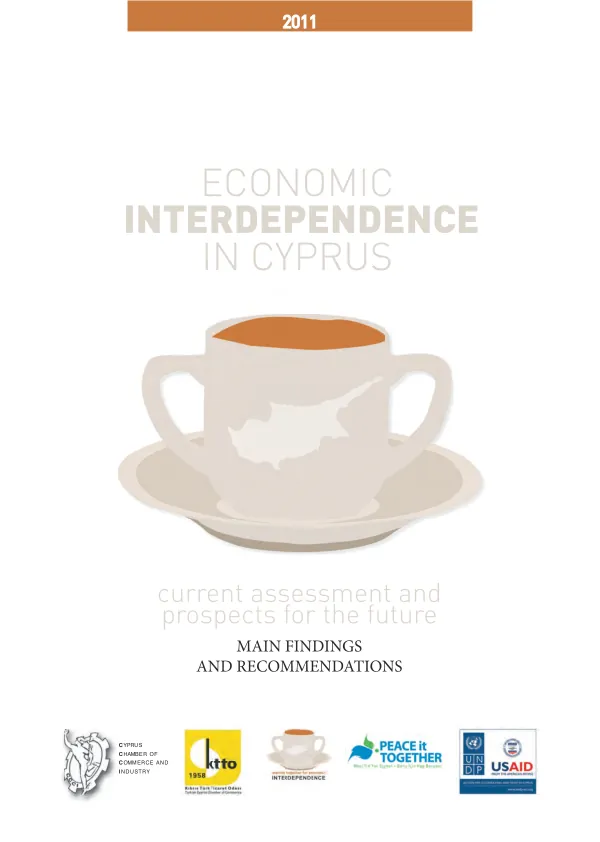
ECONOMIC INTERDEPENDENCE IN CYPRUS
Economic interdependence in Cyprus is a complex phenomenon that has significant implications for the island nation's economic development and stability.
2011 · 33 pages
Sign in to readA free account is required to download.
Abstract
The country's strategic location at the crossroads of Europe, Asia, and Africa makes it an important hub for trade and investment. Cyprus has a highly open economy, with a strong service sector and a significant tourism industry. The country's economy is heavily reliant on foreign investment, with a large number of foreign companies operating in the country. The government has implemented various policies to attract foreign investment, including tax incentives and streamlined regulatory procedures. One of the key drivers of economic interdependence in Cyprus is the country's membership in the European Union. Cyprus joined the EU in 2004 and has since implemented a range of EU policies and regulations. The country's accession to the EU has facilitated trade and investment with other EU member states, and has also provided access to EU funding and support for economic development. Cyprus has also established a number of free trade agreements with other countries, including the United States, Canada, and several countries in the Middle East. These agreements have helped to increase trade and investment with these countries, and have also facilitated the growth of the country's tourism industry. The country's economic interdependence is also reflected in its strong trade relationships with other countries in the region. Cyprus has a significant trade deficit with countries such as Greece and Turkey, but it also has a strong trade surplus with countries such as the United Kingdom and the United States. In terms of economic indicators, Cyprus has a high GDP per capita and a strong economic growth rate. However, the country also has a high level of debt and a significant current account deficit. The government has implemented a range of policies to address these issues, including austerity measures and structural reforms. Overall, economic interdependence in Cyprus is a complex and multifaceted phenomenon that has significant implications for the country's economic development and stability. The country's strong trade relationships, high level of foreign investment, and EU membership have all contributed to its economic interdependence, and have helped to drive economic growth and development. The government of Cyprus has implemented a range of policies to promote economic development and reduce the country's dependence on foreign investment. These policies include tax incentives, streamlined regulatory procedures, and investment in infrastructure and human capital. The government has also established a number of institutions and agencies to promote economic development and support businesses, including the Cyprus Investment Promotion Agency and the Cyprus Chamber of Commerce and Industry. In addition to these policies, the government has also implemented a range of initiatives to promote economic diversification and reduce the country's dependence on the tourism industry. These initiatives include investment in the manufacturing sector, the development of new industries such as renewable energy and biotechnology, and the promotion of entrepreneurship and innovation. Overall, the government of Cyprus has taken a proactive approach to promoting economic development and reducing the country's dependence on foreign investment. The country's strong trade relationships, high level of foreign investment, and EU membership have all contributed to its economic interdependence, and have helped to drive economic growth and development.