USAID DEC
Education Social Norms Case Study: Literacy Achievement and Retention Project in Uganda
Sign inGEORGETOWN UNIVERSITY'S INSTITUTE FOR REPRODUCTIVE HEALTH
Education Social Norms Case Study: Literacy Achievement and Retention Project in Uganda
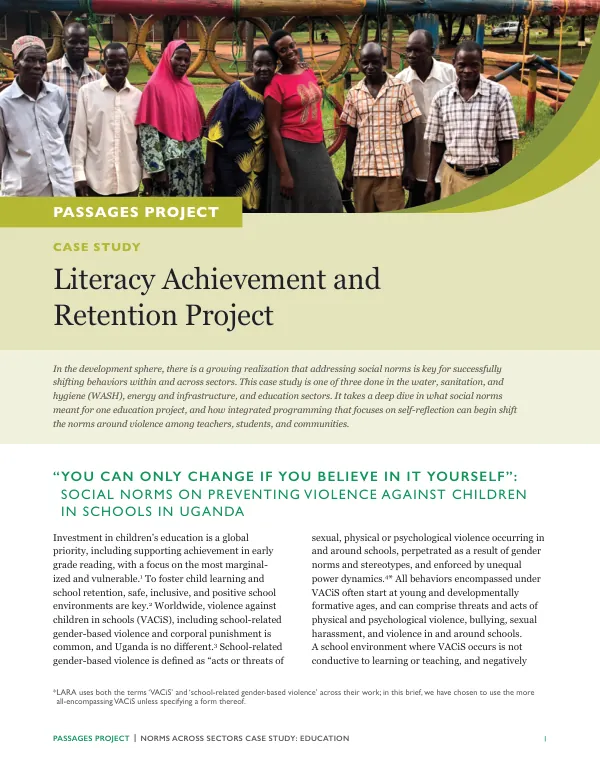
The Literacy Achievement and Retention Activity (LARA) project in Uganda aimed to advance achievements in Ugandan children's early grade reading through improved learning instruction and student retention.
2021 · 9 pages
Sign in to readA free account is required to download.
Abstract
To achieve this, LARA sought to build a violence-free and supportive school climate and promote effective instruction where teachers invest in each child's education and well-being, and nurture students' social and emotional learning. The project was managed and implemented by RTI International in partnership with the Ugandan Ministry of Education and Sports, working at scale across 38 districts in Uganda and reaching more than 3,500 public schools, 40,000 teachers, and 1.3 million students. The Journeys program, a component of LARA, focused on transforming the school culture and climate, including prevention of violence against children in schools (VACiS) through norms-shifting strategies. To achieve desired changes, Journeys engaged teachers and students in schools, and adults and key stakeholders in communities. Journeys' social norms-shifting strategies sought to change expectations and acceptance about the need for and use of VACiS, build positive discipline skills, and increase reporting of and response to incidences of VACiS in schools. Journeys included three complementary and age-appropriate handbooks that engage teachers, students, and community members in facilitated activities and reflective discussion. The programming in Journeys addressed multiple norms to prevent and increase reporting of VACiS. Design of the Journeys programming built on formative research that identified norms, reference groups, and power holders that lead to or could prevent VACiS and those that limit reporting of VACiS. Journeys applied social emotional learning approaches to deepen individual, group, and school-wide understanding and commitment to change. Trained school and community change agents engaged teachers and school support staff and community members, respectively, in individual and collective social and emotional reflection, dialogue, games, art, and drama guided by the Journeys handbooks. Supportive supervision, both planned and as-needed, was available for these change agents. The program used applied adult education techniques to teach and empower people to prevent and address VACiS. Through facilitated exercises, school and community change agents supported participants in understanding how children feel and experience VACiS, and how it affects their learning. The Journeys program used a variety of strategies to prevent VACiS, including reminders of school values and positive discipline strategies displayed in classrooms, and principals tracking school-wide engagement in Journeys. School change agents visited teachers individually to encourage their transformation, and principals validated this effort through recognition of teachers' efforts and efforts to ensure consequences for those who continue with VACiS. School change agents also led efforts to build reporting and response mechanisms for VACiS, including encouraging students and teachers to report VACiS, and for school change agents and administrators to investigate and respond to reports. The Journeys program aimed to establish a school and classroom climate that is welcoming, warm, and supportive; safe physically, emotionally, socially, and academically; inclusive with equal opportunities for all students; and nurturing of students' positive social and emotional development. The program also sought to strengthen students' socioemotional skills, confidence, and agency, and eliminate VACiS. Through its programming, Journeys addressed multiple norms that underpin VACiS in Uganda, including physical, verbal, and labor punishments being necessary for student learning, and good colleagues not reporting other teachers' sexual harassment of children or their use of corporal punishment.
Related documents
Documents in this collection
 2021
2021USAID DEC
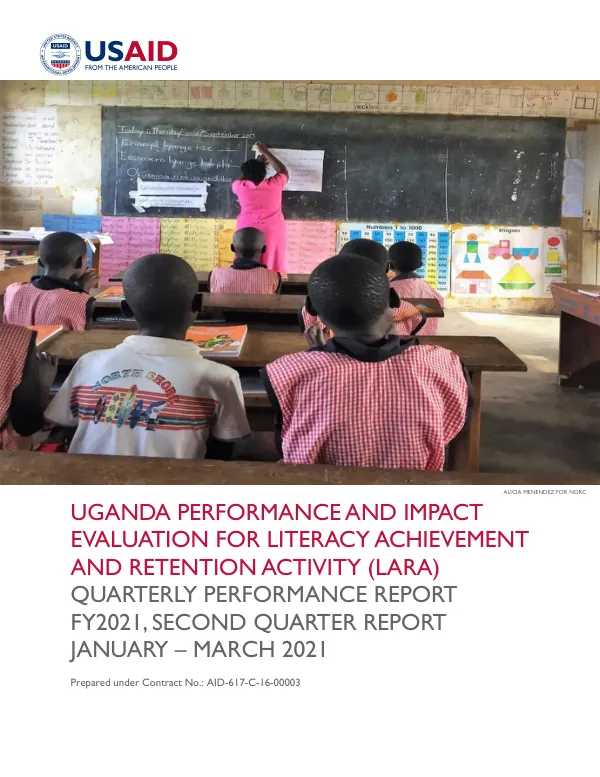
Quarterly Performance Report FY 2021, Second Quarter Report January-March 2021: USAID/Uganda Performance and Impact Evaluation for Literacy Achievement and Retention Activity (LARA)
Open record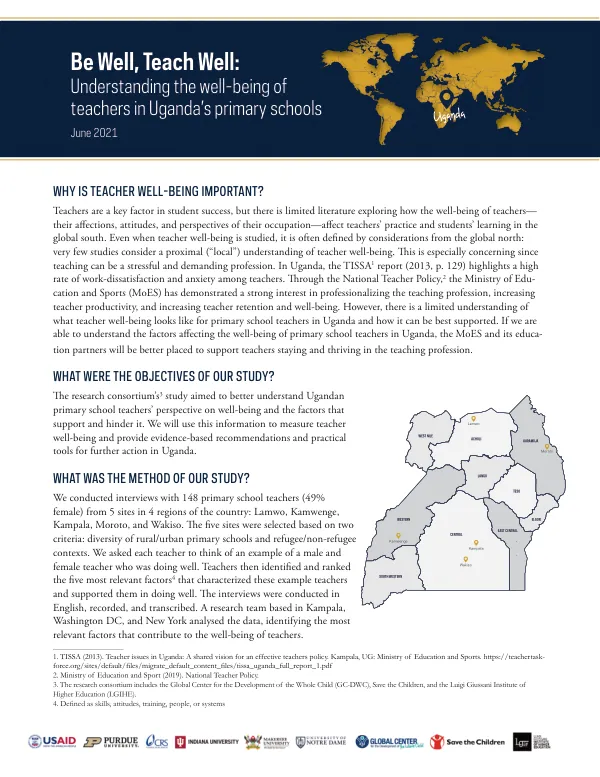 2021
2021USAID DEC
Be Well, Teach Well: Understanding the well-being of teachers in Uganda’s primary schools
Open record