USAID DEC
Be Well, Teach Well: Understanding the well-being of teachers in Uganda’s primary schools
Sign inMINISTRY OF EDUCATION AND CULTURE
Be Well, Teach Well: Understanding the well-being of teachers in Uganda’s primary schools
Teacher well-being is a critical factor in student success, but there is limited literature exploring its impact on teachers' practice and students' learning in the global south.
2021 · 4 pages
Sign in to readA free account is required to download.
Abstract
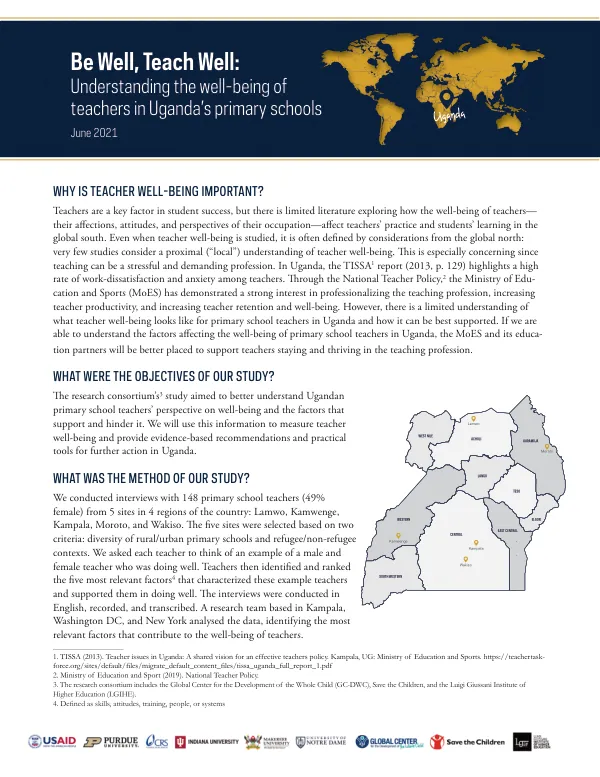
In Uganda, the teaching profession is considered stressful and demanding, with a high rate of work-dissatisfaction and anxiety among teachers. The Ministry of Education and Sports has demonstrated a strong interest in professionalizing the teaching profession, increasing teacher productivity, and increasing teacher retention and well-being. A research consortium conducted a study to better understand Ugandan primary school teachers' perspective on well-being and the factors that support and hinder it. The study involved interviews with 148 primary school teachers from five sites in four regions of the country. The teachers were asked to identify and rank the five most relevant factors that characterized teachers who were doing well. The interviews were conducted in English, recorded, and transcribed, and a research team analyzed the data to identify the most relevant factors that contribute to the well-being of teachers. Teachers had a broad definition of well-being, which included being free from problems and stress, and holistically healthy. They identified seven groups of factors that support their well-being, including intrapersonal (individual skills and beliefs) and interpersonal skills (social skills), as well as the settings and systems (external motivation and learning community) that allow teachers to succeed. The most important factors that supported a teacher in doing well were peer cooperation, classroom methods, training, being prepared, and responsibility. Cooperation among teachers was the most frequently mentioned factor and the most highly ranked by participants. Teachers working in a refugee context prioritized strong teaching methods, including training, lesson design, and preparation. School administration was also important to teacher well-being, especially when administrators were supportive, approachable, and respectful. The lack of support from administration was perceived to hinder instruction and therefore well-being. The study found that there were no significant gender differences in the factors identified or prioritized by teachers, except that female teachers more frequently articulated the importance of holistic health in doing well, while male teachers underlined the support given from administration and their economic status as being part of their well-being. The study had some limitations, including a restricted sample size and a reliance on rapid ethnographic interviews, which may not have allowed for a deep and comprehensive understanding of the lived experience of teachers in Uganda. Further research on teacher well-being in Uganda is needed to add to the findings of this study.